Anubias Care Guide: Everything You Need to Know
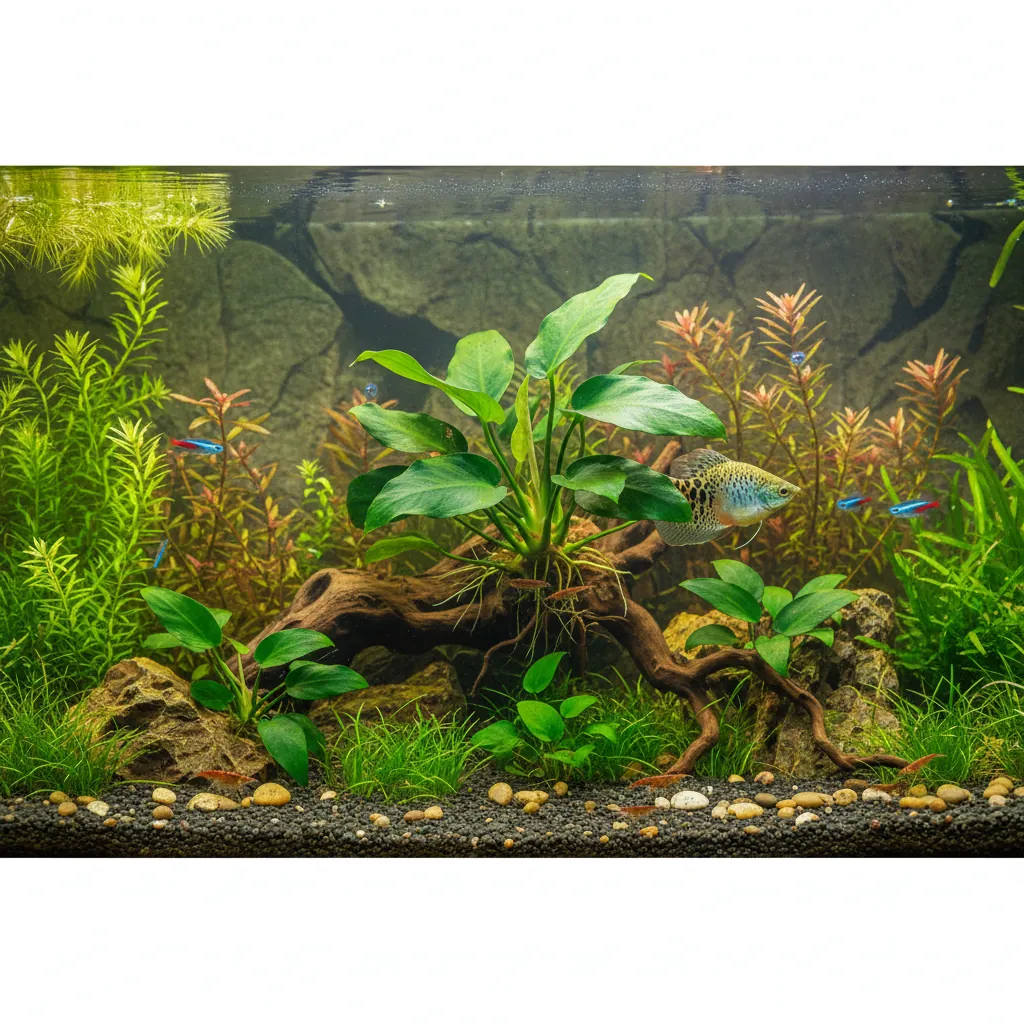
Anubias Care Guide: Everything You Need to Know
Contents
- Quick Care Summary
- How to Set Up an Anubias Tank
- Optimal Water Parameters for Anubias
- Feeding and Fertilization
- Suitable Tank Mates for Anubias
- Common Problems and Solutions
- How to Propagate Anubias
Anubias plants are hardy, low-maintenance aquatic plants ideal for beginners and experienced aquarists alike. They thrive in low to moderate light, tolerate a wide range of water parameters, and can be anchored to driftwood, rocks, or planted in substrate. Anubias enhance aquarium aesthetics, provide oxygenation, and offer shelter for fish, making them a versatile choice for any tank setup.
Quick Care Summary
- Tank Size: Suitable for nano tanks to large aquariums.
- Water Temperature: 72°F to 84°F (22°C to 29°C).
- pH: 6.0 to 8.0.
- Diet: Absorbs nutrients from the water column; liquid fertilizers optional.
- Temperament: Peaceful, compatible with most fish and invertebrates.
- Difficulty: Easy, beginner-friendly.
How to Set Up an Anubias Tank
Anubias plants are adaptable and can thrive in various setups. Here’s how to prepare your tank:
Anchoring Options
Anubias can be attached to hardscape elements like driftwood or rocks using aquarium-safe glue or cotton thread. Ensure the rhizome (the thick horizontal stem) is exposed to prevent rot.
Substrate Planting
If planted in substrate, ensure the rhizome remains above the surface to avoid decay. Nutrient-rich substrate is not required but can enhance growth.
Placement
Anubias can be placed in the foreground, midground, or background, depending on the species and your aquascape design.
Optimal Water Parameters for Anubias
Anubias thrive in stable water conditions. Here are the ideal parameters:
| Parameter | Range | Notes |
|---|---|---|
| Temperature | 72°F - 84°F | Suitable for tropical fish tanks. |
| pH | 6.0 - 8.0 | Can adapt to slightly acidic or alkaline water. |
| Water Hardness | Soft to medium | General hardness (GH) of 2-15 dGH. |
Feeding and Fertilization
Anubias absorb nutrients directly from the water column. While they can thrive without additional fertilization, liquid fertilizers rich in potassium and iron can enhance growth. Root tabs are unnecessary but can be used if planted in substrate.
Suitable Tank Mates for Anubias
Anubias are compatible with a wide range of aquatic species:
- Fish: Tetras, guppies, bettas, and cichlids.
- Invertebrates: Shrimp (e.g., cherry shrimp, Amano shrimp) and snails (e.g., nerite snails).
- Plants: Java Ferns, Bucephalandra, and mosses like Christmas Moss.
Avoid fish that nibble on plants, as they may damage Anubias leaves.
Common Problems and Solutions
Yellowing or Melting Leaves
This often occurs due to stress or poor water quality. Trim damaged leaves and maintain stable water parameters.
Algae Growth
Anubias leaves are prone to algae under strong lighting. Reduce light intensity or introduce algae-eating species like otocinclus catfish or Amano shrimp.
Rhizome Rot
Ensure the rhizome is not buried in substrate, as this can lead to decay. Keep it exposed to light and water.
How to Propagate Anubias
Propagating Anubias is simple:
- Carefully cut the rhizome into sections, ensuring each piece has at least 3-4 leaves.
- Attach the cuttings to hardscape or substrate, following the same care guidelines.
- New roots will develop over time.
FAQ
Can Anubias grow without CO2?
Yes, Anubias do not require CO2 supplementation and thrive in low-tech setups.
How fast do Anubias grow?
Anubias are slow-growing plants, typically producing one new leaf every few weeks.
Can Anubias be grown emersed?
Yes, Anubias can grow emersed in humid conditions. Use a spray bottle to keep the rhizome moist.
Why are my Anubias leaves turning brown?
Brown leaves may indicate nutrient deficiency or algae growth. Consider adding liquid fertilizers or reducing light exposure.
Related guides
- How to Plant Aquarium Plants Effectively
- Java Moss Care: Complete Guide for Aquarium Keepers
- How to Set Up a Successful Planted Aquarium: A Beginner’s Guide
- Amano Shrimp Care Guide: Algae-Busting Powerhouses
- Angelfish Care: A Complete Guide