Aquarium Lighting Guide: Everything You Need to Know
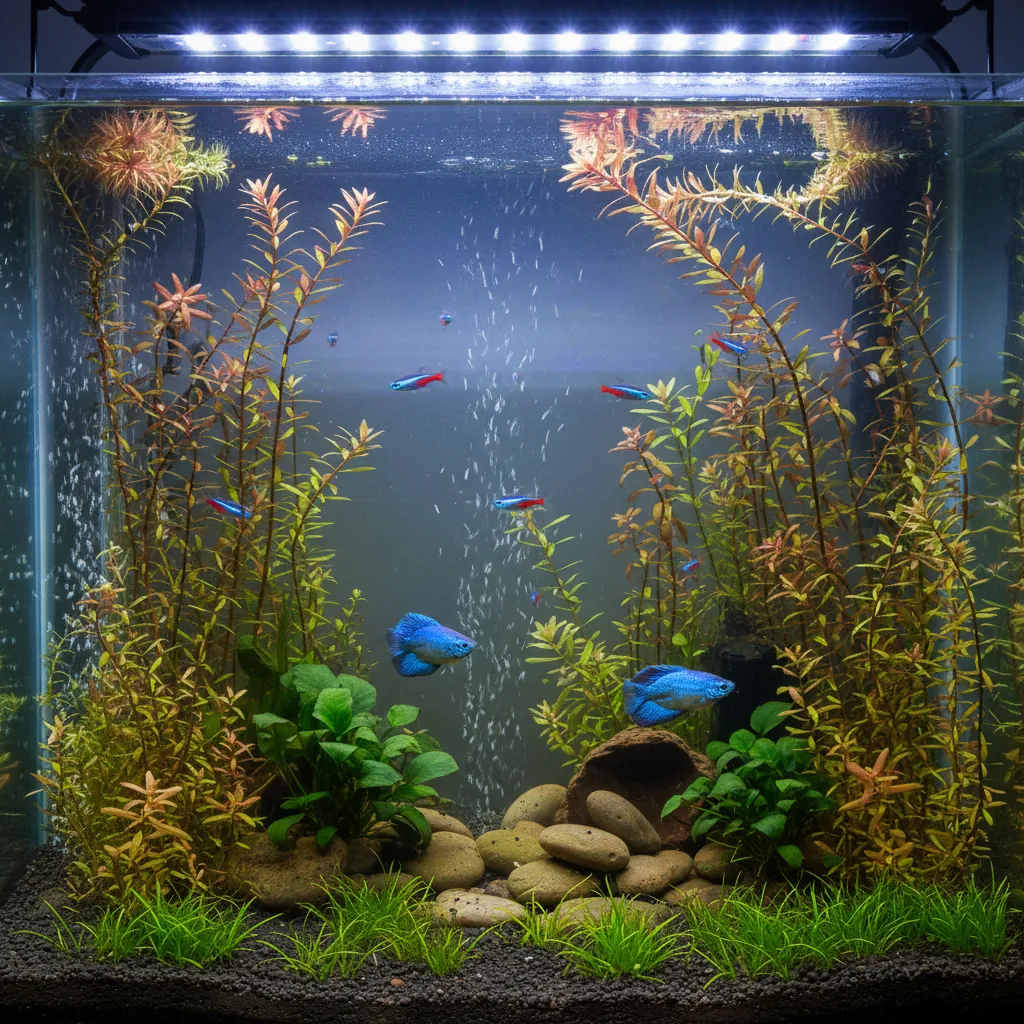
Aquarium Lighting Guide: Everything You Need to Know
Contents
- Quick Care Summary
- Why is Aquarium Lighting Important?
- How to Choose the Best Aquarium Lighting?
- How Much Light Do Fish and Plants Need?
- Best Aquarium Lighting Fixtures Compared
- How to Set Up Aquarium Lighting
- Common Lighting Problems and Solutions
Proper aquarium lighting is essential for the health of your fish, plants, and overall tank ecosystem. It mimics natural sunlight, supports photosynthesis, enhances colors, and regulates fish behavior. For most aquariums, LED lights with full-spectrum RGB (red, green, blue) capabilities are ideal, offering energy efficiency, customization, and consistent performance.
Quick Care Summary
- Tank Size: Match lighting fixture size to your aquarium dimensions.
- Water Temperature: Ensure lighting doesn’t overheat the tank.
- pH: Maintain stable pH levels for plant and fish health.
- Diet: Lighting supports photosynthesis, indirectly benefiting fish diets.
- Temperament: Balanced lighting reduces stress and mimics natural habitats.
- Difficulty: Beginner-friendly LEDs simplify setup; advanced systems offer customization.
Why is Aquarium Lighting Important?
Lighting is vital for photosynthesis in live plants, providing oxygen and maintaining water quality. It also enhances fish colors, regulates behavior, and prevents algae overgrowth. Too much light can cause algae blooms, while insufficient light stunts plant growth and dulls fish appearance.
How to Choose the Best Aquarium Lighting?
1. Match Lighting to Your Tank Type
| Tank Type | Recommended Lighting |
|---|---|
| Fish-Only Tank | Moderate lighting (5,500K–6,500K) for viewing and fish health. |
| Planted Tank | Full-spectrum RGB lighting (red, blue, green) for photosynthesis and plant growth. |
| Reef Tank | High-intensity PAR lighting for corals and invertebrates. |
2. Decide on Light Type
- LED Lighting: Energy-efficient, customizable, and long-lasting. Ideal for most setups.
- Fluorescent Lighting: Affordable but less efficient and shorter lifespan.
- Metal Halide Lighting: High intensity for deep tanks or demanding plants; generates heat.
3. Consider Light Spectrum
- Red Light: Promotes stem growth and enhances red hues in plants and fish.
- Green Light: Boosts foliage vibrancy and improves visual appeal.
- Blue Light: Encourages leaf growth and enhances blue tones in fish and decor.
How Much Light Do Fish and Plants Need?
| Tank Type | Daily Light Duration |
|---|---|
| Fish-Only Tank | 8 hours |
| Planted Tank | 10–12 hours |
| Reef Tank | 8–12 hours |
Note: Use timers or apps like Aqueon BlueIQ to automate lighting schedules.
Best Aquarium Lighting Fixtures Compared
| Fixture | Best For | Key Features | Trade-Offs |
|---|---|---|---|
| Aqueon OptiBright Smart LED | Beginners and tech-savvy aquarists | Full-spectrum RGB, app-controlled, customizable settings. | Premium pricing; requires app connectivity. |
| Fluval Plant 4.0 | Planted tanks | App scheduling, dimming, and color adjustments. | Confirmation needed for fitting range and power-failure behavior. |
| Chihiros WRGB II Pro | Advanced aquascaping | Adjustable color channels and output for detailed customization. | Requires careful mounting and ventilation. |
| NICREW RGB+W 24/7 | Budget-conscious setups | Physical controls with remote programming. | Limited app control; infrared remote requires line of sight. |
How to Set Up Aquarium Lighting
- Position the Light: Place the fixture directly above the tank for even coverage.
- Set Duration: Use timers to maintain consistent light cycles (6–8 hours for fish-only tanks; 10–12 for planted tanks).
- Adjust Intensity: Start with moderate settings and adjust based on plant health and algae growth.
- Clean Regularly: Remove dust and water spots from light fixtures to maintain brightness.
Common Lighting Problems and Solutions
- Algae Overgrowth: Reduce light duration or intensity and manually remove algae.
- Dull or Leggy Plants: Increase light intensity or duration and ensure proper nutrient levels.
- Fish Stress: Avoid excessive light exposure and maintain a natural day-night cycle.
FAQ
1. Can I leave my aquarium light on all night?
No, leaving lights on overnight disrupts fish sleep cycles and promotes algae growth. Use a timer for consistent day-night cycles.
2. Do fish need special lighting?
Fish-only tanks require moderate lighting for viewing and health. Plants and corals need full-spectrum lighting for photosynthesis.
3. How do I know if my plants are getting enough light?
Healthy plants will grow steadily and maintain vibrant colors. Pale or leggy plants indicate insufficient light.
4. Can I use sunlight as aquarium lighting?
Direct sunlight can cause algae overgrowth and temperature fluctuations. Artificial lighting is recommended for controlled conditions.
Related guides
- Aquarium Filter Types: A Complete Guide
- Aquarium Heater Guide: Choosing the Right Heater for Your Tank
- Driftwood in Aquariums: A Complete Care Guide
- Amano Shrimp Care Guide: Algae-Busting Powerhouses
- Angelfish Care: A Complete Guide