The Aquarium Nitrogen Cycle Explained: How to Keep Your Fish Safe
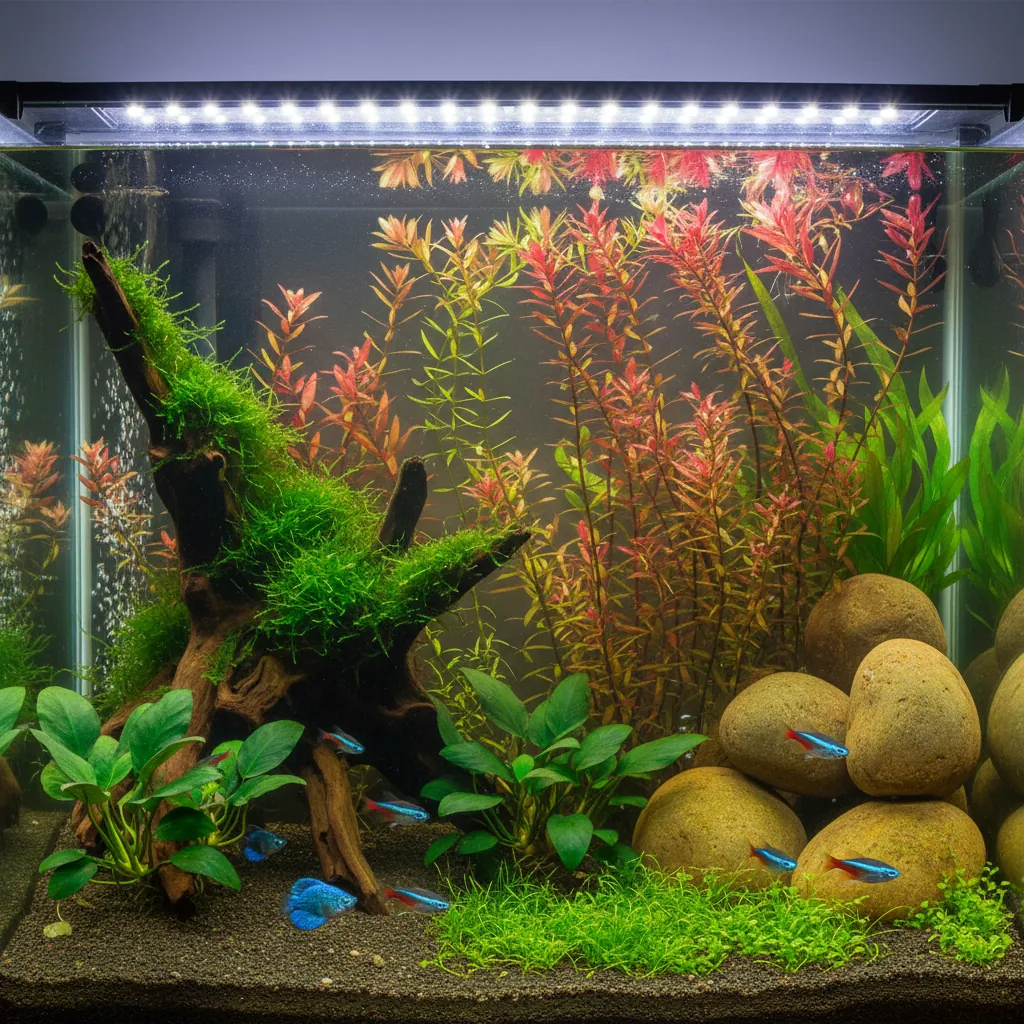
The Aquarium Nitrogen Cycle Explained: How to Keep Your Fish Safe
Contents
- Quick Care Summary
- What Is the Aquarium Nitrogen Cycle?
- How Long Does Cycling Take?
- Tank Setup for Proper Cycling
- Water Parameters During Cycling
- Feeding During Cycling
- Common Cycling Problems
The aquarium nitrogen cycle is the process where beneficial bacteria convert toxic fish waste (ammonia) into less harmful nitrites, then nitrates. This natural filtration system is essential for fish health, typically taking 2-8 weeks to establish. You’ll know it’s working when tests show 0ppm ammonia, 0ppm nitrites, and some nitrates (kept below 40ppm via water changes).
Quick Care Summary
- Tank Size: Varies by fish species
- Water Temperature: 72-82°F (varies by species)
- pH: 6.5-7.5 (ideal for most tropical fish)
- Diet: Varies by species
- Temperament: Varies by species
- Difficulty: Medium (requires monitoring)
What Is the Aquarium Nitrogen Cycle?
The nitrogen cycle describes how nature processes fish waste:
- Fish produce ammonia through waste/gills
- Beneficial bacteria (Nitrosomonas) convert ammonia to nitrites
- Different bacteria (Nitrobacter) convert nitrites to nitrates
- Plants consume nitrates or you remove them via water changes

How Long Does Cycling Take?
| Method | Timeframe | Notes |
|---|---|---|
| Natural cycling | 3-8 weeks | No additives |
| Bottled bacteria | 1-3 weeks | Products like Fritz Zyme 7 |
| Established media | 1-7 days | Using filter media from cycled tank |
(Conflicting info: Source 3 claims bottled bacteria is ineffective, while Sources 1/4 recommend it)
Tank Setup for Proper Cycling
- Install filter with biological media (sponge, ceramic rings)
- Add substrate and decor (provides surface area for bacteria)
- Either:
- Add hardy “cycling fish” (not recommended by most sources)
- Use pure ammonia or fish food to start fishless cycle
Water Parameters During Cycling
Test every 2-3 days until cycled:
- Ammonia: Should peak then drop to 0ppm
- Nitrites: Will rise after ammonia peaks, then drop to 0ppm
- Nitrates: Will appear last, keep below 40ppm
- pH: Keep stable (affects ammonia toxicity)
Feeding During Cycling
If using fish:
- Feed minimally (once every 2 days)
- Remove uneaten food immediately For fishless cycling:
- Add ammonia to 2-4ppm daily until nitrites appear
Common Cycling Problems
| Issue | Solution |
|---|---|
| Ammonia over 2ppm | 25-50% water change |
| Nitrites over 1ppm | Water change + reduce feeding |
| Stalled cycle | Check pH (>6.5 needed) |
| Cloudy water | Normal bacterial bloom |
FAQ
Q: Can I add fish before cycling completes?
A: Not recommended - ammonia/nitrite spikes will harm fish (Sources 1,4,5 agree).
Q: Do live plants help with cycling?
A: Yes! They consume ammonia/nitrates (Sources 1,4,5 confirm).
Q: How often should I test water during cycling?
A: Every 2-3 days (all sources agree).
Q: Can I use water from an established tank to cycle?
A: No - bacteria live on surfaces, not in water (Sources 1,3 explain).
Q: Why are my nitrates not showing up?
A: Some tanks never show nitrates - rely on ammonia/nitrite tests (Source 3 note).
Related guides
- Essential Aquarium Water Parameters for Healthy Fish
- How Often to Change Aquarium Water
- How to Control Algae in Your Aquarium: Causes, Prevention, and Solutions
- How to Lower Aquarium pH: A Complete Guide