Aquarium Substrate Guide: Choosing the Best Base for Planted Tanks
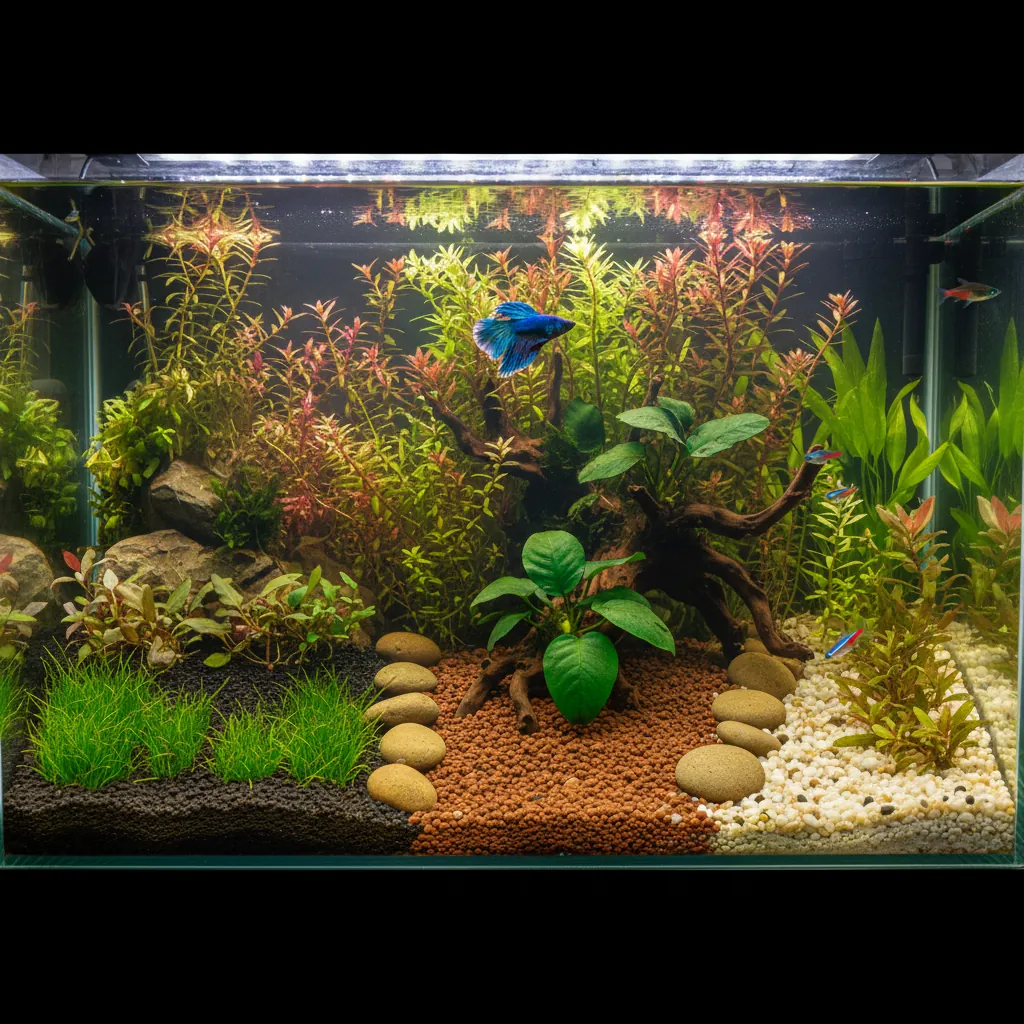
Aquarium Substrate Guide: Choosing the Best Base for Planted Tanks
Contents
- Quick Care Summary
- How to Choose the Right Aquarium Substrate?
- What’s the Ideal Substrate Depth?
- How to Layer Substrate for Planted Tanks?
- What Are Common Substrate Problems?
- How Often Should Substrate Be Replaced?
The best aquarium substrate depends on your tank type: nutrient-rich soils (like ADA Amazonia) excel for planted tanks but require frequent water changes initially; inert sand/gravel works for fish-only tanks and is low-maintenance; while hybrid substrates (layered soil capped with sand) balance plant growth and ease. Depth should be 2-3” for fish-only tanks, 3-5” for planted tanks, with finer grains (1-2mm) preferred for rooted plants.
Quick Care Summary
- Tank Size: Varies by plant/fish species, but ≥5 gallons for stability
- Water Temperature: 72-82°F (22-28°C) for most tropical species
- pH: 6.0-7.5 for planted tanks; up to 8.0 for cichlids with crushed coral
- Diet: Root tabs for rooted plants; liquid fertilizers for water column feeders
- Temperament: Avoid sharp substrates for bottom-dwellers like loaches
- Difficulty: Soil = high-maintenance; sand/gravel = beginner-friendly
How to Choose the Right Aquarium Substrate?
For Planted Tanks:
- Nutrient-rich soils (e.g., ADA Amazonia): Best for fast-growing plants but release ammonia initially. Requires daily 30% water changes for 1-2 weeks.
- Adsorptive soils (e.g., GEX Pure Soil): Lower nutrients, good for slow-growing plants like Anubias. Stabilizes water quickly.
- Hybrid soils: Mix nutrient-rich and adsorptive properties. Ideal for beginners.
For Fish-Only Tanks:
- Sand (0.7-1.2mm grain): Safe for burrowing fish but requires frequent cleaning to prevent anaerobic pockets.
- Gravel (1-3mm grain): Allows better water flow; less prone to compaction. Avoid sharp edges for sensitive species.
- Specialty substrates: Crushed coral raises pH for African cichlids; dolomite buffers hard water.
What’s the Ideal Substrate Depth?
| Tank Type | Depth Range | Notes |
|---|---|---|
| Fish-only | 2-3” (5-7.5cm) | Standard for most setups |
| Planted foreground | 3-4” (7.5-10cm) | Ensures root stability for carpets |
| Planted background | 4-6” (10-15cm) | Supports deep-rooted stem plants |
How to Layer Substrate for Planted Tanks?
- Base layer (1”): Nutrient-rich soil (e.g., Miracle-Gro Organic Choice) mixed with phosphate/iron root tabs.
- Cap layer (1-2”): Inert sand/gravel to prevent soil from clouding water. Match colors to avoid messy aesthetics.
- Maturation: Wait 6 weeks before planting to avoid “souring” (low oxygen levels that kill roots).
Conflicting Advice: Some sources recommend immediate planting above the soil (not in it) during maturation, while others suggest keeping lights off and tank covered until cycling completes.
What Are Common Substrate Problems?
- Anaerobic pockets: Foul-smelling gas (hydrogen sulfide) from compacted fine sand. Fix with regular gravel vacuuming.
- Algae blooms: Excess nutrients from decomposing soil. Manage with water changes and reduced lighting initially.
- Cloudiness: Stirred-up particles from rapid water filling. Prevent by pouring water over a plate or using a drip method.
How Often Should Substrate Be Replaced?
- Nutrient soils: Replace every 1-2 years as nutrients deplete.
- Sand/gravel: Rinse and reuse indefinitely unless contaminated.
- Indicator: Mud-like texture or persistent root rot signals replacement is needed.
FAQ
Q: Can I use potting soil in my aquarium?
A: Only sterilized, organic soils (e.g., Miracle-Gro Organic Choice) capped with sand. Avoid perlite (floats) and fertilized soils (high nitrogen causes algae).
Q: Is sand or gravel better for beginners?
A: Gravel (1-3mm) is easier to maintain. Sand requires more cleaning but is safer for bottom-dwellers.
Q: Do I need root tabs if using nutrient soil?
A: Only after 6-12 months when soil nutrients deplete. For inert substrates, root tabs are essential from the start.
Q: Can I mix substrate types?
A: Yes, but layer them (soil under sand/gravel). Mixing evenly can create nutrient imbalances.
Related guides
- Aquarium Filter Types: A Complete Guide
- Aquarium Heater Guide: Choosing the Right Heater for Your Tank
- Aquarium Lighting Guide: Everything You Need to Know
- Driftwood in Aquariums: A Complete Care Guide
- Amano Shrimp Care Guide: Algae-Busting Powerhouses