Cryptocoryne Care: A Complete Guide to Thriving Aquarium Plants
Cryptocoryne Care: A Complete Guide to Thriving Aquarium Plants
Contents
- Quick Care Summary
- How to Set Up a Tank for Cryptocoryne
- What Are the Ideal Water Parameters for Cryptocoryne?
- How to Feed Cryptocoryne
- What Are the Best Tank Mates for Cryptocoryne?
- What Are Common Problems with Cryptocoryne?
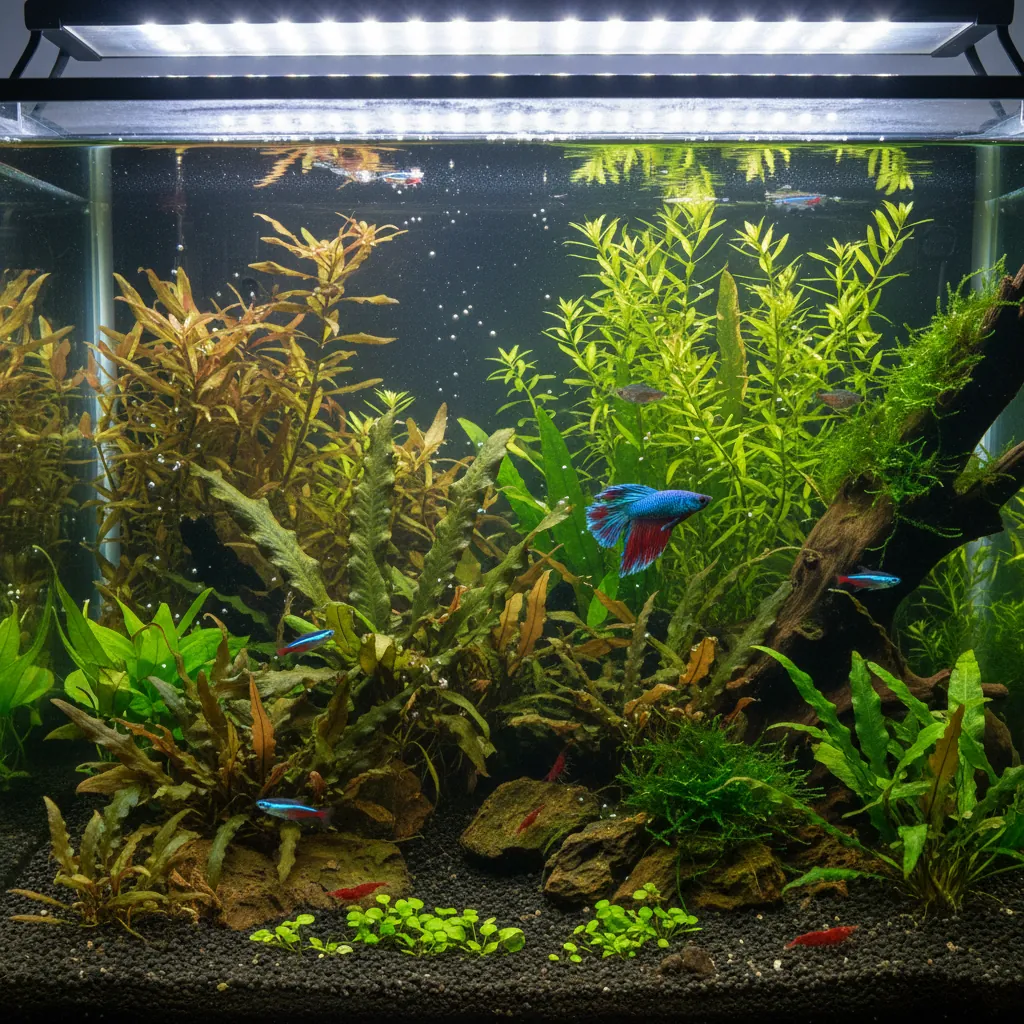
Cryptocoryne, commonly known as water trumpets, are shade-tolerant, rooted aquarium plants native to tropical Asia. They are ideal for low to moderate light setups and thrive in stable water conditions. Known for their variety in leaf shapes, sizes, and colors, Crypts are beginner-friendly once established, though they may experience “crypt melt” when moved or subjected to sudden environmental changes. With proper care, they can create lush, natural aquascapes.
Quick Care Summary
- Tank Size: Suitable for nano tanks to larger aquariums, depending on species (5cm to 70cm height).
- Water Temperature: 22-28°C (tropical range).
- pH: 5-8 (tolerates a wide range).
- Diet: Heavy root feeders; requires nutrient-rich substrate or root tabs.
- Temperament: Peaceful; grows slowly with minimal maintenance.
- Difficulty: Easy for beginners once established; sensitive to disturbance.
How to Set Up a Tank for Cryptocoryne
Cryptocoryne thrives in stable, nutrient-rich environments. Use a planted aquarium substrate or supplement with root tabs to provide essential nutrients. Plant the crown at the substrate surface, leaving the growing point exposed. Avoid burying the crown deeply, as this can hinder growth. Place Crypts in low to moderate light areas, ideally under taller plants or in shaded spots to mimic their natural understorey habitats. Minimal disturbance is key to preventing crypt melt.
What Are the Ideal Water Parameters for Cryptocoryne?
Cryptocoryne prefers stable water conditions:
- Temperature: 22-28°C (tropical range).
- pH: 5-8 (adaptable to a wide range).
- Water Hardness: Soft to hard water, depending on species (e.g., Cryptocoryne usteriana prefers hard, alkaline water).
- CO₂: Not required but enhances growth and coloration.
Avoid sudden changes in water chemistry or temperature, as this can trigger crypt melt.
How to Feed Cryptocoryne
Crypts are heavy root feeders and require a nutrient-rich substrate. If using inert substrate, supplement with root tabs placed near the roots. Liquid fertilizers can also be used but are secondary to root feeding. Avoid overfeeding, as excess nutrients can lead to algae growth.
What Are the Best Tank Mates for Cryptocoryne?
Cryptocoryne pairs well with peaceful community fish and invertebrates. Avoid species that dig or uproot plants, such as large cichlids or goldfish. Suitable tank mates include:
- Fish: Tetras, guppies, rasboras, and bettas.
- Invertebrates: Shrimp (e.g., cherry shrimp) and snails (e.g., nerite snails).
What Are Common Problems with Cryptocoryne?
| Symptom | Cause | Solution |
|---|---|---|
| Leaves melt rapidly | Sudden changes in conditions | Keep water stable; leave roots undisturbed |
| Yellowing leaves, weak growth | Nutrient-deficient substrate | Add root tabs or nutrient-rich substrate |
| Stunted growth | Low light or recent disturbance | Provide moderate light; avoid moving plants |
FAQ
Why Did My Cryptocoryne Melt?
Crypt melt occurs when Crypts experience stress from replanting, water parameter changes, or new tank conditions. The plant sheds leaves but regrows from healthy roots. Maintain stable conditions and avoid disturbing the plant to minimize melt.
Do Cryptocorynes Need CO₂?
CO₂ is not required but can enhance growth and leaf coloration. Crypts thrive in low-tech setups without CO₂ injection.
Are Cryptocorynes Suitable for Beginners?
Yes, Crypts are beginner-friendly once established. They are shade-tolerant, low-maintenance, and adaptable to a range of water conditions. The key is to provide stable conditions and avoid disturbing the plant.
Related guides
- Amazon Sword Care Guide: How to Grow Echinodorus in Aquariums
- Anubias Care Guide: Everything You Need to Know
- Best Aquarium Plants for Beginners: Hardy, Low-Light Choices
- Dwarf Hairgrass Care: A Complete Guide
- How to Plant Aquarium Plants Effectively