Driftwood in Aquariums: A Complete Care Guide
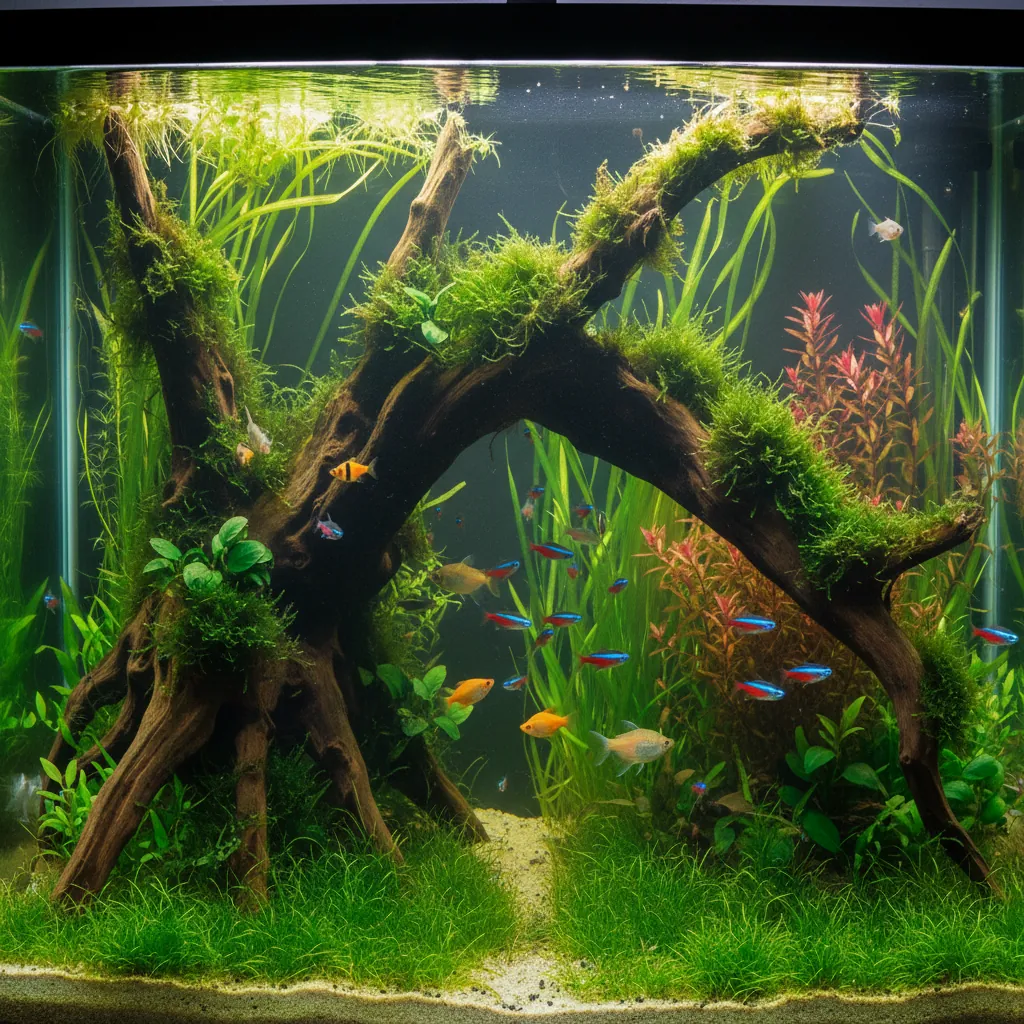
Driftwood in Aquariums: A Complete Care Guide
Contents
- Quick Care Summary
- Why Use Driftwood in an Aquarium?
- How to Choose Aquarium Driftwood?
- Tank Setup with Driftwood
- Water Parameters
- Feeding
- Tank Mates
- Common Problems
Driftwood enhances aquariums by providing natural aesthetics, shelter for fish, and beneficial tannins that improve water quality. It requires preparation (soaking/boiling to remove tannins and ensure sinking) and suits most freshwater setups. Popular types include Malaysian driftwood, Mopani wood, and spider wood, each with unique shapes and properties.
Quick Care Summary
- Tank Size: Varies by driftwood size (10+ gallons recommended for most pieces)
- Water Temperature: 72-82°F (compatible with most tropical fish)
- pH: May lower pH slightly (6.5-7.5 typical range with driftwood)
- Diet: N/A (not a food source, but grows biofilm fish may eat)
- Temperament: Non-aggressive
- Difficulty: Easy to moderate (requires preparation)
Why Use Driftwood in an Aquarium?
Driftwood benefits aquariums by:
- Creating natural hiding spots for fish
- Releasing tannins with antifungal/antimicrobial properties (Source 1)
- Supporting biofilm growth beneficial for shrimp and fry (Source 4)
- Serving as an anchor for aquatic plants like Java fern or Anubias (Source 3)
How to Choose Aquarium Driftwood?
| Type | Sinks? | Tannins | Price Range | Best For |
|---|---|---|---|---|
| Malaysian | Yes | High | $15-$55 | Natural pH-lowering |
| Mopani (African) | Yes | Medium | $60-$240 | Dense, decorative |
| Spider Wood | No | Low | $16-$40 | Branching aquascapes |
| American | No | Varies | $15-$50 | Budget setups |
Conflicting info: Source 1 lists Malaysian driftwood as sinking immediately, while Source 3 notes some pieces may require soaking.
Tank Setup with Driftwood
- Clean: Scrub with water (no chemicals) to remove debris (Source 3)
- Soak/Boil: Submerge for 1-2 weeks (change water daily) or boil for 2-4 hours to remove tannins (Sources 2, 3)
- Anchor: Use rocks or slate for floating varieties (Source 1)
- Position: Place according to aquascape rules (e.g., Rule of Thirds) (Source 3)
Water Parameters
- May lower pH slightly (0.2-0.5 points) due to tannins
- Can tint water tea-colored (harmless but removable with activated carbon)
- Monitor for bacterial blooms during first 2 weeks (Source 2)
Feeding
Not applicable, but driftwood fosters biofilm that fish/shrimp eat naturally.
Tank Mates
Compatible with:
- Tetras, angelfish (prefer tannin-stained water)
- Plecos (graze on wood)
- Shrimp and snails (use biofilm) Avoid with:
- African cichlids (require high pH)
- Saltwater species (Source 1)
Common Problems
- Floating Wood: Soak for longer or weigh down (Source 1)
- White Fungus: Harmless biofilm; scrubbing removes it (Source 2)
- Excessive Tannins: Use chemical filtration or water changes (Source 3)
- Decomposition: Choose dense hardwoods (e.g., Mopani) over softwoods (Source 2)
FAQ
How long to boil driftwood?
2-4 hours, until water runs clear (Sources 2, 3).
Does driftwood lower pH?
Yes, slightly. Malaysian driftwood has the strongest effect (Sources 1, 3).
Can I use beach driftwood?
No. Saltwater-contaminated wood harms freshwater tanks (Source 2).
Why is my driftwood slimy?
Normal bacterial growth; disappears in 2-3 weeks (Source 2).
How to sink stubborn driftwood?
Tie to slate or use silicone to attach to rocks (Source 1).
Related guides
- Aquarium Filter Types: A Complete Guide
- Aquarium Heater Guide: Choosing the Right Heater for Your Tank
- Aquarium Lighting Guide: Everything You Need to Know
- Amano Shrimp Care Guide: Algae-Busting Powerhouses
- Angelfish Care: A Complete Guide