How to Fertilize Aquarium Plants: A Complete Guide
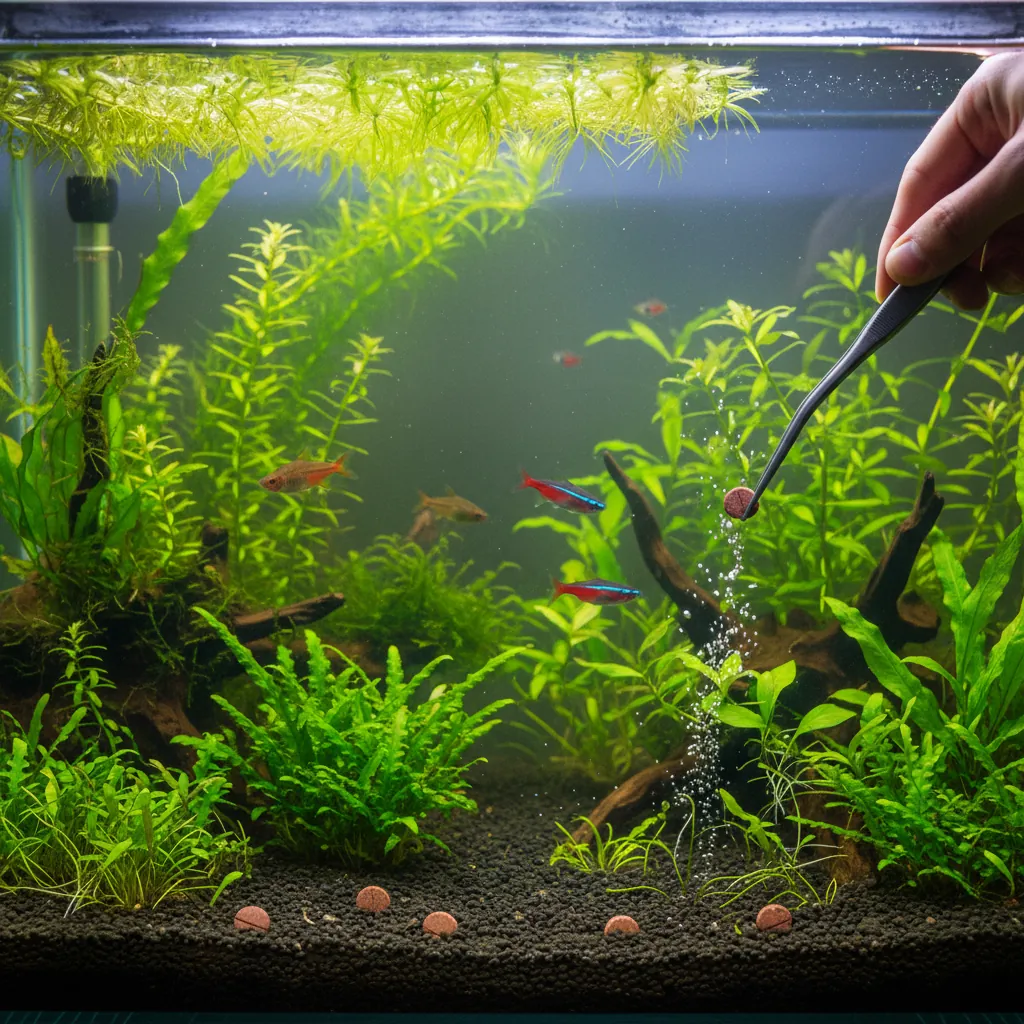
How to Fertilize Aquarium Plants: A Complete Guide
Contents
- Quick Care Summary
- Tank Setup for Planted Aquariums
- Water Parameters
- Feeding and Fertilization
- Tank Mates
- Common Problems
To fertilize aquarium plants effectively, use root tabs (e.g., API ROOT TABS) for root-feeding plants and liquid fertilizers (e.g., API LEAF ZONE or GLA Nectar) for water column absorption. Root tabs should be inserted monthly (1 tablet per 30 square inches of substrate), while liquid fertilizers are dosed weekly (e.g., 5 mL per 10 gallons). Combine both methods for optimal growth, and adjust dosing based on plant density, light, and CO2 levels.
Adding live plants to your aquarium enhances its beauty and helps maintain water quality by competing with algae for nutrients. Proper fertilization ensures vibrant growth and prevents deficiencies like yellowing leaves. Below, we outline the best practices for fertilizing aquarium plants.
Quick Care Summary
- Tank Size: Varies by plant species (e.g., 10+ gallons for most root feeders).
- Water Temperature: 72–82°F (22–28°C) for tropical plants.
- pH: 6.5–7.5 (adjust for specific species).
- Diet: Macronutrients (nitrogen, phosphorus, potassium) and micronutrients (iron, magnesium).
- Temperament: Varies by species; some are hardy, while others are sensitive.
- Difficulty: Low to high, depending on plant type and tank setup.
Tank Setup for Planted Aquariums
- Substrate: Use fine gravel or planted tank substrate for root-feeding plants.
- Lighting: 2–4 watts per gallon for most plants; adjust for high-light or low-light species.
- CO2: Optional but beneficial for fast-growing plants (use API CO2 BOOSTER if not injecting CO2).
Water Parameters
- Maintain stable pH (6.5–7.5) and hardness (3–8 dGH).
- Soft water may require calcium/magnesium supplements.
- Avoid extreme fluctuations to prevent stress.
Feeding and Fertilization
Types of Fertilizers
- Root Tabs (e.g., API ROOT TABS):
- Insert monthly into substrate (1 tab per 30 square inches).
- Provides iron, potassium, and carbon for root-feeding plants.
- Liquid Fertilizers (e.g., API LEAF ZONE or GLA Nectar):
- Dose weekly (e.g., 5 mL per 10 gallons for LEAF ZONE).
- Delivers chelated iron and potassium for leaf absorption.
- CO2 Supplements:
- Enhances photosynthesis (use API CO2 BOOSTER in low-tech tanks).
Fertilizer Comparison Table
| Type | Frequency | Key Nutrients | Best For |
|---|---|---|---|
| Root Tabs | Monthly | Iron, Potassium, Carbon | Root-feeding plants (e.g., Amazon Sword) |
| Liquid Fertilizer | Weekly | Iron, Potassium | Water column feeders (e.g., Anubias) |
| CO2 Booster | Daily/Weekly | Carbon | High-light tanks |
Tank Mates
- Compatible with most freshwater fish (e.g., tetras, guppies).
- Avoid plant-eating species like goldfish or cichlids.
- Shrimp and snails are safe with copper-free fertilizers (e.g., GLA Nectar AIO/S).
Common Problems
- Yellow Leaves: Iron deficiency (increase liquid fertilizer or root tabs).
- Algae Overgrowth: Reduce light duration (8–10 hours/day) or adjust nutrient dosing.
- Slow Growth: Check CO2 levels or increase macronutrients (nitrogen/phosphorus).
FAQ
How often should I fertilize aquarium plants?
- Root tabs: Monthly. Liquid fertilizers: Weekly. Adjust based on plant growth and algae.
Can I use both root tabs and liquid fertilizer?
Yes! Combining both ensures plants receive nutrients through roots and leaves.
Are fertilizers safe for shrimp?
Copper-free options (e.g., GLA Nectar AIO/S) are shrimp-safe. Avoid high-copper formulas.
Why are my plants dying after adding fertilizer?
Overdosing or poor water parameters (e.g., pH swings) may stress plants. Test water and follow dosing guidelines.
Related guides
- Amazon Sword Care Guide: How to Grow Echinodorus in Aquariums
- Anubias Care Guide: Everything You Need to Know
- Best Aquarium Plants for Beginners: Hardy, Low-Light Choices
- How to Use CO2 in a Planted Aquarium
- Cryptocoryne Care: A Complete Guide to Thriving Aquarium Plants