How to Lower Aquarium pH: A Complete Guide
How to Lower Aquarium pH: A Complete Guide
Contents
- Quick Care Summary
- Why Lower pH in an Aquarium?
- Tank Setup
- Water Parameters
- Feeding
- Tank Mates
- Common Problems
- Comparison Table: Natural Methods to Lower Aquarium pH
Lowering aquarium pH can be achieved naturally using methods like adding driftwood, peat moss, catappa (Indian almond) leaves, or using reverse osmosis (RO) water. These methods release tannins and acids that gently lower pH without causing sudden fluctuations, which can stress fish. Always test water parameters regularly and adjust pH gradually for best results.
Maintaining the right pH is crucial for the health of your fish and plants, especially for species that thrive in acidic conditions like tetras, discus, and Amazon swords. This guide will walk you through natural methods to lower aquarium pH safely and effectively.
Quick Care Summary
- Tank Size: Varies by species, but aim for stable pH in any tank size.
- Water Temperature: Typically 72-82°F for tropical fish.
- pH: Ideal for most soft water fish: 5.5-7.0.
- Diet: Species-specific but avoid overfeeding.
- Temperament: Dependent on fish species.
- Difficulty: Moderate; requires regular monitoring.
Why Lower pH in an Aquarium?
Many tropical fish and soft water plants thrive in slightly acidic conditions (pH below 7). High pH can cause stress, inhibit plant growth, and affect fish health. Lowering pH naturally creates a stable, healthy environment for aquatic life.
Tank Setup
To lower pH naturally, consider the following additions to your tank setup:
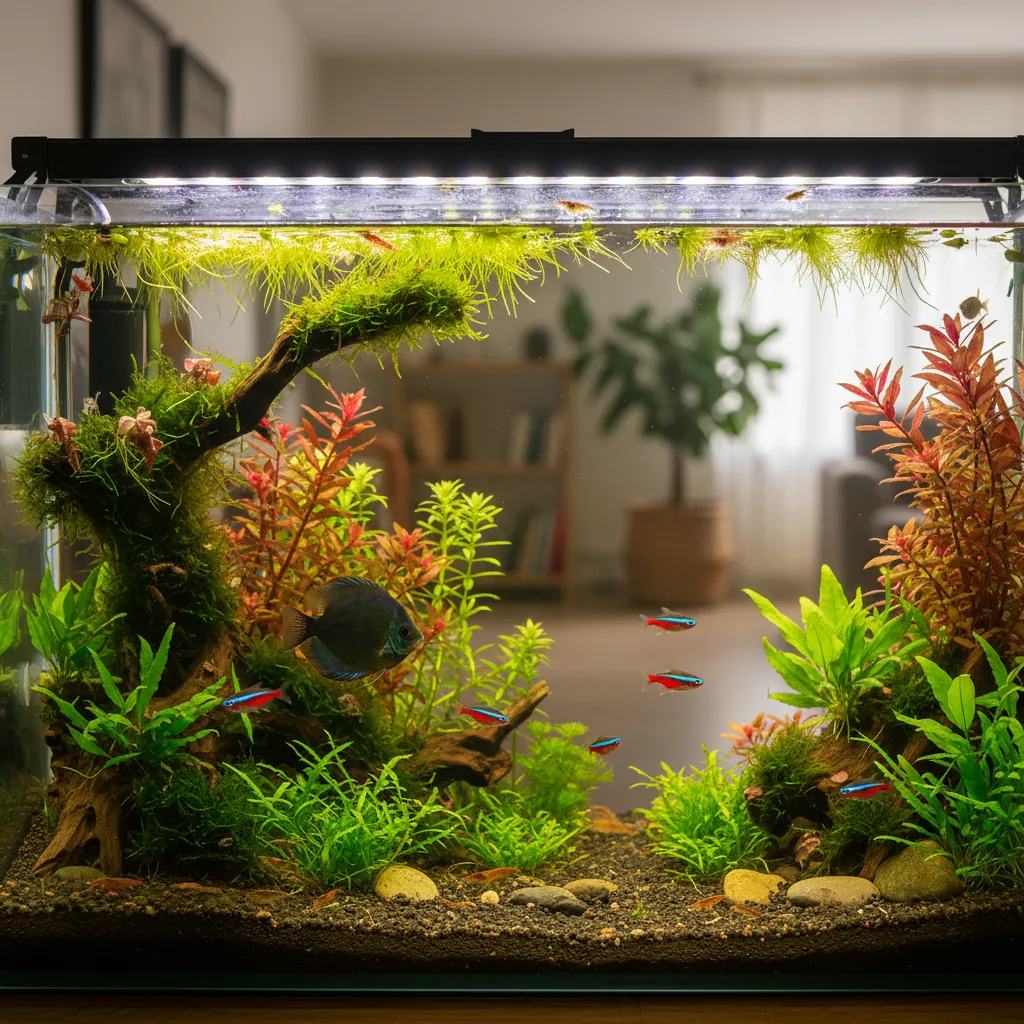
- Driftwood: Releases tannins that lower pH. Malaysian and spider wood are excellent choices.
- Indian Almond Leaves: Slowly release tannins and provide antibacterial benefits.
- Peat Moss: Releases humic acids and tannins. Place in a media bag inside your filter.
- Reverse Osmosis (RO) Water: Mix with tap water to reduce pH without harsh chemicals.
Water Parameters
- Ideal pH: 5.5-7.0 for soft water fish and plants.
- Testing: Use a reliable pH test kit or probe to monitor levels.
- Stability: Avoid sudden pH changes; adjust gradually.
Feeding
Feed your fish a balanced diet appropriate for their species. Avoid overfeeding, as excess food can decay and affect water chemistry.
Tank Mates
Choose fish and invertebrates that thrive in the same pH range. Tetras, discus, and rasboras are excellent choices for lower pH environments.
Common Problems
- Sudden pH Fluctuations: Avoid drastic changes; adjust pH gradually.
- Discolored Water: Tannins from driftwood and leaves can tint water but are harmless.
- Inconsistent pH: Regular water changes and stable setups help maintain consistency.
FAQ
Q: How quickly should I lower pH in my aquarium?
A: Lower pH gradually over several days to avoid stressing fish.
Q: Can I use chemicals to lower pH?
A: Chemicals can cause sudden fluctuations; natural methods are safer and more stable.
Q: How often should I test pH?
A: Test water parameters weekly or after making adjustments.
Q: Will tannins harm my fish?
A: No, tannins are safe and mimic natural environments for many species.
Q: What is the best method to lower pH?
A: Driftwood and peat moss are highly effective and natural options.
Comparison Table: Natural Methods to Lower Aquarium pH
| Method | Effectiveness | Cost | Pros | Cons |
|---|---|---|---|---|
| Driftwood | High | Low-Moderate | Natural, releases tannins | May tint water |
| Peat Moss | High | Low | Long-lasting, natural | Requires replacement over time |
| Indian Almond Leaves | Moderate | Low | Antibacterial, releases tannins | Needs regular replacement |
| Reverse Osmosis | High | High | Precise, removes impurities | Expensive initial setup |
Related guides
- Essential Aquarium Water Parameters for Healthy Fish
- How Often to Change Aquarium Water
- Angelfish Care: A Complete Guide
- Aquarium Filter Types: A Complete Guide
- Best Beginner Aquarium Fish: Hardy & Easy-to-Care-for Species