Java Moss Care: Complete Guide for Aquarium Keepers
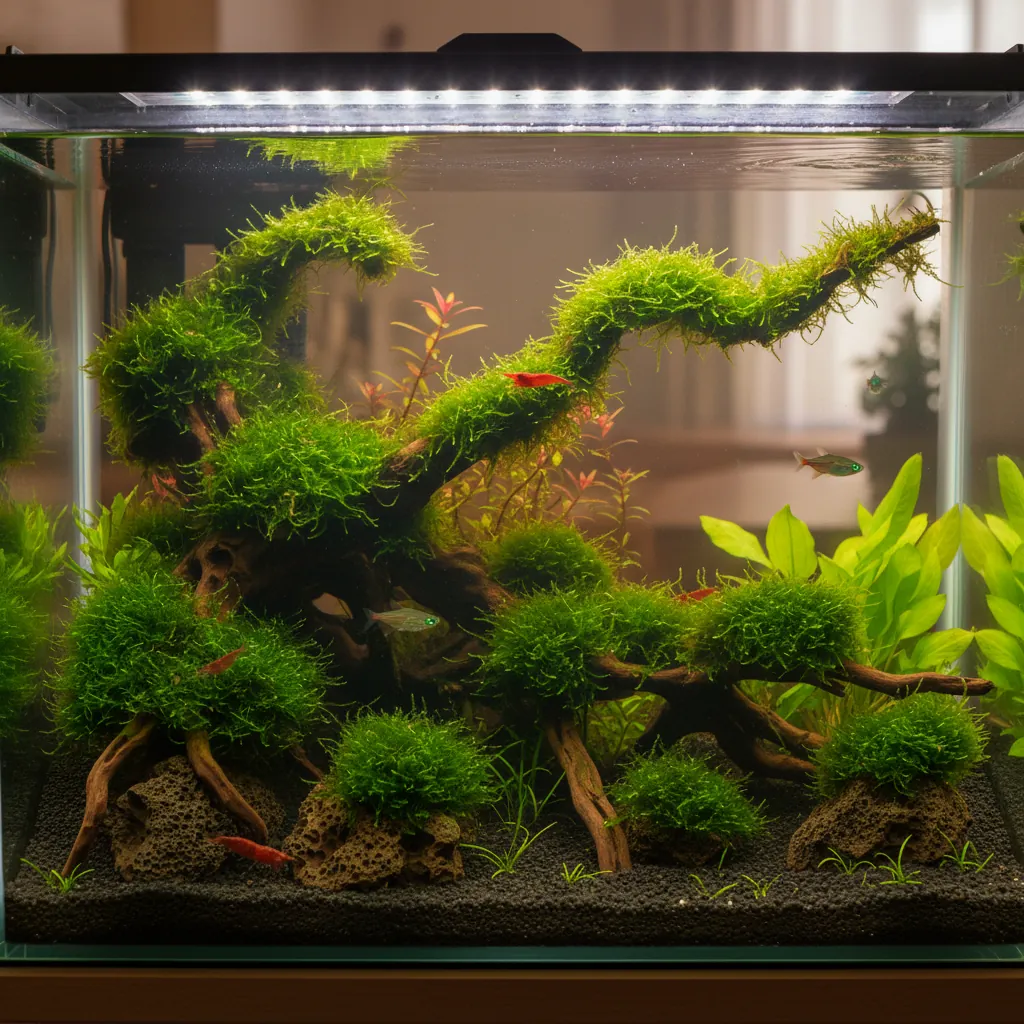
Java Moss Care: Complete Guide for Aquarium Keepers
Contents
- Quick Care Summary
- How to Set Up a Tank for Java Moss?
- What Water Parameters Does Java Moss Need?
- How to Feed and Maintain Java Moss?
- Best Tank Mates for Java Moss?
- Common Java Moss Problems
Java moss (Taxiphyllum barbieri or Vesicularia dubyana) is a versatile, low-maintenance aquarium plant that thrives in various water conditions. It grows as dense mats of tiny olive-green leaves (4mm long) without true roots, anchoring via rhizoids. Ideal for beginners, it tolerates temperatures of 59–86°F (15–30°C), pH 5.0–8.0, and low-to-high light while absorbing nitrates and providing shelter for fry/shrimp.
Quick Care Summary
- Tank Size: 5+ gallons
- Water Temperature: 59–86°F (15–30°C), ideal 70–85°F (21–29°C)
- pH: 5.0–8.0 (prefers slightly acidic)
- Diet: Absorbs nutrients from water; no supplemental feeding needed
- Temperament: Peaceful, non-invasive
- Difficulty: Very easy
How to Set Up a Tank for Java Moss?
- Anchor the moss: Tie it to driftwood, rocks, or mesh using thread/fishing line until rhizoids attach (2–8 weeks).
- Lighting: Low to medium (10–20 PAR). High light risks algae but promotes denser growth.
- Water flow: Moderate flow prevents debris buildup but avoids dislodging moss.
- Substrate: Not required; grows on any surface.
| Attachment Method | Pros | Cons |
|---|---|---|
| Thread | Secure, invisible over time | Temporary (cuts needed post-attachment) |
| Glue (cyanoacrylate) | Instant hold | May discolor moss; harder to reposition |
| Mesh | Even growth for moss walls | Visible grid temporarily |
What Water Parameters Does Java Moss Need?
- Temperature: 59–86°F (15–30°C) – survives extremes but grows fastest at 70–85°F (21–29°C).
- pH: 5.0–8.0 (optimal: 6.0–7.5).
- Hardness: Soft to moderately hard (3–12 dGH).
- CO₂: Not required; growth may accelerate with supplementation but risks algae.
Note: Conflicting data exists on brackish tolerance—some sources claim resilience, while others recommend freshwater only.
How to Feed and Maintain Java Moss?
- Nutrients: Absorbs nitrates/phosphates from water. Liquid fertilizers optional but rarely needed.
- Pruning: Trim dense clumps with scissors to prevent oxygen depletion at night.
- Cleaning: Rinse detached moss under tap water to remove debris/algae.
- Propagation: Cut and scatter trimmings; they’ll regrow.
Best Tank Mates for Java Moss?
- Shrimp (Neocaridina/Caridina): Fry hide in moss; adults graze biofilm.
- Small fish (e.g., bettas, tetras): Moss provides cover.
- Avoid: Large, plant-eating fish (e.g., goldfish, cichlids).
Common Java Moss Problems
- Algae Overgrowth: Reduce light/nutrients; manually remove affected sections.
- Browning: Caused by extreme temps/poor water quality; trim dead parts.
- Detritus Buildup: Increase flow or siphon debris during water changes.
FAQ
Q: How fast does Java moss grow?
A: 1–2 inches (3–5 cm) per month, varying with light/temperature.
Q: Can Java moss grow floating?
A: Yes, but anchoring yields denser growth.
Q: Why is my Java moss turning brown?
A: Usually due to high temps (>86°F/30°C), poor water quality, or extreme pH.
Q: Does Java moss need CO₂?
A: No, but added CO₂ may speed growth (risk algae if unbalanced).
Related guides
- Anubias Care Guide: Everything You Need to Know
- How to Plant Aquarium Plants Effectively
- How to Set Up a Successful Planted Aquarium: A Beginner’s Guide
- Amano Shrimp Care Guide: Algae-Busting Powerhouses
- Angelfish Care: A Complete Guide