Mystery Snail Care Guide
Mystery Snail Care Guide
Contents
- Quick Care Summary
- How to Set Up a Tank for Mystery Snails
- What Do Mystery Snails Eat?
- Ideal Tank Mates for Mystery Snails
- Common Problems with Mystery Snails
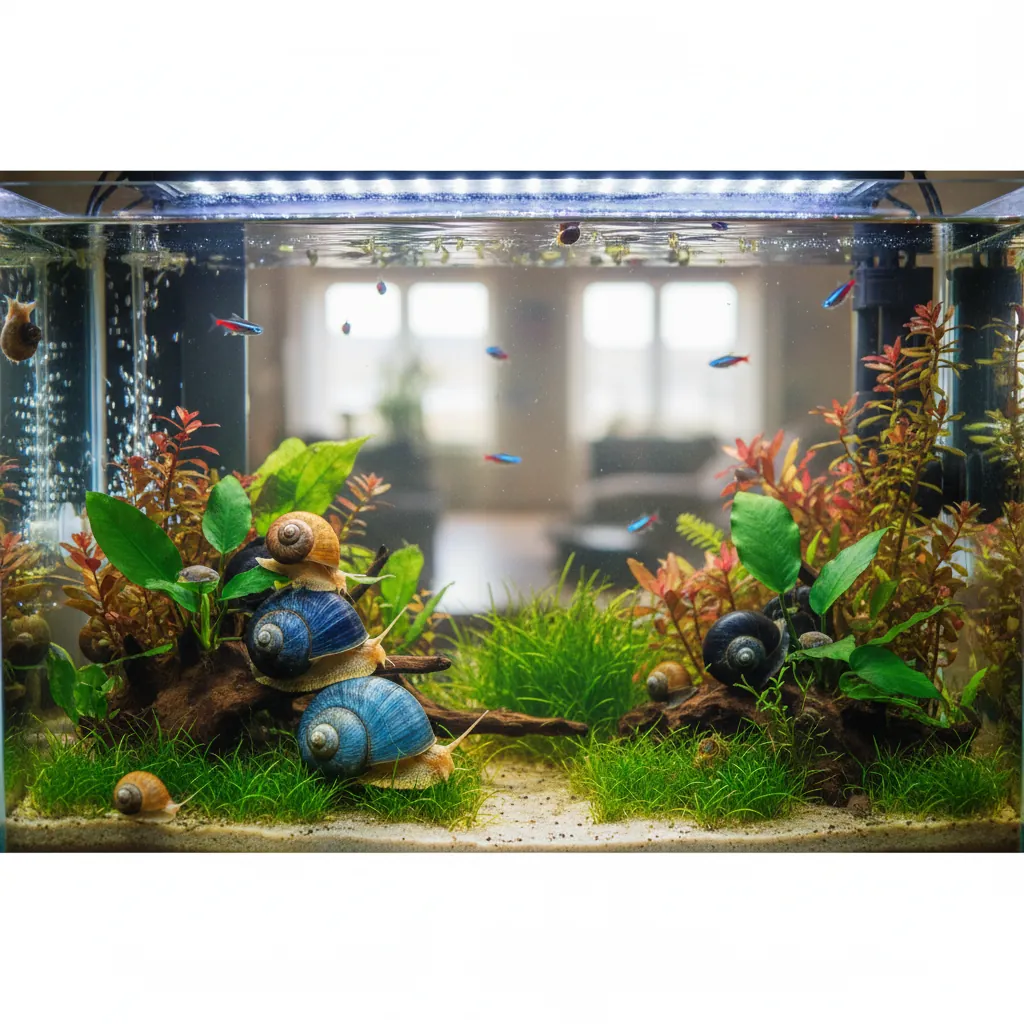
Mystery snails (Pomacea diffusa) are popular freshwater aquarium snails known for their vibrant shells, active behavior, and ability to help keep tanks clean by scavenging leftover food and decaying plant matter. They are easy to care for, making them a great choice for beginners. These snails thrive in stable environments with proper water parameters, a calcium-rich diet, and compatible tank mates.
Mystery snails are peaceful, active scavengers that grow up to 2 inches in diameter. They are native to South America and require hard water with a pH above 7.2 for healthy shell growth. Their diet includes algae, sinking pellets, and blanched vegetables, and they can coexist with most community fish.
Quick Care Summary
- Tank Size: Minimum 5 gallons for one snail; 10 gallons or more is ideal.
- Water Temperature: 68–82°F (20–28°C).
- pH: 7.2–8.0.
- Diet: Algae wafers, blanched vegetables, sinking pellets, and calcium supplements.
- Temperament: Peaceful and compatible with non-aggressive tank mates.
- Difficulty: Easy, suitable for beginners.
How to Set Up a Tank for Mystery Snails
Mystery snails need a clean, stable aquarium with proper filtration and water parameters.
- Tank Size: Start with a 5-gallon tank for one snail, but larger tanks (10 gallons+) are better for maintaining water quality.
- Substrate: Use soft sand or smooth gravel to protect their delicate foot.
- Filtration: Use a gentle filter to avoid strong currents; snails prefer calm water.
- Water Parameters: Maintain a pH of 7.2–8.0, GH above 150 ppm, and temperatures between 68–82°F (20–28°C). Avoid copper-based medications, as they are toxic to snails.
What Do Mystery Snails Eat?
Mystery snails are omnivores and scavengers, eating algae, biofilm, and decaying plant matter.
- Staple Foods: Algae wafers, sinking pellets, and calcium-rich foods like Hikari Crab Cuisine.
- Vegetables: Blanched spinach, kale, zucchini, or cucumber.
- Supplements: Add crushed eggshells, cuttlebone, or calcium supplements to support shell health.
Ideal Tank Mates for Mystery Snails
Mystery snails are peaceful and can coexist with many community fish.
- Compatible Tank Mates: Tetras, guppies, Corydoras catfish, and dwarf shrimp.
- Avoid: Aggressive fish like cichlids, pea puffers, and bettas, which may harm snails.
Common Problems with Mystery Snails
- Shell Damage: Pits or cracks in the shell indicate a lack of calcium in the water or diet. Supplement with calcium-rich foods or mineral additives.
- Poor Water Quality: High ammonia or nitrite levels can be fatal. Maintain a cycled tank and perform regular water changes.
- Escaping: Mystery snails can crawl out of the tank; ensure the lid is tightly fitted.
FAQ
How long do mystery snails live?
Mystery snails typically live 1–2 years, depending on water temperature and care.
Do mystery snails eat plants?
They generally avoid healthy plants but may eat decaying leaves or small floating plants like duckweed.
How can I tell if my snail is male or female?
Sexing mystery snails is challenging. Females have two holes near the shoulder, while males have one hole. Observing mating behavior (male on top) is the easiest way to determine gender.
Why is my snail floating?
Mystery snails store air in their shells to float but release it to sink. Floating can also indicate stress or poor water quality.
How do I stop mystery snails from breeding?
Keep only one snail or lower the water level to prevent egg-laying above the waterline.
Related guides
- Amano Shrimp Care Guide: Algae-Busting Powerhouses
- Cherry Shrimp Care Guide: Tank Setup, Feeding, and Breeding
- Nerite Snail Care Guide: Tank Setup, Diet, and Breeding Facts
- Angelfish Care: A Complete Guide
- Anubias Care Guide: Everything You Need to Know