Complete Otocinclus Catfish Care Guide: Tank Setup, Diet, and Health
Complete Otocinclus Catfish Care Guide: Tank Setup, Diet, and Health
Contents
- Quick Care Summary
- Are Otocinclus Right for Your Tank?
- Tank Setup
- Water Parameters
- Feeding Otocinclus
- Tank Mates
- Common Problems
Otocinclus catfish (or “Otos”) are small, peaceful algae-eaters native to South America, ideal for planted aquariums. They require stable water conditions (72-82°F, pH 6-7.5), groups of 6+, and abundant algae/biofilm. While often marketed as beginner fish, their sensitivity to starvation makes them intermediate-level. Wild-caught specimens commonly die within weeks due to prior malnutrition; success hinges on a mature tank with supplemental feeding.
Quick Care Summary
- Tank Size: 10+ gallons (20+ gallons ideal for groups)
- Water Temperature: 72-82°F (22-28°C)
- pH: 6.0-7.5
- Diet: Primarily algae/biofilm; supplemented with wafers, blanched veggies
- Temperament: Peaceful, social schooling fish
- Difficulty: Intermediate (due to feeding challenges)
Are Otocinclus Right for Your Tank?
Pros:
- Excellent algae grazers (soft green algae, diatoms)
- Peaceful with most community fish
- Active daytime behavior in groups
Cons:
- Wild-caught specimens often starved before sale
- Require established algae/biofilm sources
- Prone to stress in new/unplanted tanks
Tank Setup
Minimum Requirements
| Factor | Specification |
|---|---|
| Tank Size | 10 gal (6 fish), 20+ gal (optimal) |
| Filtration | 4x tank volume GPH (e.g., 40 GPH for 10 gal) |
| Substrate | Sand or rounded gravel |
| Plants | Slow-growing (Anubias, Java Fern, Cryptocorynes) |
| Hardscape | Pre-soaked driftwood, smooth stones |
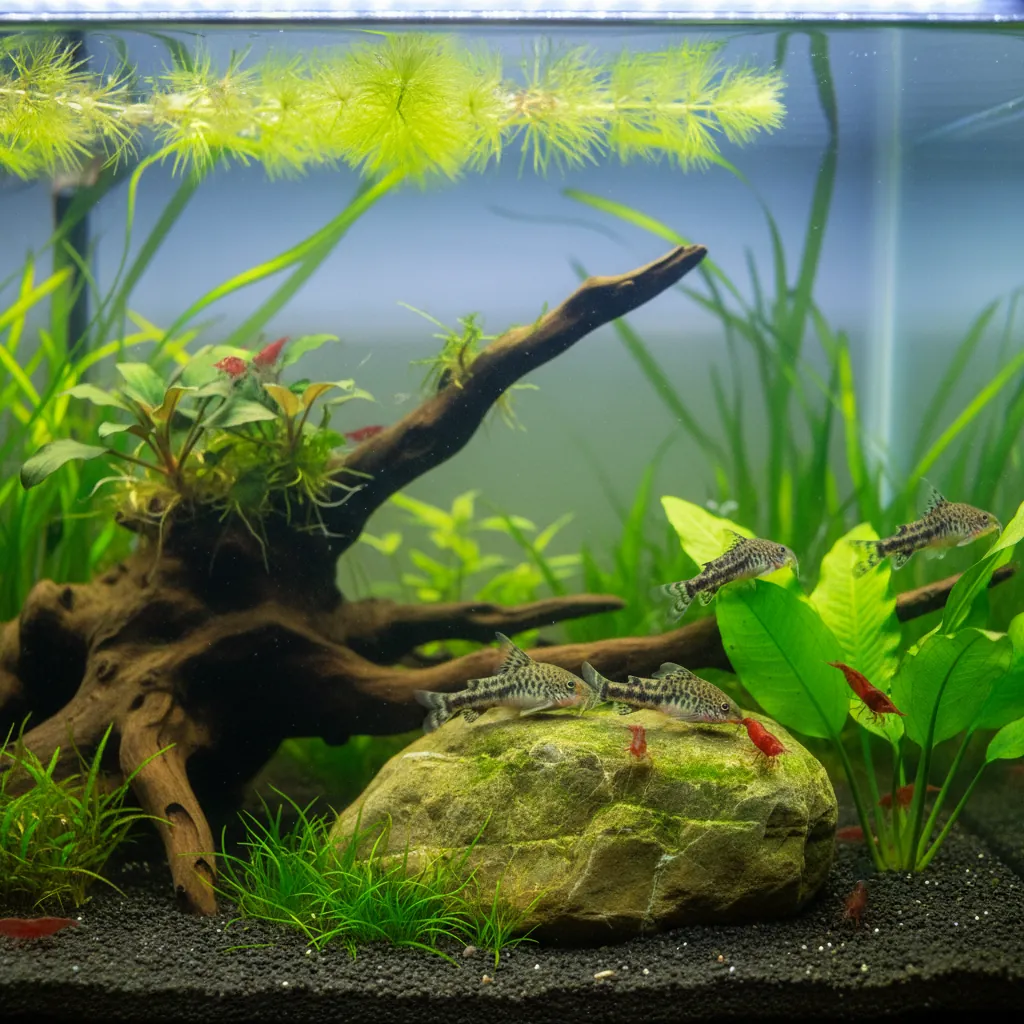
Key Tip: Wild Otocinclus school with Corydoras for protection; mimic this with Cory tank mates.
Water Parameters
- Temperature: 72-82°F (22-28°C) - Sources conflict slightly: [Source 2] suggests 72-82°F, while [Source 3] recommends 73-80°F.
- pH: 6.0-7.5 (stable; avoid fluctuations)
- Hardness: 6-15 dGH
- Nitrates: <20 ppm
- Ammonia/Nitrites: 0 ppm
Warning: Copper-based medications are lethal. Use shrimp-safe treatments.
Feeding Otocinclus
Primary Diet
- Algae/Biofilm: Grow on driftwood, plants, tank walls
- Supplemental Foods:
- Algae wafers (pre-soaked to sink)
- Blanched zucchini, spinach, cucumber
- Repashy Soilent Green gel
Critical Tip: Starved Otos may refuse non-algae foods. Float a lettuce leaf overnight to test appetite.
Tank Mates
Recommended:
- Small tetras (Neon, Ember)
- Rasboras
- Corydoras catfish
- Dwarf shrimp
Avoid:
- Large/aggressive fish (Cichlids, Goldfish)
- Fast eaters that outcompete for food
Common Problems
- Sudden Deaths: Usually from prior starvation or poor acclimation.
- Weight Loss: Feed algae wafers daily if tank lacks algae.
- Stress: Keep in groups; provide hiding spots.
Data Point: 80% of Oto deaths occur in the first month ([Source 3]).
FAQ
Q: Can Otocinclus survive on tank algae alone?
A: Only in heavily stocked algae tanks. Most need supplemental feeding.
Q: How many Otos should I keep?
A: Minimum 6, but adjust based on tank size/algae growth.
Q: Why do my Otos keep dying?
A: Common causes: starvation (most frequent), copper exposure, or solitary stress.
Q: Can they eat green spot algae?
A: No—they prefer soft green algae and diatoms ([Source 4]).
Q: Are they jumpers?
A: Rarely, but a lid is recommended during acclimation ([Source 3]).
## Related guides

- [Angelfish Care: A Complete Guide](https://aquabasics.xyz/guides/angelfish-care)
- [Betta Fish Care Guide: Essential Tips for a Healthy Life](https://aquabasics.xyz/guides/betta-fish-care)
- [Bristlenose Pleco Care Guide](https://aquabasics.xyz/guides/bristlenose-pleco-care)
- [Cardinal Tetra Care Guide](https://aquabasics.xyz/guides/cardinal-tetra-care)
- [Clown Loach Care Guide: Habitat, Diet, and Tank Setup](https://aquabasics.xyz/guides/clown-loach-care)

## Sources

- [Ultimate Care Guide for Otocinclus Catfish in Aquarium – Splashy Fish](https://splashyfishstore.com/blogs/fish-keeping-101/ultimate-care-guide-for-otocinclus-catfish-in-aquarium)
- [Otocinclus Care Sheet: The Definitive Guide to Healthy Otos](https://www.scotcat.com/articles/article127.htm)