Shrimp Tank Setup: A Complete Guide
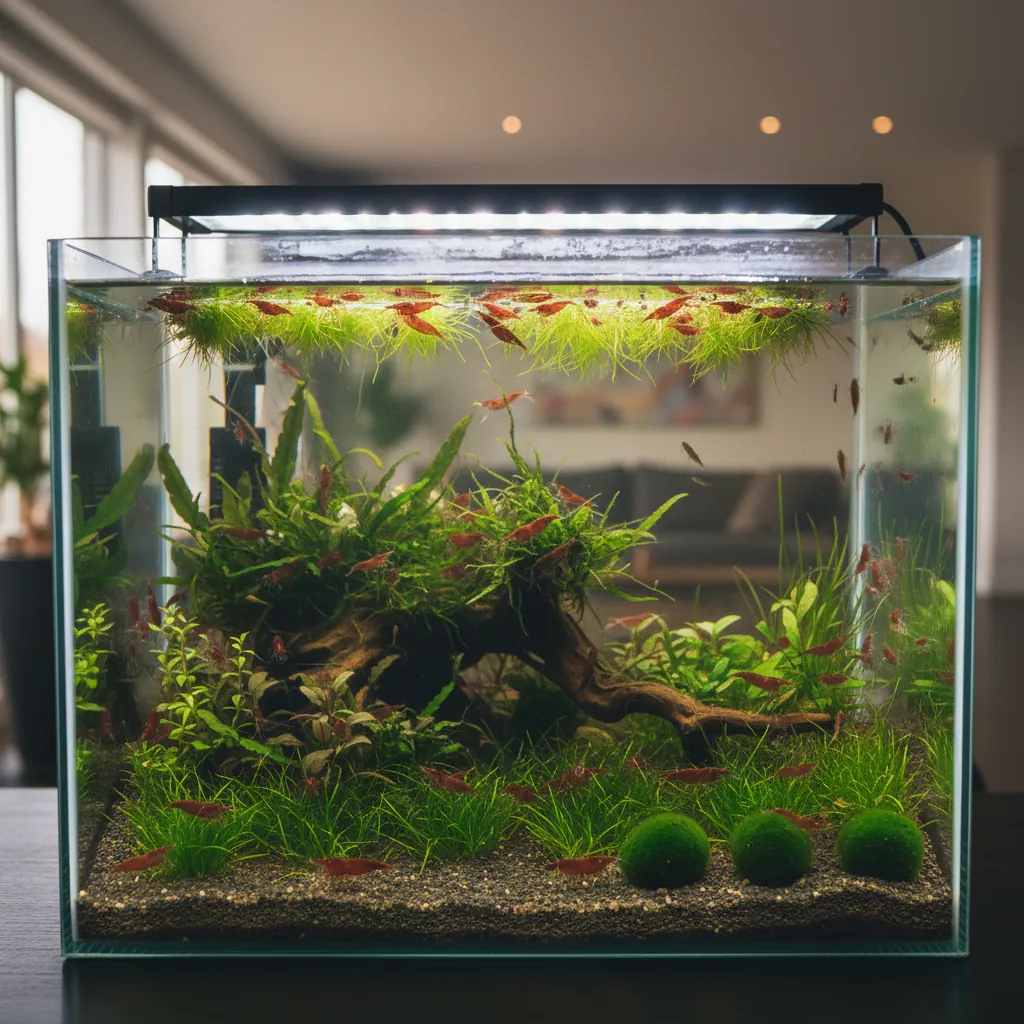
Shrimp Tank Setup: A Complete Guide
Contents
- Quick Care Summary
- How Do I Set Up a Shrimp Tank?
- What Are the Ideal Water Parameters for Shrimp?
- What Do Shrimp Eat?
- Can Shrimp Live with Other Tank Mates?
- What Are Common Shrimp Tank Problems?
Setting up a shrimp tank requires patience and attention to detail. Shrimp thrive in mature aquariums with stable water parameters, plenty of algae, and minimal feeding. A well-established tank (2-6 months old) with a sponge filter, live plants, and careful maintenance is ideal. Avoid introducing shrimp to new tanks or housing them with aggressive fish, as molting shrimp are vulnerable.
Quick Care Summary
- Tank Size: 5+ gallons for stability and space.
- Water Temperature: 68-82°F (20-28°C), depending on species.
- pH: 6.5-8.5; shrimp adapt to a wide range.
- Diet: Primarily algae; supplement with small amounts of sinking pellets or vegetables.
- Temperament: Peaceful and social.
- Difficulty: Moderate; best for intermediate aquarists.
How Do I Set Up a Shrimp Tank?
Tank Requirements
- Tank Size: A minimum of 5 gallons is recommended for stability and shrimp health. Smaller tanks (1.5+ gallons) can work but are harder to maintain.
- Substrate: Use fine gravel or shrimp-specific sand. Optionally, add crushed coral to boost calcium for molting.
- Plants: Include live plants like Java moss, Anubias, or moss balls to provide hiding spots and food sources.
- Filtration: Use sponge filters or low-flow options to prevent shrimp from being sucked in.
Cycling the Tank
- Maturation: Shrimp require a mature tank (2-6 months old) with established algae growth and a cycled filter. Avoid adding shrimp to new setups.
- Water Quality: Test ammonia (0 ppm), nitrite (0 ppm), nitrate (<40 ppm), and pH (6.5-8.5).
Equipment
- Heater: Use a small heater if needed, especially for tropical species.
- Lighting: Keep lights on for 8-14 hours daily to encourage algae growth.
- Decoration: Add rocks, driftwood, and hiding spots for shrimp to explore and molt safely.
What Are the Ideal Water Parameters for Shrimp?
- Temperature: 68-82°F (20-28°C), depending on species.
- pH: 6.5-8.5; shrimp adapt to varying pH levels but thrive in stable conditions.
- Hardness: dGH 3-15; calcium and magnesium are essential for molting.
- Nitrate: Keep below 40 ppm; shrimp are sensitive to high levels.
What Do Shrimp Eat?
- Primary Diet: Green algae and biofilm naturally growing in the tank.
- Supplemental Food: Small pieces of blanched vegetables (e.g., zucchini) or sinking pellets once a week.
- Avoid Overfeeding: Excess food can pollute water; shrimp have low metabolisms and eat very little.
Can Shrimp Live with Other Tank Mates?
| Tank Mate | Compatibility | Notes |
|---|---|---|
| Small fish (e.g., neon tetras) | Yes | Avoid fish that may eat shrimp, especially during molting. |
| Snails (e.g., Nerites) | Yes | Good algae eaters and peaceful companions. |
| Crabs | No | Crabs may attack shrimp. |
| Larger fish (e.g., cichlids) | No | Predatory fish will eat shrimp. |
What Are Common Shrimp Tank Problems?
Molting Issues
- Cause: Insufficient calcium or magnesium in water.
- Solution: Maintain dGH 3-15; add crushed coral or mineral supplements.
Water Quality Problems
- Cause: Overfeeding or improper tank maintenance.
- Solution: Perform regular water changes and avoid excess food.
Shrimp Deaths
- Cause: New tank syndrome or introduction to uncycled aquarium.
- Solution: Only add shrimp to mature tanks (2-6 months old).
FAQ
How long does it take to cycle a shrimp tank?
A shrimp tank needs at least 2 months to mature. Ideally, wait 6 months to ensure stable algae growth and water conditions.
Can I use tap water for shrimp?
Yes, but treat it with a dechlorinator and test for heavy metals. Shrimp require clean, bacteria-free water.
Do shrimp need a heater?
It depends on the species. Tropical shrimp (e.g., Neocaridina) need a heater, while others (e.g., Cherry shrimp) thrive at room temperature.
How many shrimp can I keep in a 5-gallon tank?
Start with 10-15 shrimp; they will breed and increase in number over time.
Can shrimp live in a bowl?
Yes, shrimp can live in bowls or jars (minimum 1.5 gallons), but these setups require heavy planting and careful maintenance.
Related guides
- Amano Shrimp Care Guide: Algae-Busting Powerhouses
- Assassin Snail Care Guide: Everything You Need to Know
- Cherry Shrimp Care Guide: Tank Setup, Feeding, and Breeding
- Mystery Snail Care Guide
- Nerite Snail Care Guide: Tank Setup, Diet, and Breeding Facts