Vallisneria Care Guide: Growing and Maintaining Eelgrass in Your Aquarium
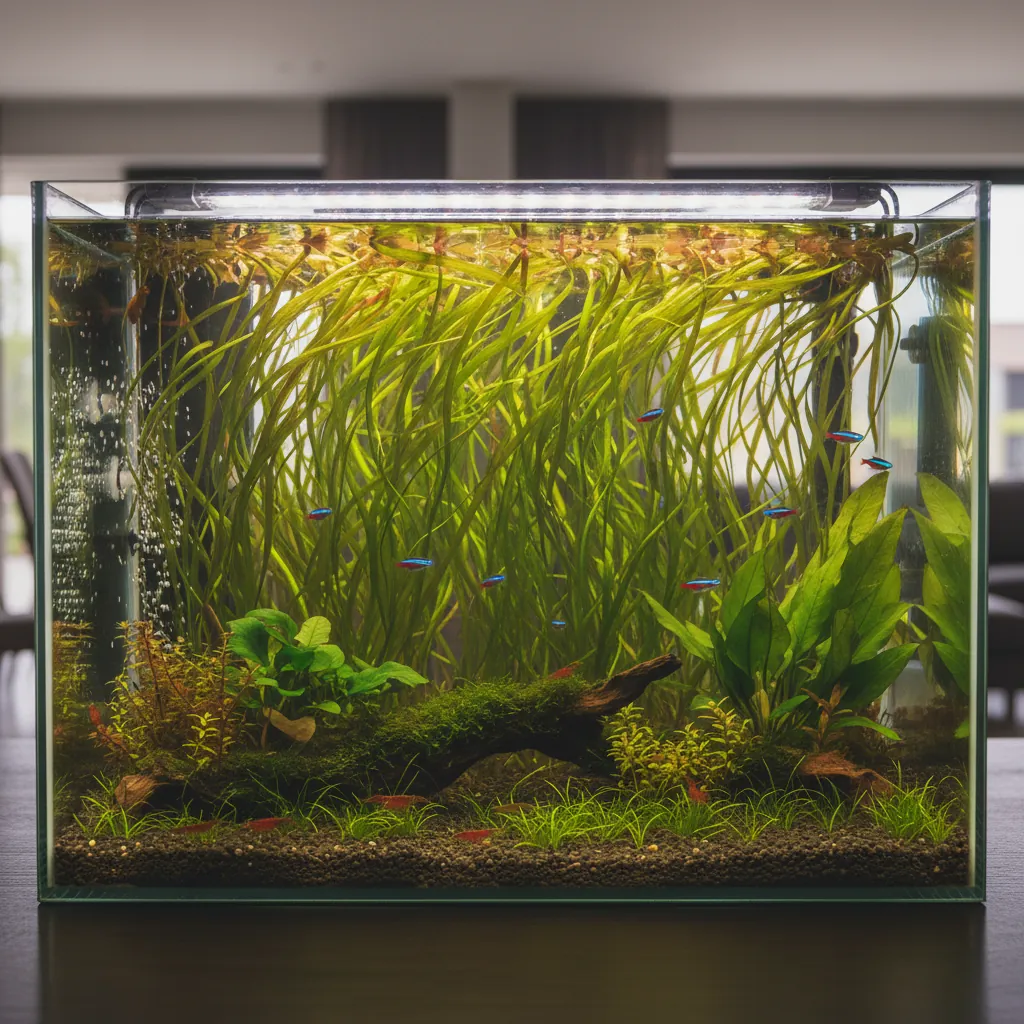
Vallisneria Care Guide: Growing and Maintaining Eelgrass in Your Aquarium
Contents
- Quick Care Summary
- How to Set Up a Tank for Vallisneria?
- What Water Parameters Does Vallisneria Need?
- How Should I Feed Vallisneria?
- What Tank Mates Are Suitable for Vallisneria?
- Common Problems with Vallisneria
- Frequently Asked Questions
Vallisneria, commonly known as eelgrass or tape grass, is a popular aquarium plant due to its adaptability, fast growth, and aesthetic appeal. It thrives in a range of water conditions, tolerates moderate lighting, and spreads easily through runners, making it ideal for beginners and experienced aquarists alike.
Quick Care Summary
- Tank Size: Suitable for tanks of all sizes, but larger species like Vallisneria gigantea require big aquariums.
- Water Temperature: 18-28°C (64-82°F).
- pH: Neutral to alkaline (6.5-9).
- Diet: Absorbs nutrients from the water column and substrate; benefits from root tabs or iron-rich fertilizers.
- Temperament: Easygoing and adaptable.
- Difficulty: Beginner-friendly.
How to Set Up a Tank for Vallisneria?
Vallisneria thrives in a variety of setups but prefers a nutrient-rich substrate or sand covered with a layer of gravel. It can grow in plain gravel if supplemented with iron-rich fertilizers. Vallisneria does not require bright lighting but grows faster and more compact under moderate to bright light. Avoid burying the crown (where leaves meet roots) to prevent rot.
What Water Parameters Does Vallisneria Need?
Vallisneria is highly adaptable but prefers:
- pH: Neutral to alkaline (6.5-9).
- Hardness: Soft to very hard water (8-12°GH).
- Temperature: 18-28°C (64-82°F). It can tolerate cooler or warmer conditions but grows best within this range.
- CO2: Not required but can benefit from low levels (0-20 mg/l).
How Should I Feed Vallisneria?
Vallisneria absorbs nutrients from the water and substrate. While it grows in plain gravel, adding root tabs or liquid fertilizers enhances its growth. Avoid over-fertilizing, which can lead to algae issues.
What Tank Mates Are Suitable for Vallisneria?
Vallisneria is compatible with most freshwater fish and invertebrates. It works well in cichlid tanks (African varieties prefer hard water) and community aquariums. Avoid fish that are known to uproot plants or graze extensively on vegetation.
Common Problems with Vallisneria
| Symptom | Cause | Fix |
|---|---|---|
| Leaf tips browning or melting | Adjustment after planting or unsuitable water (very soft or acidic) | Trim decayed leaves, stabilize water parameters, and ensure the crown isn’t buried. |
| Pale or yellow leaves | Insufficient light or nutrients | Increase lighting and add root tabs or liquid fertilizers. |
| Crown rot | Crown buried in substrate | Replant with the crown above the substrate. |
Frequently Asked Questions
Why are my Vallisneria leaves melting after planting?
Melting is common as Vallisneria adjusts to new conditions. Trim decayed leaves, maintain stable water parameters, and avoid disturbing the plant during this transition.
How do I prevent Vallisneria from overtaking my tank?
Vallisneria spreads rapidly via runners. Regularly remove and replant or discard unwanted daughter plants to control its growth.
Can Vallisneria grow in brackish water?
Yes, Vallisneria tolerates brackish water with a specific gravity of up to 1.003 (about 10% of seawater salinity).
Is Vallisneria toxic to fish or pets?
No, Vallisneria is non-toxic and safe for fish, invertebrates, and pets.
Related guides
- Amazon Sword Care Guide: How to Grow Echinodorus in Aquariums
- Anubias Care Guide: Everything You Need to Know
- Best Aquarium Plants for Beginners: Hardy, Low-Light Choices
- Cryptocoryne Care: A Complete Guide to Thriving Aquarium Plants
- Dwarf Hairgrass Care: A Complete Guide