Apistogramma Care Guide
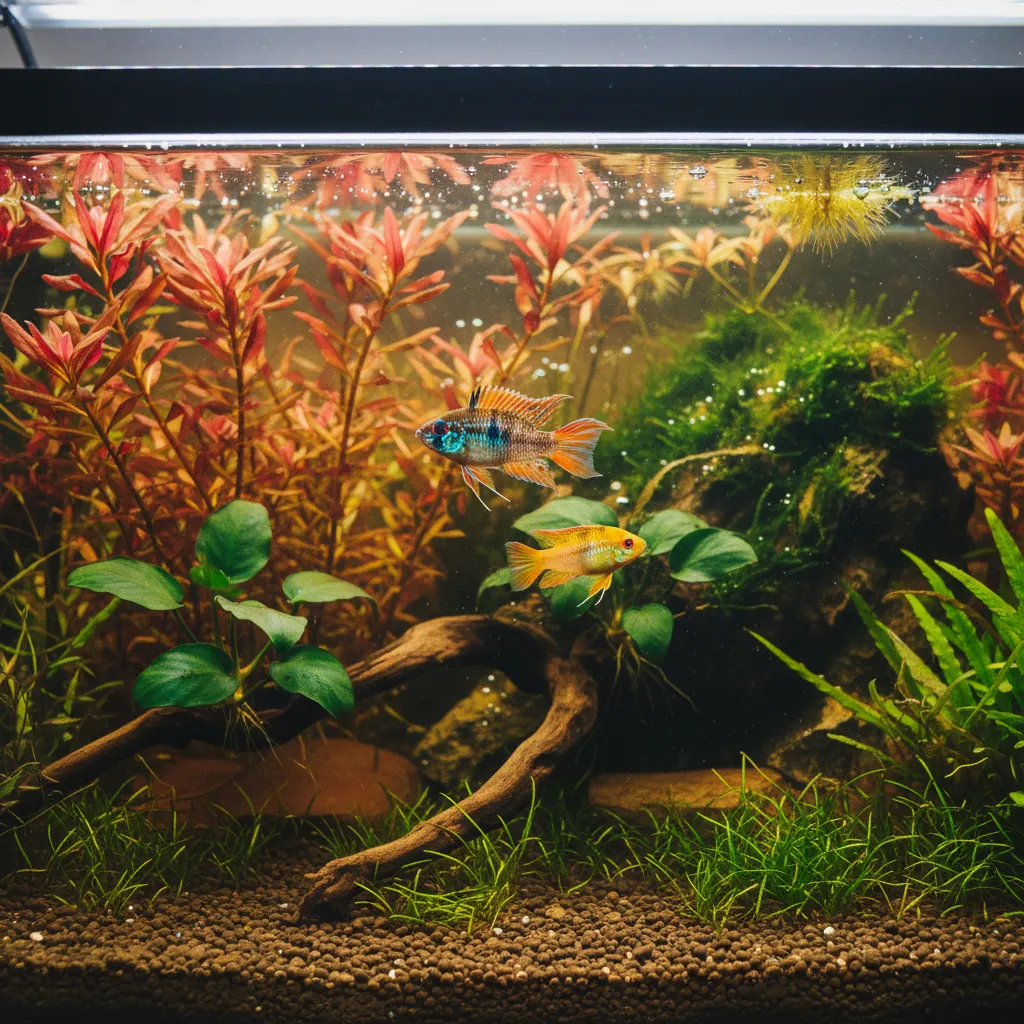
Apistogramma Care Guide
Contents
- Quick Care Summary
- How to Set Up an Apistogramma Tank?
- What Are the Ideal Water Parameters for Apistogramma?
- What Should You Feed Apistogramma?
- What Are the Best Tank Mates for Apistogramma?
- What Are Common Problems When Keeping Apistogramma?
- How Do You Breed Apistogramma?
Apistogramma, often called “apistos,” are small, colorful dwarf cichlids native to South America. They are popular among aquarium enthusiasts for their vibrant colors and fascinating behaviors. However, they require specific water conditions, tank setups, and careful attention to thrive. This guide covers everything you need to know about Apistogramma care, from tank setup to feeding and breeding.
Quick Care Summary
- Tank Size: Minimum 20 gallons for a pair, larger for groups or community setups.
- Water Temperature: 72-86°F (22-30°C), depending on species.
- pH: 4.0-7.5 (species-specific; softer, acidic water preferred).
- Diet: Live and frozen foods like brine shrimp, daphnia, and mosquito larvae; supplemented with detritus and algae tablets.
- Temperament: Shy but territorial, especially during breeding.
- Difficulty: Moderate to advanced; not ideal for beginners.
How to Set Up an Apistogramma Tank?
Apistogramma thrive in naturalistic setups that mimic their native habitats. Use fine sand as the substrate, as these fish sift through it for food. Include driftwood, rocks, and caves to create hiding spots and territories. Adding botanicals like dried leaves (e.g., Indian almond leaves) releases tannins, simulating blackwater conditions. Floating plants like water sprite or duckweed provide shade and reduce stress.
What Are the Ideal Water Parameters for Apistogramma?
| Parameter | Range |
|---|---|
| Temperature | 72-86°F (22-30°C) |
| pH | 4.0-7.5 (species-specific) |
| Hardness (GH) | 0-12 dGH (softer water preferred) |
| Conductivity | 17-154 µS/cm (soft to neutral) |
Always research the specific species, as some, like Apistogramma agassizii, prefer acidic blackwater, while others, like Apistogramma borellii, tolerate slightly alkaline conditions.
What Should You Feed Apistogramma?
Apistogramma are detritivores in the wild, feeding on microorganisms in leaf litter and detritus. In captivity, provide a varied diet of live or frozen foods such as brine shrimp, daphnia, and bloodworms. Supplement with algae tablets and small sinking pellets. Avoid overfeeding, as uneaten food can degrade water quality.
What Are the Best Tank Mates for Apistogramma?
Apistogramma are best kept with peaceful, upper-level swimmers that won’t compete for territory. Suitable tank mates include:
- Small tetras (e.g., neon tetras, cardinal tetras)
- Pencilfish (Nannostomus species)
- Rasboras
- Marbled hatchetfish
Avoid bottom-dwellers like corydoras or larger cichlids, as Apistogramma can become aggressive during breeding.
What Are Common Problems When Keeping Apistogramma?
- Aggression During Breeding: Apistogramma become territorial when spawning. Provide ample space and hiding spots to reduce conflicts.
- Water Quality Issues: These fish are sensitive to poor water conditions. Regular water changes and efficient filtration are essential.
- Stunted Growth: Captive-bred Apistogramma may develop deformities if not cared for properly. Choose healthy, active fish from reputable sources.
How Do You Breed Apistogramma?
Breeding Apistogramma requires soft, acidic water and a calm environment. Females turn bright yellow when ready to spawn and lay eggs in caves or crevices. After fertilization, the male is often evicted, and the female tends to the eggs. Fry hatch in 5-10 days and can be fed infusoria or baby brine shrimp.
FAQ
Can Apistogramma live in a community tank?
Yes, but carefully choose tank mates. Avoid bottom-dwellers and overly active fish that may stress them.
What size tank do Apistogramma need?
A minimum of 20 gallons is recommended for a pair. Larger tanks are needed for groups or mixed-species setups.
Can Apistogramma live in hard water?
Most Apistogramma prefer soft, acidic water. Some species, like Apistogramma borellii, tolerate slightly harder, neutral water.
How can I tell if my Apistogramma is healthy?
Healthy Apistogramma are active, have vibrant colors, a straight spine, and a good appetite.
Related guides
- Angelfish Care: A Complete Guide
- Betta Fish Care Guide: Essential Tips for a Healthy Life
- Bolivian Ram Care Guide
- Bristlenose Pleco Care Guide
- Cardinal Tetra Care Guide