Aquarium Filter Types: A Complete Guide
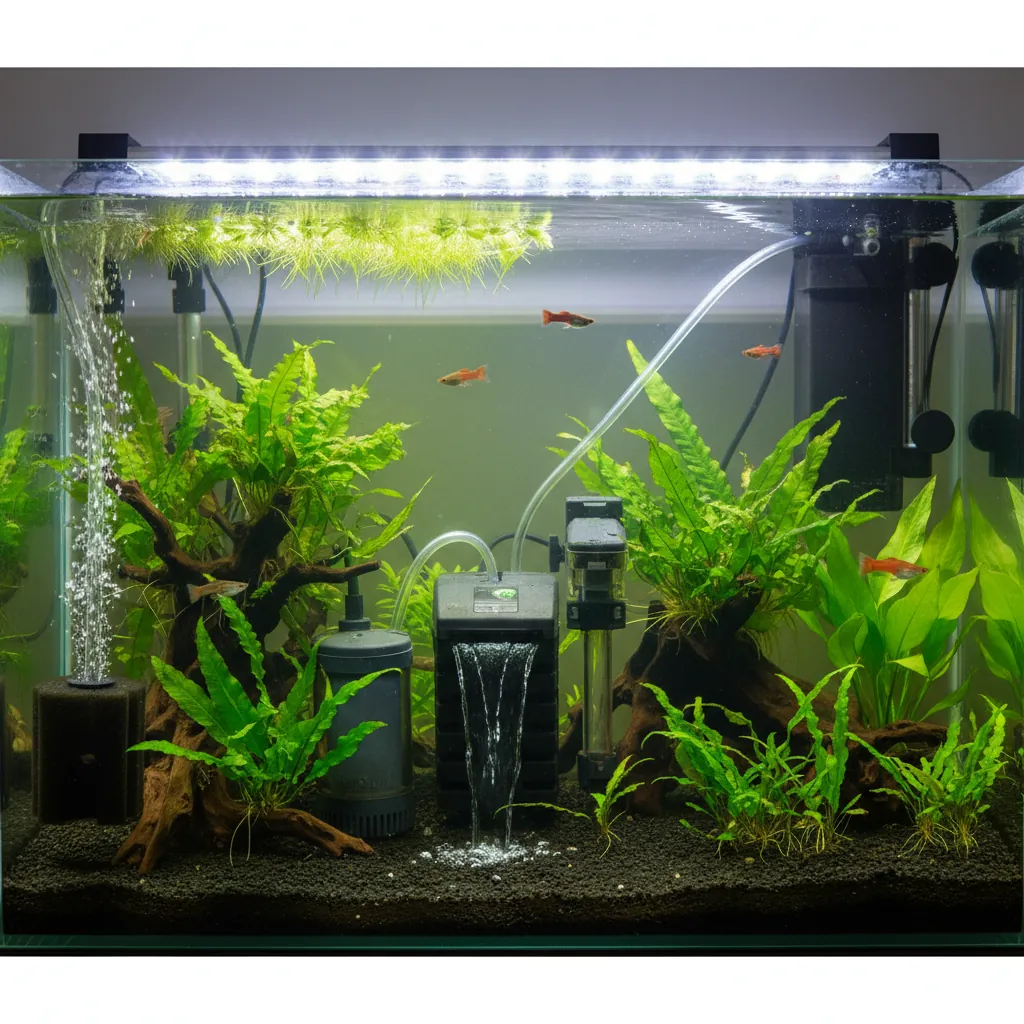
Aquarium Filter Types: A Complete Guide
Contents
- Quick Care Summary
- Why Does My Aquarium Need a Filter?
- What Are the Types of Aquarium Filtration?
- What Are the Different Types of Aquarium Filters?
- How Do I Maintain My Aquarium Filter?
Aquarium filters are essential for maintaining a healthy ecosystem by removing debris, supporting beneficial bacteria, and ensuring proper water flow. The three main types are sponge filters, hang-on-back (HOB) filters, and canister filters, each suited for different tank sizes, setups, and maintenance levels. Understanding their functions helps you choose the right filter for your aquarium.
Quick Care Summary
- Tank Size: Varies by filter type (sponge filters for small tanks, canister filters for larger setups).
- Water Temperature: Adjusted based on fish species, filters do not directly control temperature.
- pH: Filters indirectly maintain pH by reducing waste buildup.
- Diet: Filters do not affect feeding but support water quality for healthy fish.
- Temperament: Filters provide calm water flow or strong currents depending on design.
- Difficulty: Sponge filters are beginner-friendly, while canister filters require advanced maintenance.
Why Does My Aquarium Need a Filter?
Filters prevent stagnant water, remove waste, and support beneficial bacteria, which are vital for the nitrogen cycle. Without a filter, ammonia and nitrite levels can rise, harming fish and plants. Filters also improve water clarity and oxygenation, ensuring a healthy aquatic environment.
What Are the Types of Aquarium Filtration?
Aquarium filtration includes mechanical, biological, and chemical processes:
- Mechanical Filtration: Traps debris like fish waste and uneaten food using foam or floss.
- Biological Filtration: Uses beneficial bacteria to convert toxic ammonia into less harmful nitrate.
- Chemical Filtration: Removes dissolved impurities through activated carbon or specialized resins.
What Are the Different Types of Aquarium Filters?
1. Sponge Filters
- Function: Provides mechanical and biological filtration.
- Pros: Affordable, easy to maintain, gentle water flow ideal for small tanks or fry.
- Cons: Less effective for larger tanks, visible in the tank.
- Best For: Breeding tanks, nano tanks, and shrimp tanks.
2. Hang-on-Back (HOB) Filters
- Function: Combines mechanical, biological, and chemical filtration.
- Pros: Easy to install and clean, suitable for most tank sizes.
- Cons: May create strong water flow, less efficient for very large tanks.
- Best For: Beginner aquarists and medium-sized tanks.
3. Canister Filters
- Function: Offers advanced mechanical, biological, and chemical filtration.
- Pros: High capacity, customizable media, ideal for large tanks.
- Cons: Expensive, complex maintenance, requires space outside the tank.
- Best For: Large aquariums and advanced hobbyists.
Comparison Table: Aquarium Filter Types
| Feature | Sponge Filter | Hang-on-Back Filter | Canister Filter |
|---|---|---|---|
| Cost | Low | Moderate | High |
| Maintenance | Easy | Easy | Advanced |
| Tank Size | Small | Small to Medium | Large |
| Filtration Types | Mechanical, Biological | Mechanical, Biological, Chemical | Mechanical, Biological, Chemical |
| Pros | Affordable, gentle flow | Easy to clean, versatile | High capacity, customizable |
| Cons | Visible in tank, limited capacity | Strong flow, less efficient for large tanks | Expensive, complex setup |
How Do I Maintain My Aquarium Filter?
- Mechanical Filters: Clean regularly to remove debris and prevent clogging.
- Chemical Filters: Replace media every 4-6 weeks to ensure effectiveness.
- Biological Filters: Avoid over-cleaning to preserve beneficial bacteria.
FAQ
1. Can I use multiple filters in one tank?
Yes, combining filters (e.g., sponge and HOB) can enhance filtration efficiency.
2. How often should I clean my aquarium filter?
Mechanical filters should be cleaned weekly, while chemical media should be replaced monthly. Biological filters require minimal cleaning to preserve bacteria.
3. Do I need a filter for a small tank?
Yes, even small tanks benefit from filtration to maintain water quality and oxygenation.
4. What filter is best for beginners?
Hang-on-back filters are ideal for beginners due to their ease of use and versatility.
Related guides
- Angelfish Care: A Complete Guide
- Essential Aquarium Water Parameters for Healthy Fish
- Best Beginner Aquarium Fish: Hardy & Easy-to-Care-for Species
- Betta Fish Care Guide: Essential Tips for a Healthy Life
- Cherry Shrimp Care Guide: Tank Setup, Feeding, and Breeding