Discus Fish Care: A Complete Guide to Keeping the King of the Aquarium
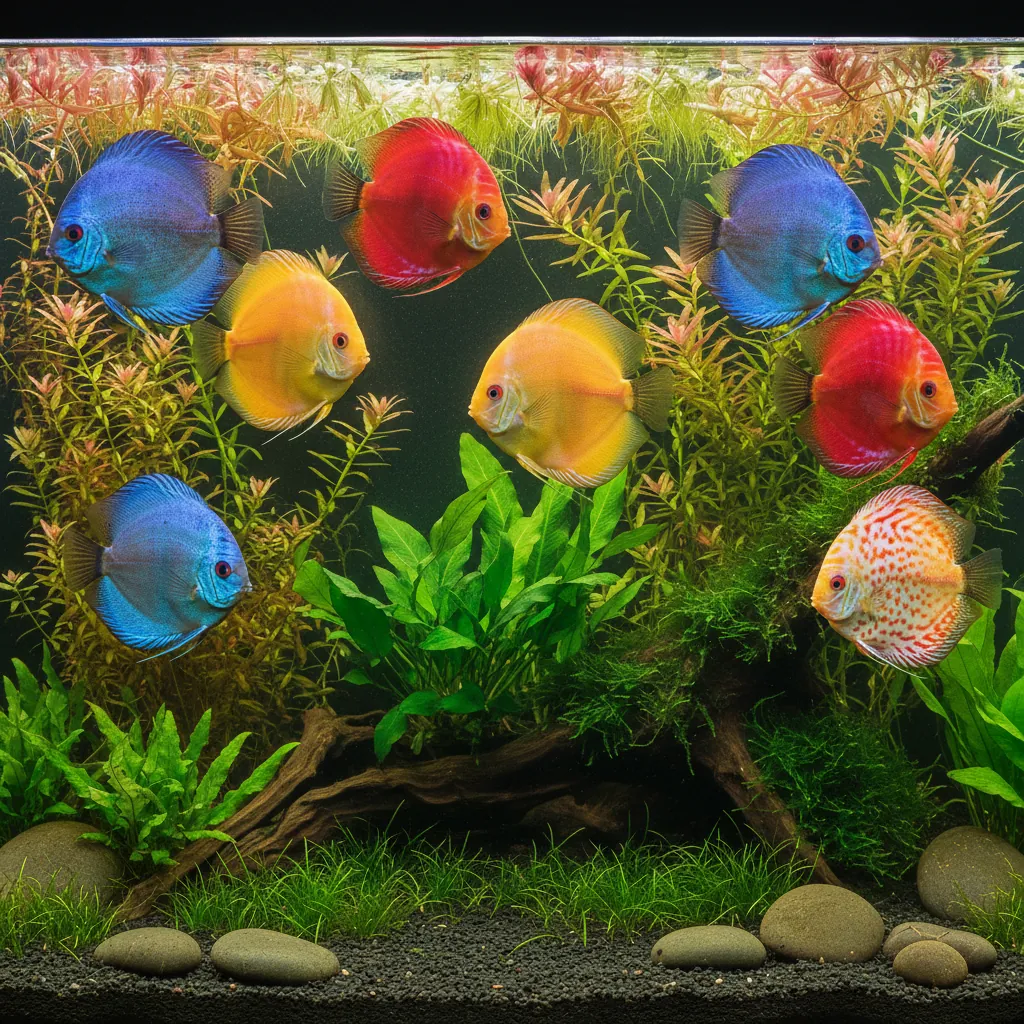
Discus Fish Care: A Complete Guide to Keeping the King of the Aquarium
Contents
- Quick Care Summary
- Tank Setup for Discus Fish
- Water Parameters for Discus Fish
- Feeding Discus Fish
- Tank Mates for Discus Fish
- Common Discus Fish Problems
Discus fish are renowned for their stunning colors and large, circular shape, making them one of the most sought-after freshwater aquarium fish. However, they require specific care, including warm water temperatures (82-86°F), clean water, and a high-protein diet. While discus care can be challenging, they thrive in stable environments with proper tank setup and maintenance.
Discus fish originate from the warm, slow-moving waters of the Amazon River basin. Their care involves maintaining a clean, warm aquarium, providing a balanced diet, and choosing compatible tank mates. With proper care, discus can live up to 10 years and reach sizes of 6-9 inches.
Quick Care Summary
- Tank Size: Minimum 55 gallons for 5-7 discus; 10 gallons per adult discus is recommended.
- Water Temperature: 82-86°F (28-30°C).
- pH: 6.0-7.5 (consistency is more important than exact numbers).
- Diet: High-protein foods like bloodworms, brine shrimp, and specialized discus pellets (40-50% protein).
- Temperament: Peaceful but can become territorial during breeding.
- Difficulty: Moderate to difficult; not recommended for beginners.
Tank Setup for Discus Fish
Tank Size
Discus fish need ample space to thrive. A minimum of 55 gallons is recommended for 5-7 discus, with 10 gallons per adult fish as a general rule. Larger tanks (75 gallons or more) are ideal for reducing aggression and maintaining stable water conditions.
Filtration
High-quality filtration is essential. Canister filters or sump systems are recommended for larger tanks to ensure clean water and stable nitrogen levels. Regular cleaning of the filter is crucial to prevent waste buildup.
Substrate and Decor
Bare-bottom tanks are popular for discus care due to ease of cleaning, but gravel or sand can be used if maintained meticulously. Live plants like anubias, java fern, and amazon sword are excellent additions but must tolerate warm water. Air stones are recommended to maintain oxygen levels in heated tanks.
Water Parameters for Discus Fish
Temperature
Discus thrive in warm water, with an ideal temperature range of 82-86°F (28-30°C). Sudden temperature changes must be avoided.
pH and Hardness
Discus prefer slightly acidic water with a pH of 6.0-7.5 and soft to medium hardness (1-8 dGH). Consistency in water parameters is more important than exact numbers.
Water Changes
Frequent water changes are essential to maintain low nitrate levels (<20 ppm for non-planted tanks, <40 ppm for planted tanks). Many hobbyists perform 25-50% water changes weekly or bi-weekly.
Feeding Discus Fish
Diet
Discus require a high-protein diet. Ideal foods include:
- Frozen or live brine shrimp
- Bloodworms
- Specialized discus pellets (40-50% protein)
- Mixing foods ensures balanced nutrition and prevents addiction to a single type.
Feeding Frequency
- Fry (0-4 weeks): Feed newly hatched brine shrimp or liquid fry food several times a day.
- Juveniles (4-12 weeks): Feed small portions 4-5 times daily.
- Adults: Feed 2-3 times daily, ensuring all food is consumed within a few minutes.
Tank Mates for Discus Fish
Discus are slow feeders and can be outcompeted by faster fish. Suitable tank mates include:
- Cardinal tetras
- Sterbai cory catfish
- Bristlenose plecos Avoid fast or aggressive species like barbs and angelfish. A species-only tank is often recommended for beginners.
Common Discus Fish Problems
Diseases
Discus are prone to several diseases due to poor water conditions or stress, including:
- Hexamita: Symptoms include white feces and loss of appetite. Treat with metronidazole and maintain clean water.
- Fin Rot: Frayed fins caused by poor water quality. Regular water changes and medications like Melafix can help.
- Hole in the Head: Small pits on the head caused by poor nutrition or water quality. Improve diet and water conditions.
Stress Prevention
Reduce stress by maintaining stable water conditions, avoiding loud noises, and limiting disturbances near the tank.
FAQ
1. Can I keep a single discus fish?
Yes, but discus are schooling fish and are happier in groups. A minimum of 5-6 discus is recommended to reduce aggression.
2. How often should I feed discus fish?
Juveniles should be fed 4-5 times daily, while adults should be fed 2-3 times daily. Avoid overfeeding to prevent water quality issues.
3. What is the ideal tank size for discus fish?
A minimum of 55 gallons is recommended for 5-7 discus, with 10 gallons per adult fish as a general rule.
4. Do discus fish need daily water changes?
It depends on tank size, filtration, and stocking levels. Weekly or bi-weekly water changes of 25-50% are common.
5. What are the best tank mates for discus fish?
Cardinal tetras, Sterbai cory catfish, and bristlenose plecos are ideal tank mates. Avoid fast or aggressive species.
Related guides
- Angelfish Care: A Complete Guide
- Betta Fish Care Guide: Essential Tips for a Healthy Life
- Bristlenose Pleco Care Guide
- Corydoras Catfish Care Guide: Tank Setup, Diet, and Breeding
- Dwarf Gourami Care Guide