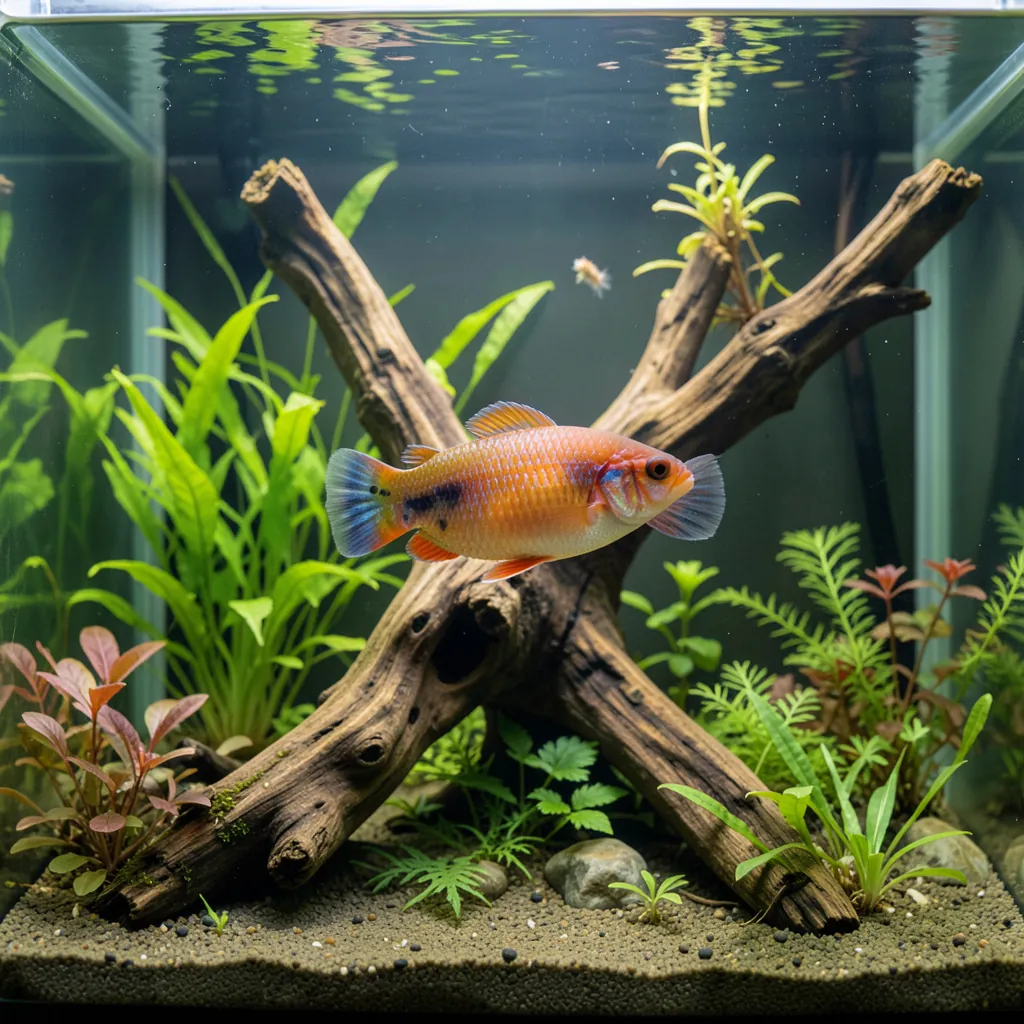
driftwood in a fish tank
Contents
- Overview
- Is It Right for You?
- Tank Setup
- Water Parameters
- Diet and Feeding
- Tank Mates
- 🩺 Common Health Issues
- 💡 Care Tips
- ❓ FAQ
🐠 Driftwood in a fish tank is a natural decor piece that enhances aesthetics while benefiting aquarium life. It softens water, lowers pH, and provides hiding spots for fish. Proper preparation is essential to remove tannins and ensure it sinks.
Overview
Driftwood is a popular addition to aquariums due to its natural appearance and functional benefits. It originates from trees and is often sourced from rivers or coastal areas. Types like Malaysian driftwood, Mopani, Spider Wood, and Cholla Wood are commonly used in aquariums for their unique shapes and chemical properties.
Is It Right for You?
Driftwood is suitable for most aquariums, but it requires patience for preparation. It softens water and lowers pH, making it ideal for species like tetras and dwarf cichlids. However, beginners should note that it releases tannins, which may discolor water unless treated.
Tank Setup
- Choose the Right Wood: Select driftwood appropriate for your tank size and fish species.
- Pre-Treatment: Soak the driftwood in water with soda and salt, then boil it for 1 hour. Repeat 3-5 times to remove tannins.
- Placement: Arrange the driftwood in your tank, ensuring it provides hiding spots and doesn’t obstruct fish movement.
- Anchor if Necessary: Use rocks or aquarium-safe silicone to weigh down buoyant pieces until they sink.
Water Parameters
| Parameter | Ideal Range | Effect of Driftwood |
|---|---|---|
| pH | 6.5-7.5 | Lowers pH gradually |
| Water Hardness | Soft to moderately hard | Softens water |
| Temperature | 76-82°F (24-28°C) | No direct effect |
Diet and Feeding
Driftwood doesn’t directly impact feeding but promotes biofilm growth, which grazing species like plecos and shrimp rely on.
Tank Mates
Driftwood is compatible with most freshwater species, including:
- Fish: Tetras, cichlids, plecos
- Shrimp: Cherry shrimp, Amano shrimp
- Snails: Nerite snails, Mystery snails
Avoid pairing driftwood with fish that prefer high pH or hard water, such as African cichlids.
🩺 Common Health Issues
| Symptom | Likely Cause | Treatment |
|---|---|---|
| Yellow water | Tannins | Use activated carbon or boil driftwood again |
| White film | Harmless biofilm | Wipe off or leave for fish/shrimp to consume |
| Floating driftwood | Not fully waterlogged | Weight down until it sinks |
💡 Care Tips
- Boil driftwood thoroughly to remove tannins and speed up sinking.
- Test water parameters regularly after adding driftwood to monitor pH changes.
- Use activated carbon in your filter to maintain clear water if tannins are excessive.
- Avoid softwoods like pine, which can release harmful resins.
- Combine driftwood with live plants for a natural aquascape.
❓ FAQ
Can driftwood harm fish?
No, properly prepared driftwood is safe. Avoid untreated softwoods.
How long does driftwood take to sink?
It can take days to weeks, depending on the type and preparation. Boiling speeds up the process.
Does driftwood change water color?
Yes, it releases tannins that tint water yellow. Boiling and carbon filtration can mitigate this.
Is driftwood good for shrimp tanks?
Yes, shrimp benefit from biofilm growth on driftwood.
Can I use driftwood in saltwater tanks?
No, driftwood is unsuitable for saltwater tanks; it’s best for freshwater setups.
Related guides
- Aquarium Examples: Biotopes and Dutch-Style Tanks for Different Skill Levels
- Aquarium Filter Types: A Complete Guide
- aquarium heater buying guide
- Aquarium Heater Guide: Choosing the Right Heater for Your Tank
Sources
- hygger CO2 Aquarium Aquascape Teak Driftwood - hygger
- Amazon.com : WDEFUN Natural Driftwood for Aquarium Decor, 2-Piece 10”-14” Large Driftwood for Decorations on Fish Tank, Reptiles Bearded Dragon Accessories or Air Plants : Pet Supplies - I boiled water and dumped it in a small cooler I had since I didn’t have a pot or pan big enough to use to boil water with the w…