Dwarf Gourami Care Guide
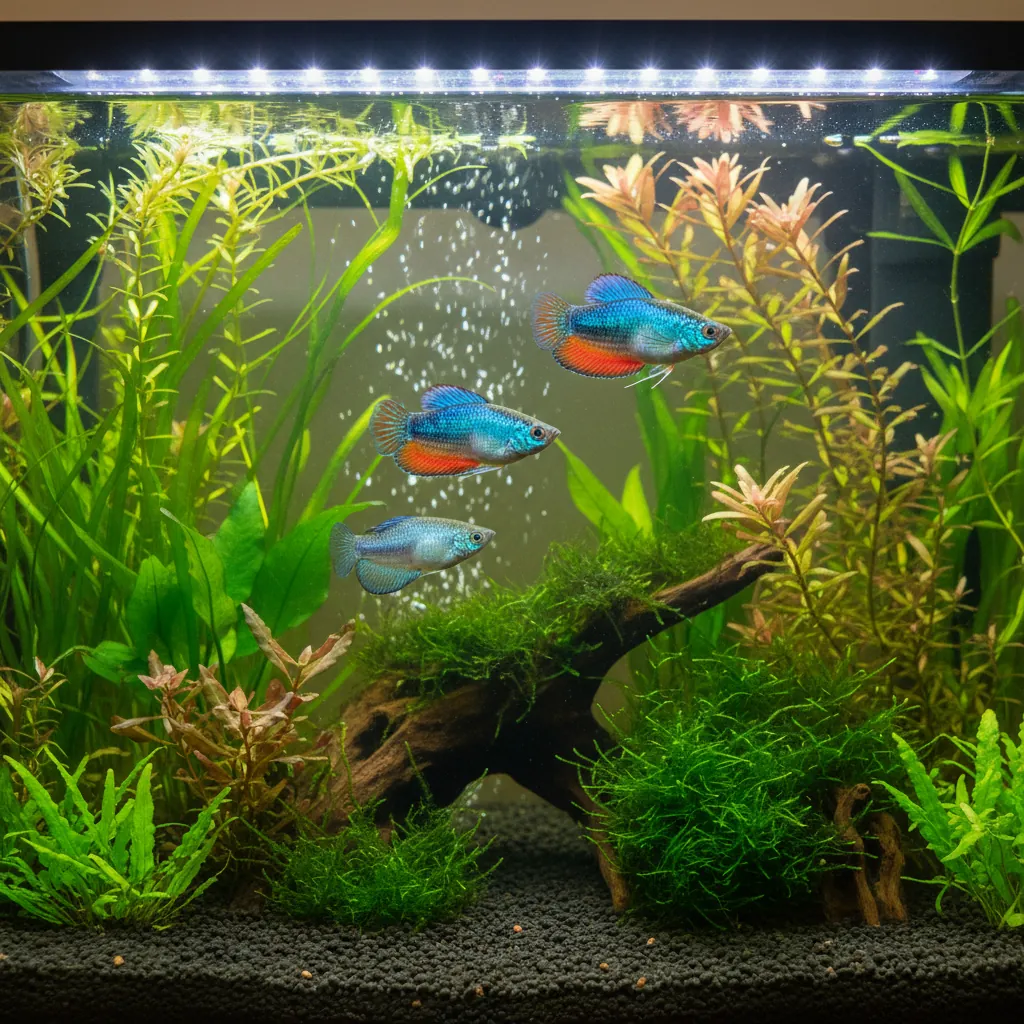
Dwarf Gourami Care Guide
Contents
- Quick Care Summary
- What Are Dwarf Gouramis?
- How to Set Up a Tank for Dwarf Gouramis
- Feeding Dwarf Gouramis
- Tank Mates for Dwarf Gouramis
- Common Problems with Dwarf Gouramis
Dwarf gouramis (Trichogaster lalius) are vibrant, hardy fish native to South Asia, known for their labyrinth organ that allows them to breathe air. They thrive in warm, planted tanks with slow water flow and a varied diet. While beginner-friendly, they can be territorial, especially males, and should be housed carefully in community tanks to avoid aggression.
Quick Care Summary
- Tank Size: Minimum 10 gallons
- Water Temperature: 72–82°F (22–28°C)
- pH: 6.0–8.0
- Diet: Omnivorous (flakes, pellets, frozen/live foods)
- Temperament: Semi-aggressive, territorial
- Difficulty: Beginner
What Are Dwarf Gouramis?
Dwarf gouramis are small labyrinth fish, growing up to 3 inches (8 cm), with distinctive ventral fins that act like feelers. They are native to slow-moving waters in India, Pakistan, and Bangladesh and come in several color variants, including powder blue, flame, and the classic neon blue with red stripes.
How to Set Up a Tank for Dwarf Gouramis
Tank Size and Environment
A 10-gallon tank is the minimum for one dwarf gourami, though larger tanks are better for communities. Include dense vegetation (live or silk), driftwood, and floating plants to mimic their natural habitat. Use a sponge filter or other low-flow filtration to avoid stressing the fish.
Water Parameters
Maintain water conditions within these ranges:
- Temperature: 72–82°F (22–28°C)
- pH: 6.0–8.0
- Hardness: Soft to hard water
Regular water changes (~10% weekly) and stable conditions are crucial for their health.
Feeding Dwarf Gouramis
Dwarf gouramis are omnivores and will eat most aquarium foods, including flakes, pellets, frozen, and live foods. Offer a varied diet with high-quality flakes, bloodworms, brine shrimp, and daphnia to ensure proper nutrition. They may also nibble on algae.
Tank Mates for Dwarf Gouramis
While dwarf gouramis can live in community tanks, their compatibility depends on their temperament:
| Tank Mate | Compatibility | Notes |
|---|---|---|
| Corydoras Catfish | Good | Peaceful bottom dwellers |
| Tetras | Good | Small, fast-moving fish |
| Rasboras | Good | Peaceful mid-level swimmers |
| Betta Fish | Poor | Both are territorial labyrinth fish |
| Cherry Shrimp | Poor | Dwarf gouramis may eat small shrimp |
Avoid housing multiple male dwarf gouramis together, as they are highly territorial.
Common Problems with Dwarf Gouramis
Dwarf Gourami Disease (Iridovirus)
This viral infection is often fatal and has no cure. Symptoms include lethargy, loss of color, and bloating. Purchase fish from reputable sources and quarantine new arrivals to reduce risk.
Overbreeding Issues
Excessive inbreeding can lead to deformities and weakened immune systems. Inspect fish for signs of poor health (e.g., bent spines, missing fins) before purchase.
FAQ
Can I keep multiple dwarf gouramis together?
It’s not recommended to keep multiple males together due to aggression. A single male with a female or peaceful tank mates is a better option.
Are dwarf gouramis good for beginners?
Yes, they are hardy and adaptable, making them suitable for beginners. However, their territorial nature requires careful tank mate selection.
How long do dwarf gouramis live?
With proper care, dwarf gouramis live 2–4 years.
Do dwarf gouramis need a heater?
Yes, maintain a warm temperature (72–82°F) using an aquarium heater.
Related guides
- Angelfish Care: A Complete Guide
- Betta Fish Care Guide: Essential Tips for a Healthy Life
- Bristlenose Pleco Care Guide
- Corydoras Catfish Care Guide: Tank Setup, Diet, and Breeding
- Discus Fish Care: A Complete Guide to Keeping the King of the Aquarium