Fire Belly Cichlid Care Guide
Fire Belly Cichlid Care Guide
Contents
- Overview
- Is It Right for You?
- Tank Setup
- Water Parameters
- Diet and Feeding
- Tank Mates
- 🩺 Common Health Issues
- 💡 Care Tips
- ❓ FAQ
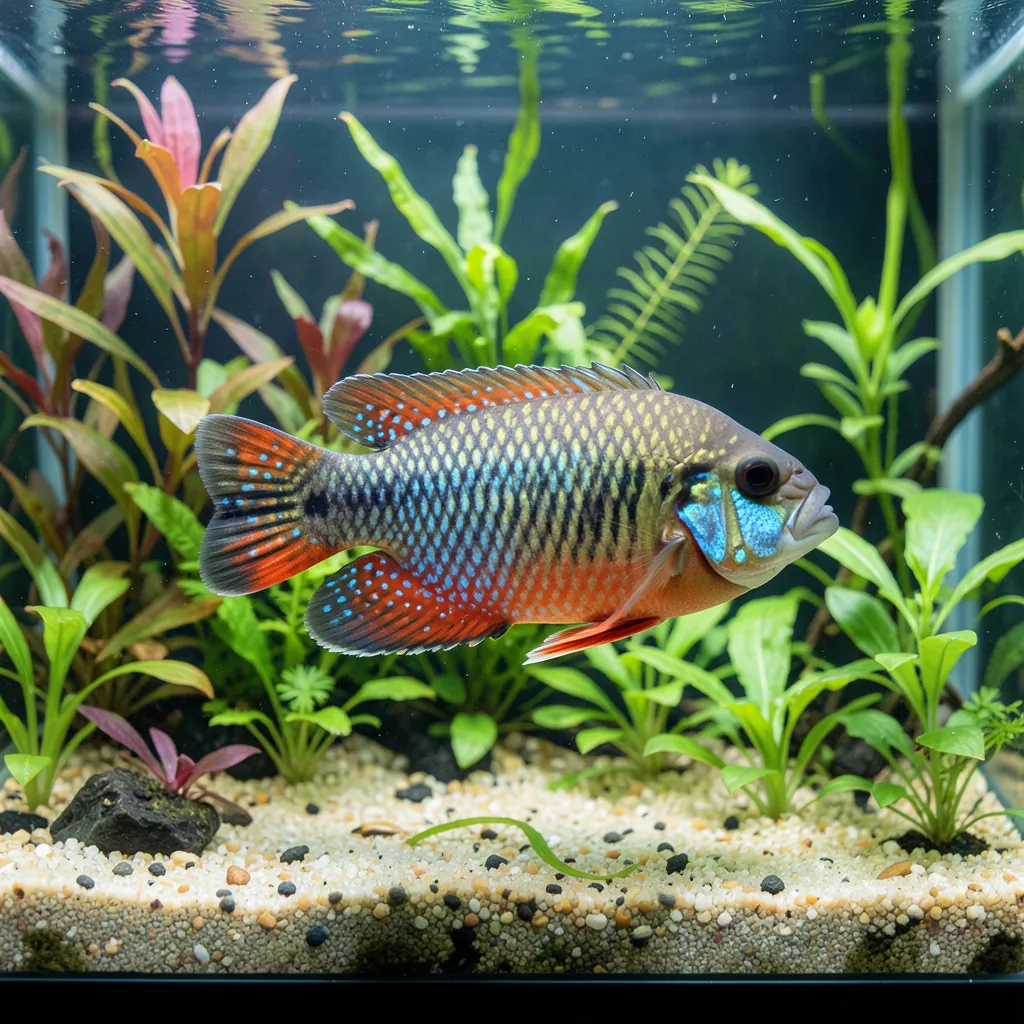
🐠 Fire Belly Cichlids (Trichromis salvini), also known as Tricolor or Tabasco Cichlids, are vibrant freshwater fish native to Central America. With their striking yellow bodies, turquoise fins, and red bellies, they make a colorful addition to aquariums. However, their care requires attention to detail, especially regarding tank setup and compatibility.
Care Level: Intermediate
Temperament: Semi-aggressive
Max Size: 6-8 inches (15-20 cm)
Lifespan: 5-8 years
Diet: Omnivore
Minimum Tank Size: 30 gallons (113 L)
Water Temp: 75-85°F (24-29°C)
pH: 6.5-8.0
Overview
Originating from rivers and streams in Central America, Fire Belly Cichlids are known for their bright colors and semi-aggressive nature. Males develop more vibrant colors, while females exhibit a deeper red belly. They are territorial and often dominate smaller fish if kept inappropriately.
Is It Right for You?
Fire Belly Cichlids are best suited for aquarists with some experience due to their semi-aggressive behavior and specific tank requirements. They require a spacious tank, stable water parameters, and careful selection of tank mates. Beginners may find them challenging but rewarding with proper research and dedication.
Tank Setup
- Tank Size: Start with a minimum 30-gallon tank for one fish; larger tanks are recommended for multiple individuals.
- Filtration: Use a powerful filter to maintain water quality; Fire Belly Cichlids produce significant waste.
- Heater: Maintain a stable temperature between 75-85°F (24-29°C).
- Substrate: Use fine sand or smooth gravel to mimic their natural habitat.
- Decor: Include rocks, caves, and driftwood to provide hiding spots and territories.
- Plants: Use hardy plants like Java Fern or Anubias, as these fish may uproot delicate species.
Water Parameters
| Parameter | Ideal Range |
|---|---|
| Temperature | 75-85°F (24-29°C) |
| pH | 6.5-8.0 |
| Hardness (KH) | 10-15 dKH |
| Ammonia/Nitrites | 0 ppm |
| Nitrates | <20 ppm |
Diet and Feeding
Fire Belly Cichlids are omnivores and thrive on a varied diet. Offer high-quality pellets, flakes, frozen foods (e.g., bloodworms, brine shrimp), and occasional vegetables like blanched spinach. Feed 2-3 times daily in small portions.
Tank Mates
Choose tank mates carefully. Compatible species include larger tetras, catfish, and other cichlids of similar size. Avoid small or timid fish like guppies, as they may become targets. Overcrowding can increase aggression, so ensure ample space.
🩺 Common Health Issues
| Symptom | Likely Cause | Treatment |
|---|---|---|
| Lethargy, loss of appetite | Poor water quality | Perform water changes, ensure proper filtration |
| White spots on body | Ich (parasitic infection) | Treat with aquarium salt or copper-based medication |
| Swimming sideways | Swim bladder issue | Feed peas, check water parameters |
💡 Care Tips
- Maintain stable water conditions through regular testing and water changes.
- Provide hiding spots to reduce stress and territorial aggression.
- Avoid overfeeding; excess food can lead to water quality issues.
- Introduce tank mates gradually to minimize conflict.
- Monitor behavior regularly to catch any signs of illness early.
❓ FAQ
Q: Can Fire Belly Cichlids live with guppies?
A: No, guppies are too small and may be seen as prey.
Q: What size tank do Fire Belly Cichlids need?
A: A minimum of 30 gallons for one fish; larger tanks are better for multiple individuals.
Q: Are Fire Belly Cichlids good for beginners?
A: They are best suited for intermediate aquarists due to their semi-aggressive nature and care requirements.
Q: How often should I feed Fire Belly Cichlids?
A: Feed 2-3 times daily in small portions to prevent overfeeding.
Q: What water temperature do Fire Belly Cichlids need?
A: Maintain a temperature between 75-85°F (24-29°C).
Q: Can Fire Belly Cichlids live with other cichlids?
A: Yes, but choose species of similar size and temperament to avoid aggression.
Related guides
- Angelfish Care: A Complete Guide
- Apistogramma Care Guide
- Best Tank Size for Goldfish: A Complete Guide
- Betta Fish Care Guide: Essential Tips for a Healthy Life
- bolivian ram