German Blue Ram Care: Complete Guide for a Thriving Aquarium
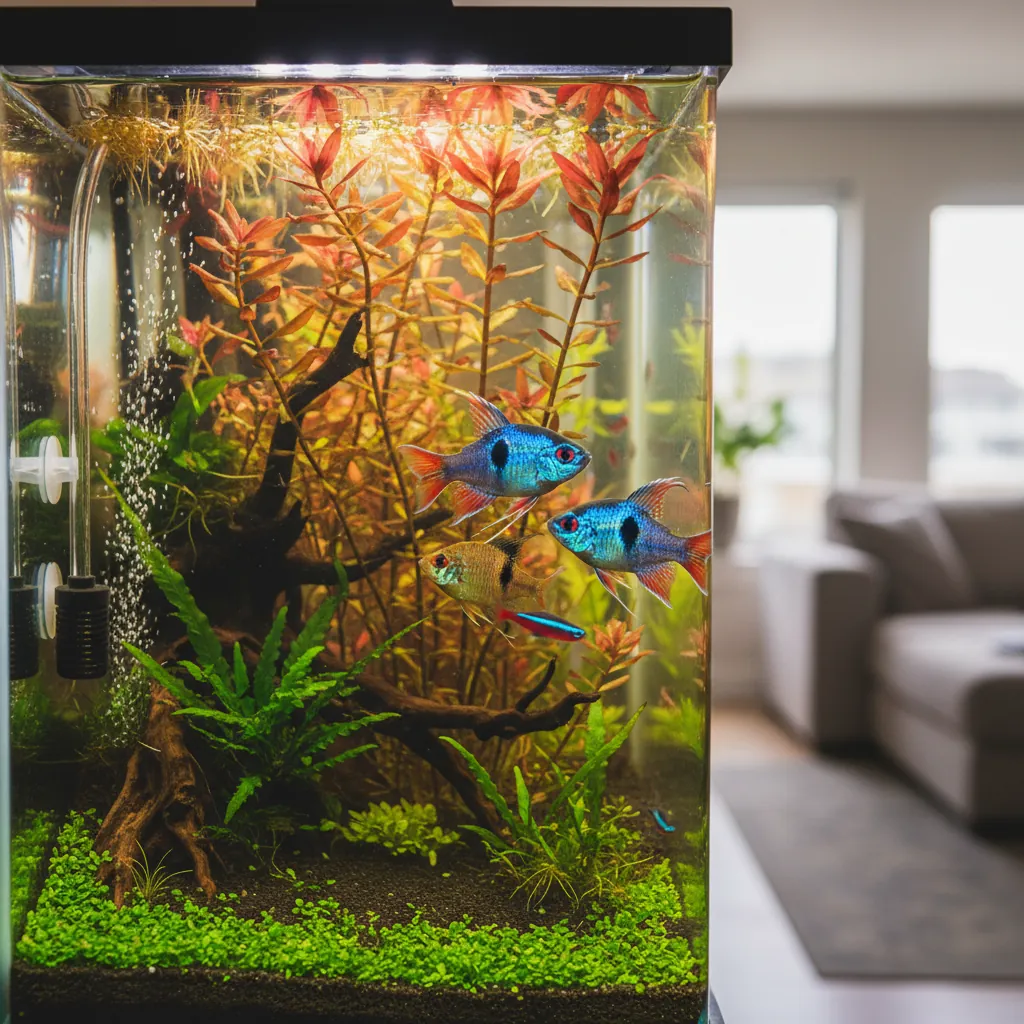
German Blue Ram Care: Complete Guide for a Thriving Aquarium
Contents
- Quick Care Summary
- German Blue Ram Tank Setup
- German Blue Ram Water Parameters
- Feeding German Blue Rams
- German Blue Ram Tank Mates
- Common German Blue Ram Problems
- Breeding German Blue Rams
German Blue Rams (Mikrogeophagus ramirezi) are vibrant dwarf cichlids native to the Orinoco River basin in Venezuela and Colombia. They require warm (78-86°F), soft, slightly acidic water (pH 5.5-7.0) and a 20+ gallon tank with fine substrate, plants, and hiding spots. These omnivores thrive on varied diets but are sensitive to poor water quality, making them intermediate-level fish despite their small size (2-3 inches).
Quick Care Summary
- Tank Size: 20+ gallons for a pair
- Water Temperature: 78-86°F (26-30°C)
- pH: 5.5-7.0 (ideal: 6.0)
- Diet: Omnivore (pellets/flakes + live/frozen foods)
- Temperament: Peaceful but territorial when breeding
- Difficulty: Intermediate
German Blue Ram Tank Setup
- Minimum Size: 20 gallons for a pair; larger if keeping multiple males.
- Substrate: Fine sand or small gravel to mimic natural habitat.
- Decor: Driftwood, smooth rocks, and dense plants (e.g., Java fern, moss) for hiding spots.
- Filtration: Gentle flow with a sponge filter to avoid stressing fish.
German Blue Ram Water Parameters
| Parameter | Ideal Range | Notes |
|---|---|---|
| Temperature | 78-86°F (26-30°C) | Higher temps (84-86°F) for breeding |
| pH | 5.5-7.0 | Soft water preferred |
| Hardness (GH) | <10 dGH | Avoid very hard water |
| Note: Sources conflict on ideal pH; some recommend 5.0-6.5 for breeding (Source 1 vs. Source 2). |
Feeding German Blue Rams
- Staple Diet: High-quality cichlid pellets (1.5mm or smaller) or flakes.
- Supplements: Live/frozen brine shrimp, bloodworms, daphnia.
- Frequency: 2x daily small portions; avoid overfeeding.
Tip: Newly introduced rams may be picky—start with live/frozen foods (Source 2).
German Blue Ram Tank Mates
- Peaceful Small Fish: Dwarf pencilfish, ember tetras, cardinals.
- Bottom Dwellers: Sterbai Corydoras, Otocinclus.
- Avoid: Large/aggressive fish (e.g., oscars) or fast eaters that outcompete rams.
Common German Blue Ram Problems
- Sudden Death Post-Purchase: Often due to unstable water; acclimate slowly to established tanks (Source 2).
- Hollow Belly (Wasting Disease): Caused by poor diet or internal parasites; quarantine affected fish.
- Aggression: Males may fight in small tanks (<30 gallons).
Breeding German Blue Rams
- Pair Selection: Let 4-6 rams grow together to form natural pairs (Source 2).
- Breeding Tank: 10-20 gallons, bare-bottom or fine substrate, flat stones for egg-laying.
- Conditioning: Feed high-protein foods (e.g., baby brine shrimp).
- Egg Care: Parents guard eggs (hatch in 3 days), but may eat first few spawns.
FAQ
Q: Can German Blue Rams live with angelfish?
A: Yes, if the tank is large (40+ gallons) and angels aren’t aggressive.
Q: Why do my rams hide constantly?
A: Stress from bright lights, lack of cover, or aggressive tank mates.
Q: How to sex German Blue Rams?
A: Males have pointed dorsal fins and no blue spangling in their black spot; females are smaller with rounded fins and a pink belly (Source 5).
Related guides
- Angelfish Care: A Complete Guide
- Betta Fish Care Guide: Essential Tips for a Healthy Life
- Bristlenose Pleco Care Guide
- Corydoras Catfish Care Guide: Tank Setup, Diet, and Breeding
- Discus Fish Care: A Complete Guide to Keeping the King of the Aquarium