Honey Gourami Care Guide: Tank Setup, Diet, and Compatibility
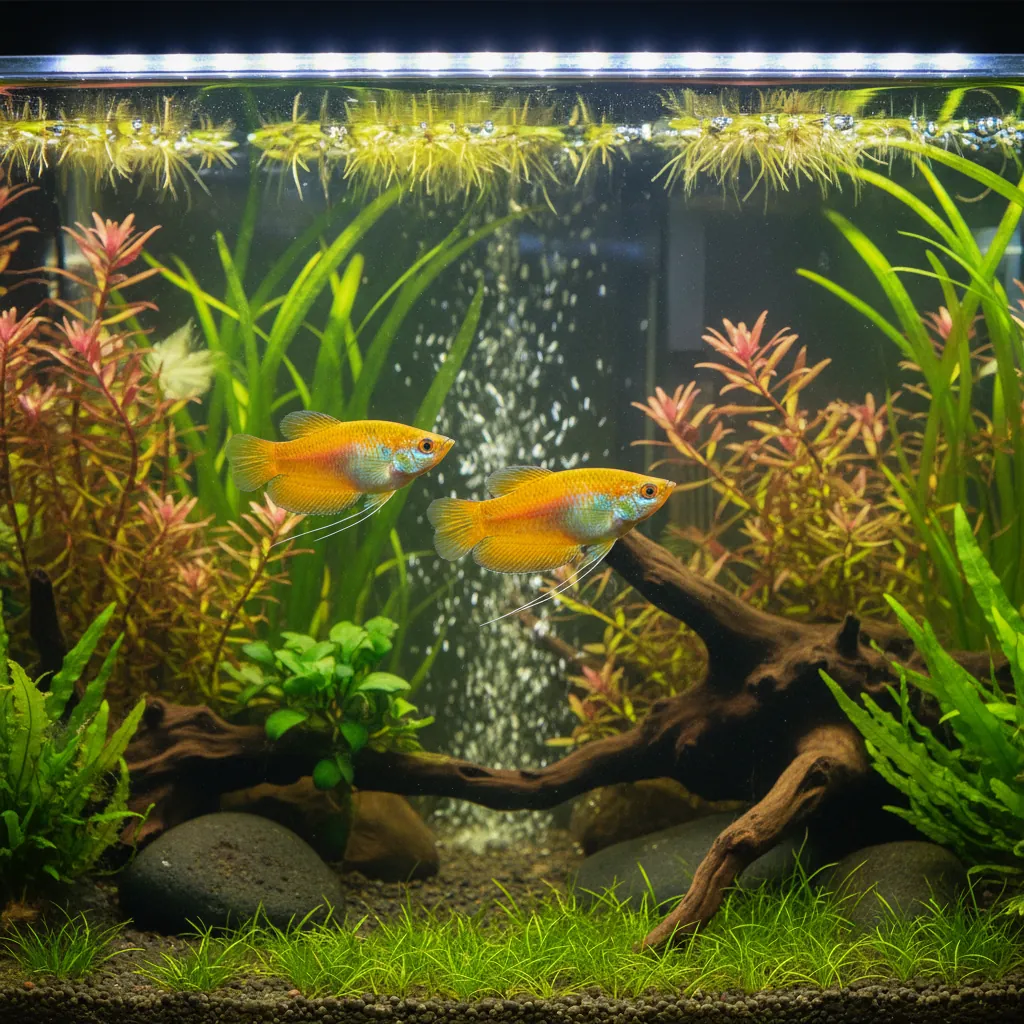
Honey Gourami Care Guide: Tank Setup, Diet, and Compatibility
Contents
- Quick Care Summary
- How to Set Up a Honey Gourami Tank
- What Do Honey Gouramis Eat?
- Compatible Tank Mates
- Common Problems
- Breeding Honey Gouramis
Honey gouramis (Trichogaster chuna) are peaceful, colorful labyrinth fish native to slow-moving waters in India and Bangladesh. Reaching 2-2.5 inches (5-6 cm), they thrive in planted tanks with gentle flow, tolerate varied water conditions (pH 6.0-8.0, 74-82°F/23-28°C), and eat omnivorous diets. Ideal for beginners, they live 3-6 years and show vibrant breeding colors.
Quick Care Summary
- Tank Size: 10+ gallons for a pair (5-gallon minimum solo)
- Water Temperature: 74-82°F (23-28°C)
- pH: 6.0-8.0
- Diet: Omnivore (flakes, pellets, frozen/live foods)
- Temperament: Peaceful (except mild territorial behavior during breeding)
- Difficulty: Beginner-friendly
How to Set Up a Honey Gourami Tank
Tank Requirements
- Minimum Size: 10 gallons for a pair; 20+ gallons for a group
- Substrate: Dark substrates enhance colors (e.g., black sand)
- Plants: Dense planting with Java fern, Anubias, Cryptocoryne, and floating plants (e.g., water lettuce)
- Filtration: Low flow (sponge or adjustable HOB filters)
- Lid: Required (they jump) or lower water level by 1-2 inches
Water Parameters
| Parameter | Ideal Range | Tolerable Range |
|---|---|---|
| Temperature | 74-82°F (23-28°C) | 72-86°F (22-30°C) |
| pH | 6.5-7.5 | 6.0-8.0 |
| Hardness (dGH) | 4-12° | Up to 15° |
Note: Stable conditions matter more than exact values. Avoid ammonia/nitrite spikes.
What Do Honey Gouramis Eat?
- Staple Diet: Quality flakes (e.g., Fluval Bug Bites), nano pellets
- Supplemental Foods: Frozen/live brine shrimp, bloodworms, daphnia; blanched vegetables (spinach, peas)
- Feeding Frequency: 1-2x daily (avoid overfeeding)
Compatible Tank Mates
| Species | Notes |
|---|---|
| Neon tetras | Avoid fin-nippers |
| Chili rasboras | Small, schooling fish |
| Corydoras catfish | Peaceful bottom dwellers |
| Amano/shrimp | Adults safe; may eat shrimp fry |
| Avoid | Aggressive fish (e.g., bettas, large gouramis) |
Common Problems
- Jumping: Use tight-fitting lids.
- Shyness: Provide ample plant cover.
- Breeding Aggression: Males darken throat colors and guard bubble nests.
- Misidentification: “Red honey gouramis” may be aggressive thick-lipped gouramis.
Breeding Honey Gouramis
- Breeding Tank: 10+ gallons, 82°F (28°C), gentle flow
- Nesting: Males build bubble nests under floating plants.
- Fry Care: Feed infusoria → baby brine shrimp after 2 weeks.
FAQ
Q: Are honey gouramis aggressive?
A: Rarely. Males may chase during breeding but are generally peaceful.
Q: Can I keep one honey gourami?
A: Yes, but pairs/groups show more natural behavior.
Q: Why is my honey gourami turning black?
A: Males develop dark throats during breeding (normal).
Q: How long do they live?
A: 3-5 years with proper care.
Related guides
- Angelfish Care: A Complete Guide
- Betta Fish Care Guide: Essential Tips for a Healthy Life
- Bristlenose Pleco Care Guide
- Cardinal Tetra Care Guide
- Clown Loach Care Guide: Habitat, Diet, and Tank Setup