How to Control Algae in Your Aquarium: Causes, Prevention, and Solutions
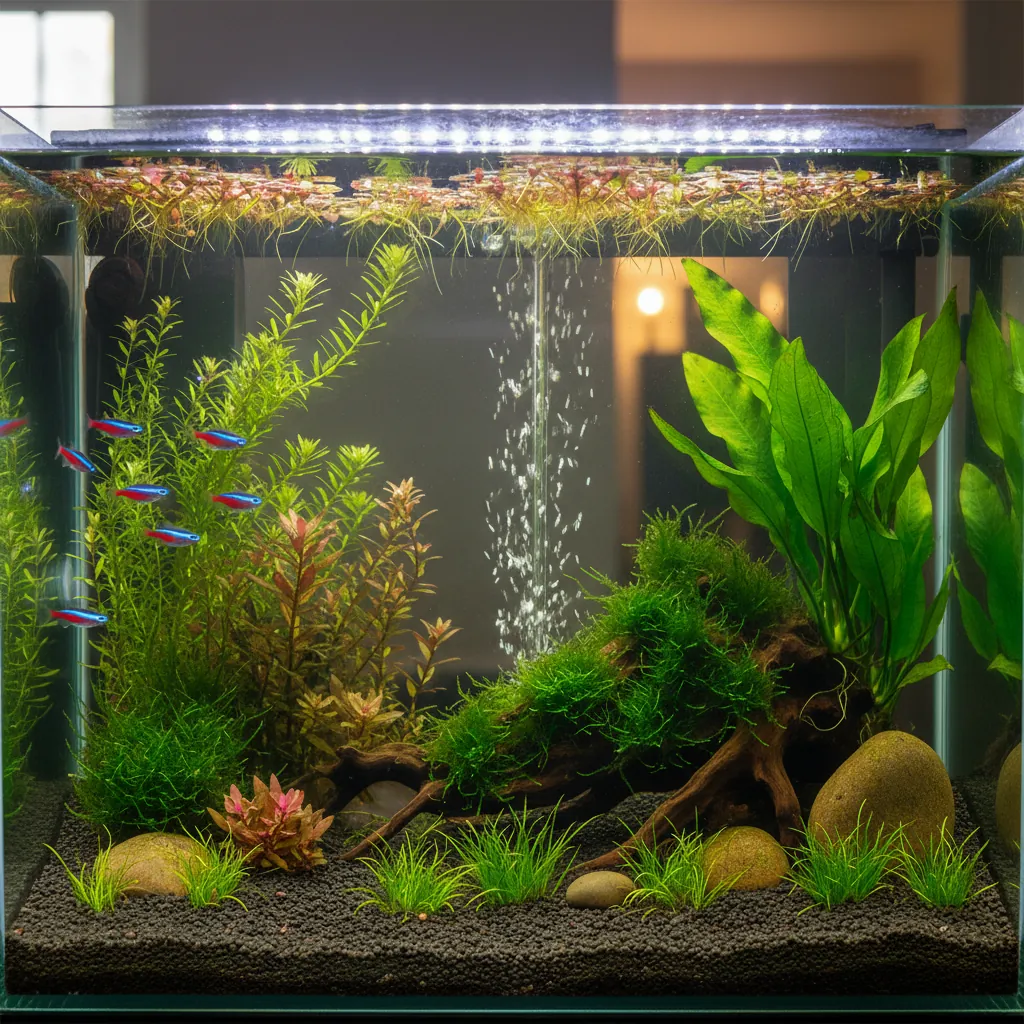
How to Control Algae in Your Aquarium: Causes, Prevention, and Solutions
Contents
- Quick Care Summary
- Why Does Algae Grow in Aquariums?
- Types of Aquarium Algae (and How to Treat Each)
- How to Prevent Algae Before It Starts
- Best Algae-Eating Tank Mates
- Common Algae Problems (and Fixes)
- FAQ: Aquarium Algae Control
To control aquarium algae, balance light (6-8 hours/day for non-planted tanks, 10-12 for planted), nutrients (nitrates <10 ppm, phosphates <0.5 ppm), and CO2. Use live plants to outcompete algae, introduce algae-eating species (e.g., nerite snails, Siamese algae eaters), perform weekly 10-25% water changes, and manually remove visible algae. UV sterilizers and blackout periods (3-5 days) help for severe outbreaks.
Quick Care Summary
- Tank Size: Varies by algae type; most thrive in any size
- Water Temperature: 68-82°F (higher temps increase growth)
- pH: 6.5-8.5 (most algae tolerate wide ranges)
- Diet: Light + excess nutrients (nitrates/phosphates)
- Temperament: Non-aggressive but invasive
- Difficulty: Easy to grow, moderate to eradicate
Why Does Algae Grow in Aquariums?
Algae blooms occur due to imbalances in:
- Light: Excess duration (>8 hours) or intensity, especially white/blue spectrum
- Nutrients: High nitrates (>10 ppm), phosphates (>0.5 ppm), or silicates
- CO2: Low levels in planted tanks (plants outcompeted by algae)
- Maintenance: Infrequent water changes, overfeeding, poor filtration
Types of Aquarium Algae (and How to Treat Each)
| Type | Appearance | Causes | Solutions |
|---|---|---|---|
| Brown Diatoms | Dusty brown film | New tank syndrome, high silicates | Nerite snails, manual removal, RO water |
| Green Water | Cloudy green water | Excess light + nutrients | UV sterilizer, 3-day blackout, reduce feeding |
| Black Beard | Black tufts on decorations | Low CO2, fluctuating nutrients | Excel/CO2 boost, Amano shrimp, hydrogen peroxide spot treatment |
| Blue-Green | Slimy blue-green mat | Cyanobacteria (low nitrates) | Erythromycin (if severe), manual removal, increase nitrates |
| Hair/Filamentous | Stringy green clumps | High phosphates | Siamese algae eaters, manual twirling, reduce light to 6 hours |
How to Prevent Algae Before It Starts
Tank Setup Tips
- Use timer-controlled lighting (max 8 hours for non-planted, 12 for planted)
- Position tank away from direct sunlight
- Include fast-growing plants (e.g., hornwort, water wisteria) to absorb excess nutrients
Water Parameters to Monitor
- Nitrates: Keep <10 ppm via weekly 10-25% water changes
- Phosphates: Aim for <0.5 ppm using phosphate removers (e.g., Seachem PhosGuard)
- Silica: Use RO water if diatoms persist
Feeding Practices
- Feed only what fish consume in 2 minutes
- Use a gravel vacuum to remove uneaten food
- Avoid overstocking; 1 inch of fish per gallon is a safe guideline
Best Algae-Eating Tank Mates
- Shrimp: Amano (eat beard algae), Cherry (soft algae)
- Snails: Nerite (glass/diatoms), Mystery (green algae)
- Fish: Siamese algae eater (black beard), Otocinclus (soft algae), Bristlenose pleco (hard surfaces)
Common Algae Problems (and Fixes)
- Recurring green spot algae:
- Scrub with magnetic cleaner
- Dose liquid phosphate remover
- Stubborn black brush algae:
- Apply liquid carbon (Excel) directly
- Add true Siamese algae eaters (Crossocheilus oblongus)
- Cyanobacteria patches:
- Manual removal + increase water flow
- Treat with Chemi-Clean if persistent
FAQ: Aquarium Algae Control
Q: Will turning off my lights kill algae?
A: A 72-hour blackout can help, but only addresses symptoms—balance nutrients long-term.
Q: Are algae killers (e.g., algaecides) safe?
A: Use sparingly; they may harm plants/invertebrates and cause oxygen depletion.
Q: Do LED lights cause less algae than fluorescent?
A: Yes—LEDs last longer with less spectrum shift, reducing algae-friendly conditions.
Q: Why does algae return after cleaning?
A: Spores remain; consistent maintenance (water changes, light control) is key.
Related guides
- The Aquarium Nitrogen Cycle Explained: How to Keep Your Fish Safe
- Essential Aquarium Water Parameters for Healthy Fish
- How Often to Change Aquarium Water
- How to Lower Aquarium pH: A Complete Guide
- Amano Shrimp Care Guide: Algae-Busting Powerhouses