How to Set Up a Betta Fish Tank: The Complete Guide
How to Set Up a Betta Fish Tank: The Complete Guide
Contents
- Quick Care Summary
- What size tank do betta fish need?
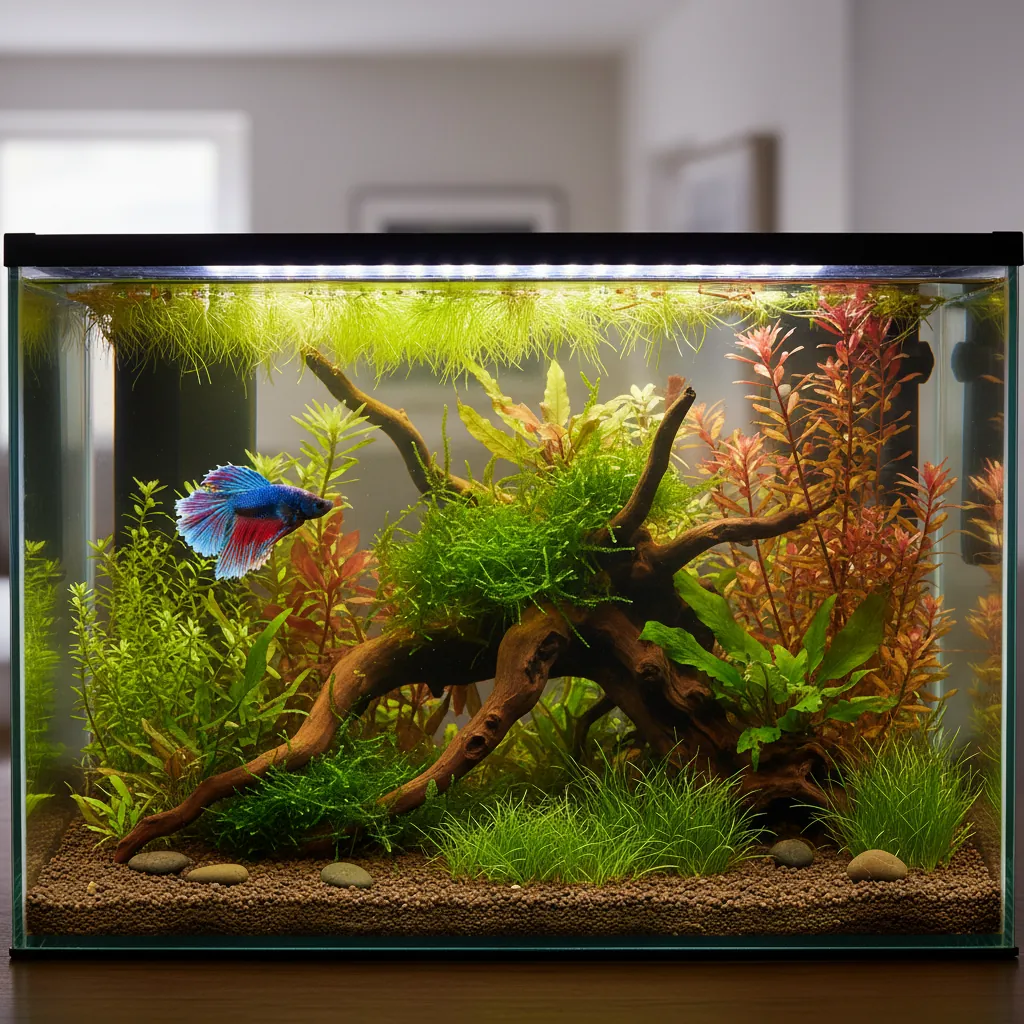
- How should I set up the tank?
- How long does betta tank cycling take?
- What water conditions do bettas need?
- What do betta fish eat?
- Can bettas have tank mates?
- What are common betta health issues?
To set up a betta fish tank, you’ll need at least a 5-gallon tank (3-gallon minimum), a low-flow filter, heater (76-82°F), soft decor without sharp edges, and conditioned water. Cycle the tank for 2-6 weeks before adding your betta, testing ammonia/nitrite/nitrate levels until they stabilize at 0ppm/0ppm/<20ppm. Larger tanks (10+ gallons) are easier to maintain and provide better enrichment.
Quick Care Summary
- Tank Size: Minimum 3 gallons, 5+ gallons ideal, 10+ gallons optimal
- Water Temperature: 76-82°F (25-28°C)
- pH: 6.0-8.0 (target ~7.0)
- Diet: High-protein pellets/flakes, frozen foods 2-3x weekly
- Temperament: Territorial (males aggressive with other males)
- Difficulty: Beginner-friendly with proper setup
What size tank do betta fish need?
Sources agree bettas require at least 3 gallons, but ideal sizes vary:
| Source | Minimum Size | Ideal Size | Notes |
|---|---|---|---|
| PetSmart | 3 gallons | 10 gallons | Easier maintenance in larger tanks |
| Aquarium Co-Op | 5 gallons | 10 gallons | Better stability and enrichment |
| Aqueon | 2.5 gallons | 5+ gallons | “Bigger is better” for swimming |
| PetMD | 2.5 gallons | 5-10 gallons | More stable water conditions |
Key Fact: Despite being sold in small containers, bettas thrive in spacious environments that allow swimming and exploration.
How should I set up the tank?
Essential Equipment
- Tank: 5-10 gallon glass/acrylic with lid (prevents jumping)
- Filter: Sponge or low-flow hang-on-back (adjustable flow preferred)
- Heater: 3-5 watts per gallon with thermometer
- Substrate: Sand or smooth gravel (rinse before adding)
- Decor: Live/artificial plants (Anubias, Java Fern), caves without sharp edges
- Lighting: LED with timer (6-8 hours/day)
Setup Steps
- Rinse all items (no soap) and arrange decor.
- Fill with dechlorinated water (use conditioner like Seachem Prime).
- Install equipment but wait 30 minutes before turning on heater.
- Add beneficial bacteria starter (e.g., Fritzzyme).
- Cycle tank (see next section).
How long does betta tank cycling take?
Cycling establishes beneficial bacteria to process waste:
- Duration: 2-6 weeks
- Methods:
- Fishless: Add fish food daily, test until ammonia/nitrites hit 0ppm
- With Starter Bacteria: Can accelerate cycle (still takes 1-2 weeks)
- Testing: Use API test kit; target:
Ammonia: 0ppm
Nitrite: 0ppm
Nitrate: <20ppm
Warning: Adding fish before cycling completes risks ammonia poisoning.
What water conditions do bettas need?
| Parameter | Ideal Range | Importance |
|---|---|---|
| Temperature | 76-82°F | Tropical fish need warmth |
| pH | 6.0-8.0 | Stable near tap water pH |
| Ammonia | 0ppm | Toxic even at low levels |
| Nitrite | 0ppm | Prevents “brown blood disease” |
| Nitrate | <20ppm | Regular water changes control |
Pro Tip: Weekly 20% water changes help maintain stability. Use a gravel vacuum to remove waste.
What do betta fish eat?
- Staple Diet: High-protein pellets (e.g., Hikari Betta BioGold)
- Supplements: Frozen/thawed bloodworms, brine shrimp 1-2x weekly
- Feeding Schedule: Small portions 2x daily (amount eaten in 60 seconds)
- Avoid: Overfeeding—leads to bloating and poor water quality
Can bettas have tank mates?
Males: Best kept alone or with non-aggressive species:
- Snails (Nerite, Mystery)
- Shrimp (Ghost, Amano)
- Small bottom-dwellers (Corydoras catfish - requires groups)
Females: May live in sororities (6+ females in 20+ gallon heavily planted tanks).
Conflict Note: PetSmart suggests bettas can coexist in communities, while Aquarium Co-Op emphasizes territorial risks. Monitor closely for aggression.
What are common betta health issues?
- Fin Rot: Frayed fins from poor water quality (treat with clean water + antibiotics if severe).
- Ich: White spots (raise temperature to 82°F slowly over 48 hours).
- Bloating: From overfeeding (fast for 24-48 hours, offer daphnia).
- Stress: Caused by small tanks, strong currents, or aggressive tank mates.
When to Vet: Abnormal swimming, lethargy, loss of appetite, or visible wounds.
FAQ
Q: Can bettas live in bowls?
A: No—bowls lack filtration/heating, causing stress and shortened lifespans (2-3 years in proper tanks vs. months in bowls).
Q: Do bettas need a filter?
A: Yes, even in small tanks. Filters stabilize water quality and support beneficial bacteria.
Q: Can I use tap water?
A: Only if treated with conditioner to remove chlorine/chloramine (e.g., Aqueon Water Conditioner).
Q: Why is my betta at the surface gasping?
A: Likely low oxygen or high ammonia—test water immediately and increase surface agitation.
Related guides
- Angelfish Care: A Complete Guide
- Betta Fish Care Guide: Essential Tips for a Healthy Life
- Bristlenose Pleco Care Guide
- Corydoras Catfish Care Guide: Tank Setup, Diet, and Breeding
- Discus Fish Care: A Complete Guide to Keeping the King of the Aquarium