Pea Puffer Care: Complete Guide to Keeping the World's Smallest Pufferfish
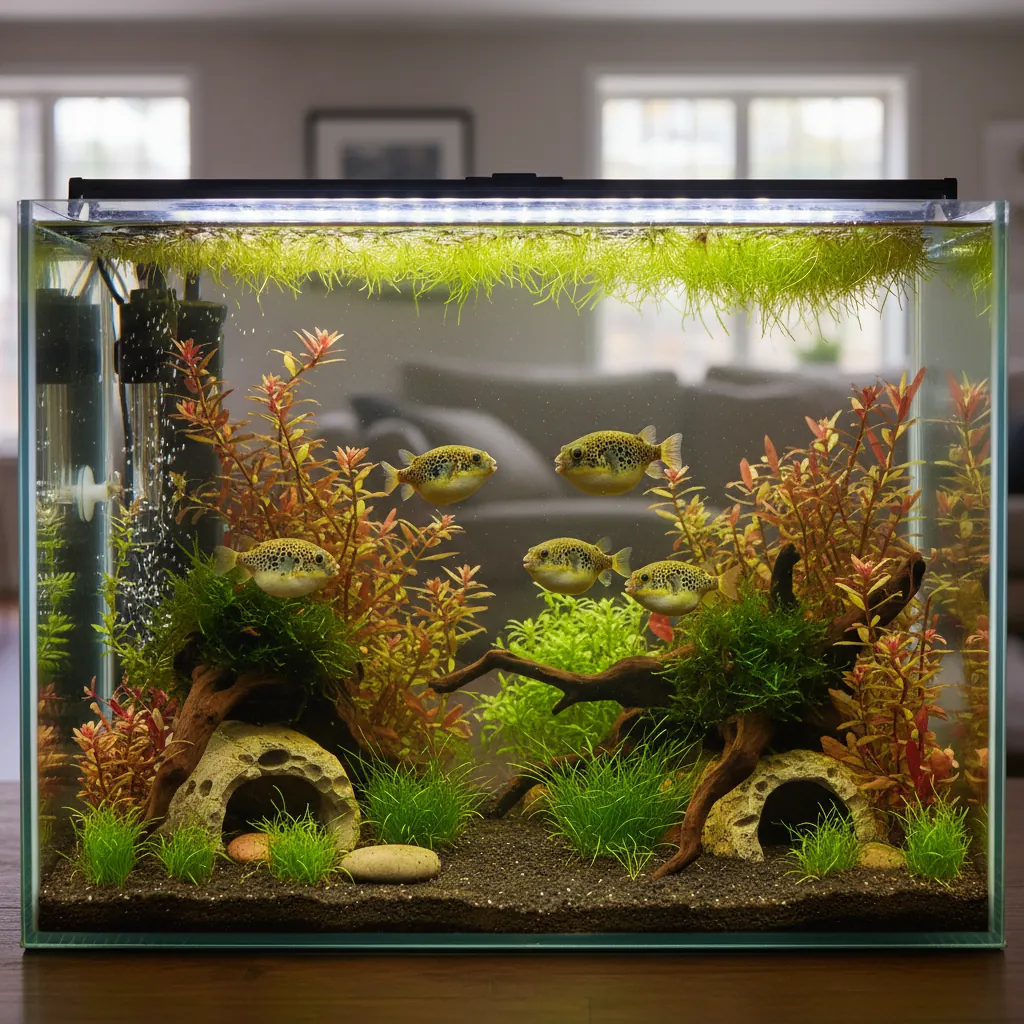
Pea Puffer Care: Complete Guide to Keeping the World’s Smallest Pufferfish
Contents
- Quick Care Summary
- Tank Setup for Pea Puffers
- Water Parameters
- Feeding Pea Puffers
- Tank Mates
- Common Problems
Pea puffers (Carinotetraodon travancoricus) are 2.5 cm (1 inch) freshwater pufferfish native to Kerala, India, known for their intelligence, hunting behavior, and territorial personalities. They require a species-only tank (5+ gallons per fish), stable warm water (24-28°C/75-82°F), and a specialized snail-based diet to prevent beak overgrowth. While rewarding, their care complexity makes them best for intermediate aquarists.
Quick Care Summary
- Tank Size: 5 gallons per puffer (19L) with 10+ gallons for groups
- Water Temperature: 24-28°C (75-82°F)
- pH: 7.0-7.6
- Diet: Live/frozen snails (1-3/day), bloodworms, brine shrimp
- Temperament: Territorial; species-only recommended
- Difficulty: Intermediate (specialized feeding needs)
Tank Setup for Pea Puffers
Minimum Tank Size
- Single puffer: 5 gallons (19L)
- Group (6+ ): 20+ gallons with dense plants (Source 1, Source 5)
Essential Elements
- Substrate: Fine sand or smooth gravel
- Plants: Dense live plants (java moss, anubias) for hiding
- Decor: Driftwood and caves to reduce aggression
- Filtration: Gentle flow sponge filter
- Cover: Tight-fitting lid (prone to jumping)
Water Parameters
| Parameter | Ideal Range | Notes |
|---|---|---|
| Temperature | 24-28°C (75-82°F) | Requires heater |
| pH | 7.0-7.6 | Kerala waters are neutral |
| GH | 6-8 dGH | Moderately hard |
| KH | 3-4 dKH | Stable alkalinity |
| Nitrates | <15-50 ppm | Conflict: Some keepers report success >20 ppm (Source 5) |
Note: Daily testing recommended during acclimation (Source 5).
Feeding Pea Puffers
Critical Requirements
- Snails (non-negotiable): 1-3 bladder/ramshorn snails daily (3-6mm size) to wear down continuously growing beak (Source 4)
- Supplemental foods: Frozen bloodworms, brine shrimp, daphnia 2-3x/week
Snail Culture Guide
| Feeder Snail | Shell Thickness | Operculum | Breeding Rate | Suitability |
|---|---|---|---|---|
| Bladder | Thin | None | Very High | Best (easily crushed) |
| Ramshorn | Moderate | None | High | Good for adults |
| Malaysian Trumpet | Thick | Yes | High | Poor (too hard) |
Pro Tip: Start a 20+ gallon snail colony 30 days before getting puffers (150-200 adults per puffer needed) (Source 4).
Tank Mates
- Recommended: Species-only tank (Sources 1, 2)
- Possible exceptions (in 20+ gallon tanks):
- Otocinclus catfish (fast, armored)
- Chili rasboras (too fast to nip)
- Avoid: Slow-moving or long-finned fish
Common Problems
- Beak overgrowth: Caused by lack of snails; leads to starvation
- Aggression: Overcrowding or lack of hiding spots
- Nitrate sensitivity: Some reports of stress >15 ppm (conflict: Source 5 users report tolerance >20 ppm)
- Diseases: Susceptible to ich if water quality fluctuates
FAQ
Q: Can pea puffers live with other fish?
A: Not recommended due to territorial behavior. Species-only tanks show highest success (Sources 1, 2).
Q: How often should I feed snails?
A: Daily: 1-3 adult snails per puffer. Juveniles need 2-5 smaller snails (Source 4).
Q: Are they beginner-friendly?
A: No. Their specialized diet (mandatory snails) and sensitivity make them intermediate-level (Sources 1, 5).
Q: How many can live in a 10-gallon tank?
A: 2 with heavy planting. Groups of 6+ need 20+ gallons to disperse aggression (Source 5).
Q: Do they need a heater?
A: Yes. Kerala natives require stable 24-28°C (75-82°F) water (Source 1).
Related guides
- Angelfish Care: A Complete Guide
- Apistogramma Care Guide
- Betta Fish Care Guide: Essential Tips for a Healthy Life
- Bolivian Ram Care Guide
- Bristlenose Pleco Care Guide