Pea Puffer Tank Setup: A Comprehensive Guide
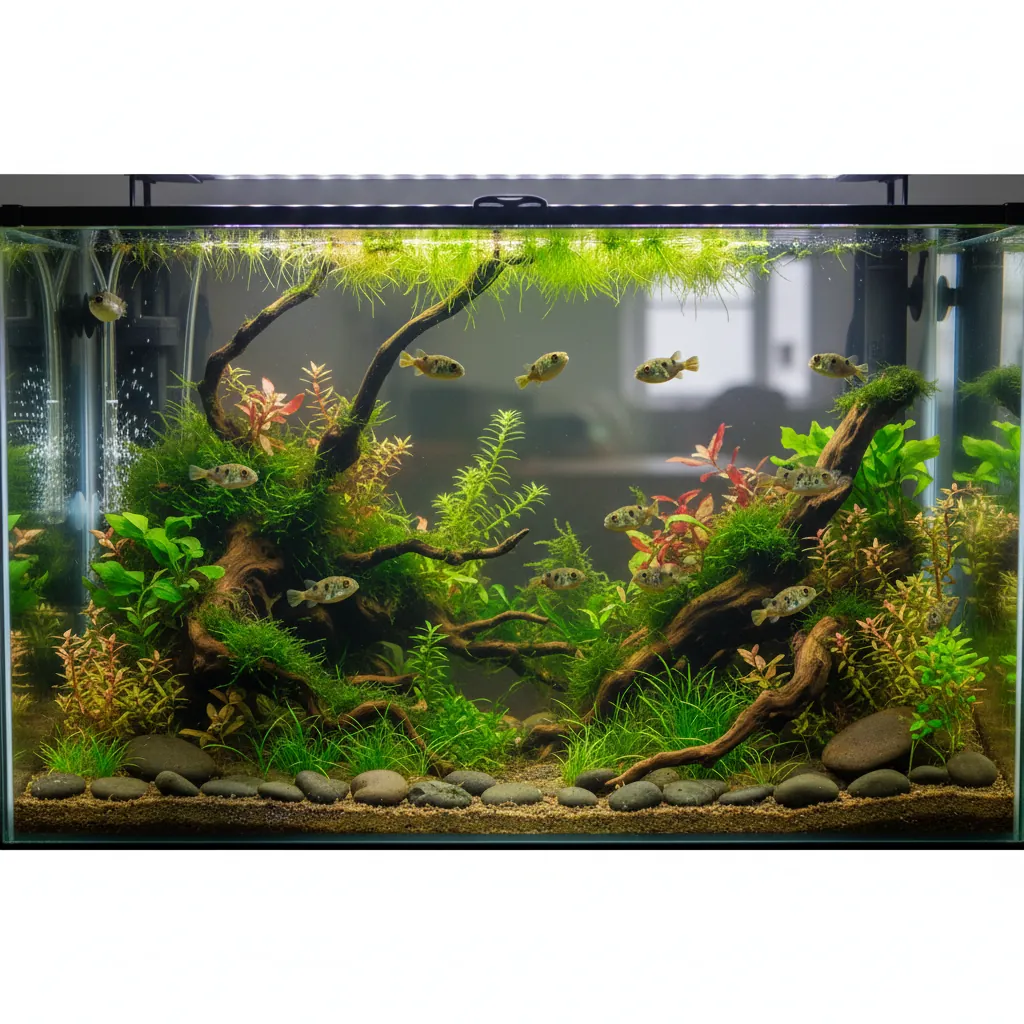
Pea Puffer Tank Setup: A Comprehensive Guide
Contents
- Quick Care Summary
- How to Set Up a Pea Puffer Tank
- What Are the Ideal Water Parameters?
- What Should I Feed My Pea Puffers?
- Can Pea Puffers Have Tank Mates?
- Common Problems in Pea Puffer Tanks
- FAQs
- Comparison Table: Pea Puffer Tank Setup Options
Pea puffers (Carinotetraodon travancoricus) are small, charismatic freshwater fish native to Kerala, India. Known for their bright colors, unique eye movements, and carnivorous diet, they require specific tank conditions to thrive. This guide covers everything from tank setup and water parameters to feeding and tank mates, ensuring your pea puffers live healthy, happy lives.
Quick Care Summary
- Tank Size: Minimum 5 gallons per puffer; 10 gallons recommended for small groups.
- Water Temperature: 24–28°C (75–82°F).
- pH: 6.5–7.5.
- Diet: Carnivorous – live or frozen foods like bloodworms, brine shrimp, and snails.
- Temperament: Territorial; best kept alone or in species-only tanks.
- Difficulty: Moderate; requires attention to diet and water quality.
How to Set Up a Pea Puffer Tank
Tank Size and Layout
Pea puffers need ample space to establish territories. A 10-gallon tank is suitable for a small group, while larger tanks (20+ gallons) allow for more puffers and additional enrichment. Use dense plants, driftwood, and rocks to create sight breaks and reduce aggression. Floating plants like Salvinia or red root floaters add cover and mimic their natural habitat.
Substrate
Fine sand or smooth gravel is ideal, as it resembles their riverbed habitats and is safe for their delicate bodies.
Filtration
A sponge filter or a hang-on-back filter with a baffled outlet provides gentle flow. Pea puffers prefer slow-moving water, though they can adapt to moderate flow in larger tanks.
Lighting
Moderate lighting highlights their colors and supports plant growth. Avoid overly bright setups, as pea puffers can become stressed.
What Are the Ideal Water Parameters?
Pea puffers thrive in soft, slightly acidic water:
- Temperature: 24–28°C (75–82°F).
- pH: 6.5–7.5.
- GH: 5–15 dGH.
- Ammonia/Nitrite: 0 ppm.
- Nitrate: <20 ppm. Regular water changes (25–30% weekly) help maintain water quality.
What Should I Feed My Pea Puffers?
Pea puffers are obligate carnivores and require live or frozen foods:
- Staple Diet: Bloodworms, brine shrimp, snails, daphnia, and blackworms.
- Feeding Frequency: 1–2 times daily, offering only what they can consume in 2–3 minutes.
- Live Food Breeding: Consider setting up separate tanks for snail or daphnia cultures to ensure a steady food supply.
Can Pea Puffers Have Tank Mates?
Pea puffers are territorial and do best in species-only tanks. However, in larger, well-planted tanks, they may coexist with:
- Amano shrimp (curiosity, not aggression).
- Kuhli loaches (cleanup crew, nocturnal).
- Otocinclus (algae eaters).
Avoid slow-moving or long-finned fish, as pea puffers may nip fins.
Common Problems in Pea Puffer Tanks
- Aggression: Overcrowding or insufficient hiding spots can lead to territorial disputes. Provide ample cover and space.
- Parasites: Wild-caught puffers often carry internal parasites. Treat with praziquantel or levamisole after purchase.
- Poor Diet: Pea puffers can starve if not offered live or frozen foods. Ensure variety in their diet.
- Water Quality: Monitor ammonia, nitrite, and nitrate levels closely to prevent stress and illness.
FAQs
Q: Are pea puffers suitable for beginners?
A: While rewarding, pea puffers require specific care and are better suited for aquarists with some experience.
Q: Do pea puffers need a heater?
A: Yes, they thrive in warm water (24–28°C). A heater is essential in most setups.
Q: How many pea puffers can I keep together?
A: Start with one per 5 gallons. Larger groups (6–10) require bigger tanks (20+ gallons) and ample hiding spots.
Q: Can pea puffers live with snails?
A: Yes, but snails are typically viewed as food rather than tank mates. Avoid keeping snail species you want to preserve.
Q: How do I reduce aggression in a pea puffer tank?
A: Use plants, hardscape, and hiding spots to break sight lines. Maintain a high female-to-male ratio (2:1) if keeping multiple puffers.
Comparison Table: Pea Puffer Tank Setup Options
| Feature | Option 1: Species-Only Tank | Option 2: Community Tank |
|---|---|---|
| Tank Size | 10 gallons (minimum) | 20+ gallons |
| Filtration | Sponge filter | Hang-on-back filter with baffle |
| Plants | Dense, varied plants | Dense plants with hiding spots |
| Tank Mates | None | Kuhli loaches, Amano shrimp |
| Feeding | Live/frozen carnivorous diet | Same, with supplementary foods |
| Difficulty | Moderate | Moderate to high |
Related guides
- Angelfish Care: A Complete Guide
- Apistogramma Care Guide
- Best Tank Size for Goldfish: A Complete Guide
- Betta Fish Care Guide: Essential Tips for a Healthy Life
- Bolivian Ram Care Guide