Why Is My Fish Tank Cloudy? Causes and Solutions
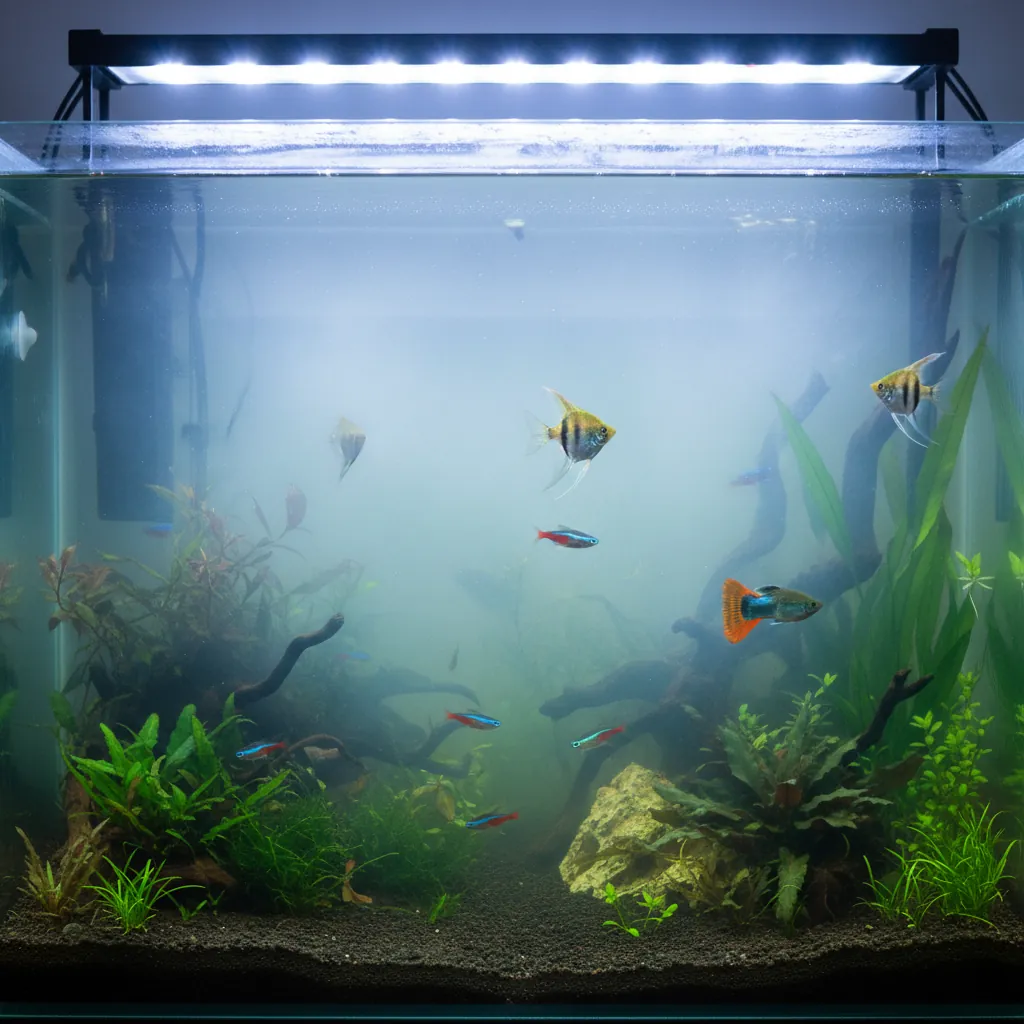
Why Is My Fish Tank Cloudy? Causes and Solutions
Contents
- Quick Care Summary
- Why Is My Fish Tank Cloudy?
- Quick Fixes for Cloudy Water
- Common Mistakes to Avoid
- Frequently Asked Questions
Cloudy fish tank water is most often caused by bacterial blooms, algae, or debris in the water. Bacterial blooms are common in new tanks as beneficial bacteria establish themselves. Algae blooms turn water green, while tannins from driftwood or leaves can make it brown. Cleaning the tank improperly, overfeeding, or inadequate filtration can also lead to cloudiness. Most cases resolve with patience and minor adjustments.
Quick Care Summary
- Tank Size: Ensure proper size for your fish species.
- Water Temperature: Maintain species-specific temperature (e.g., 72-82°F for tropical fish).
- pH: Keep pH stable (6.5-7.5 for most freshwater species).
- Diet: Feed sparingly to avoid excess waste.
- Temperament: Avoid overcrowding to reduce stress and waste.
- Difficulty: Beginner-friendly fixes include patience, water changes, and proper filtration.
Why Is My Fish Tank Cloudy?
1. Bacterial Blooms
Bacterial blooms are common in new tanks or after major changes. They occur when beneficial bacteria multiply rapidly, turning water milky white. This is often part of the nitrogen cycle and resolves on its own in 1-2 weeks.
2. Algae Blooms
Green water is caused by free-floating algae, often due to excess light and nutrients. Reduce light exposure, limit feeding, and consider a UV sterilizer to eliminate algae.
3. Debris and Particles
Cloudiness from fine particles occurs with unwashed substrate, overfeeding, or dirty filters. Regular tank maintenance, including substrate rinsing and filter cleaning, can help.
4. Tannins
Brown or tea-colored water is caused by tannins leaching from driftwood, leaves, or botanicals. Activated carbon or water changes can clear it up.
5. Improper Cleaning
Overcleaning filters or disturbing substrate can release debris and disrupt beneficial bacteria. Avoid aggressive cleaning and perform consistent, small water changes.
Quick Fixes for Cloudy Water
| Issue | Solution |
|---|---|
| Bacterial Bloom | Wait 1-2 weeks; avoid water changes or filter cleaning. |
| Algae Bloom | Reduce light, limit feeding, and use a UV sterilizer. |
| Debris/Particles | Clean substrate, perform water changes, and use a clarifier. |
| Tannins | Use activated carbon or Purigen; boil driftwood before adding it. |
| Improper Cleaning | Clean filters gently; avoid overcleaning substrate. |
Common Mistakes to Avoid
- Overfeeding: Excess food decomposes, fueling bacterial and algae growth.
- Overcleaning: Aggressive filter cleaning disrupts beneficial bacteria.
- Large Water Changes: Replace only 20-30% of water weekly to avoid imbalance.
- Ignoring Filtration: Ensure your filter is adequate for your tank size and fish load.
Frequently Asked Questions
Q: How long does it take for cloudy water to clear?
A: Bacterial blooms typically clear in 1-2 weeks. Algae blooms may take longer without intervention.
Q: Can cloudy water harm my fish?
A: In most cases, no. However, high ammonia or nitrite levels during a bacterial bloom can be dangerous.
Q: Should I clean my filter if the water is cloudy?
A: Avoid cleaning the filter unless clogged. Beneficial bacteria live in the filter media and are essential for a healthy tank.
Q: Can I use chemicals to clear cloudy water?
A: Water clarifiers can help with debris-related cloudiness, but they won’t solve bacterial or algae blooms.
Q: How do I prevent cloudy water in the future?
A: Maintain a regular cleaning schedule, avoid overfeeding, and ensure proper filtration.
Related guides
- The Aquarium Nitrogen Cycle Explained: How to Keep Your Fish Safe
- Essential Aquarium Water Parameters for Healthy Fish
- How Often to Change Aquarium Water
- How to Control Algae in Your Aquarium: Causes, Prevention, and Solutions
- How to Lower Ammonia in Your Aquarium