Amano Shrimp Care Guide
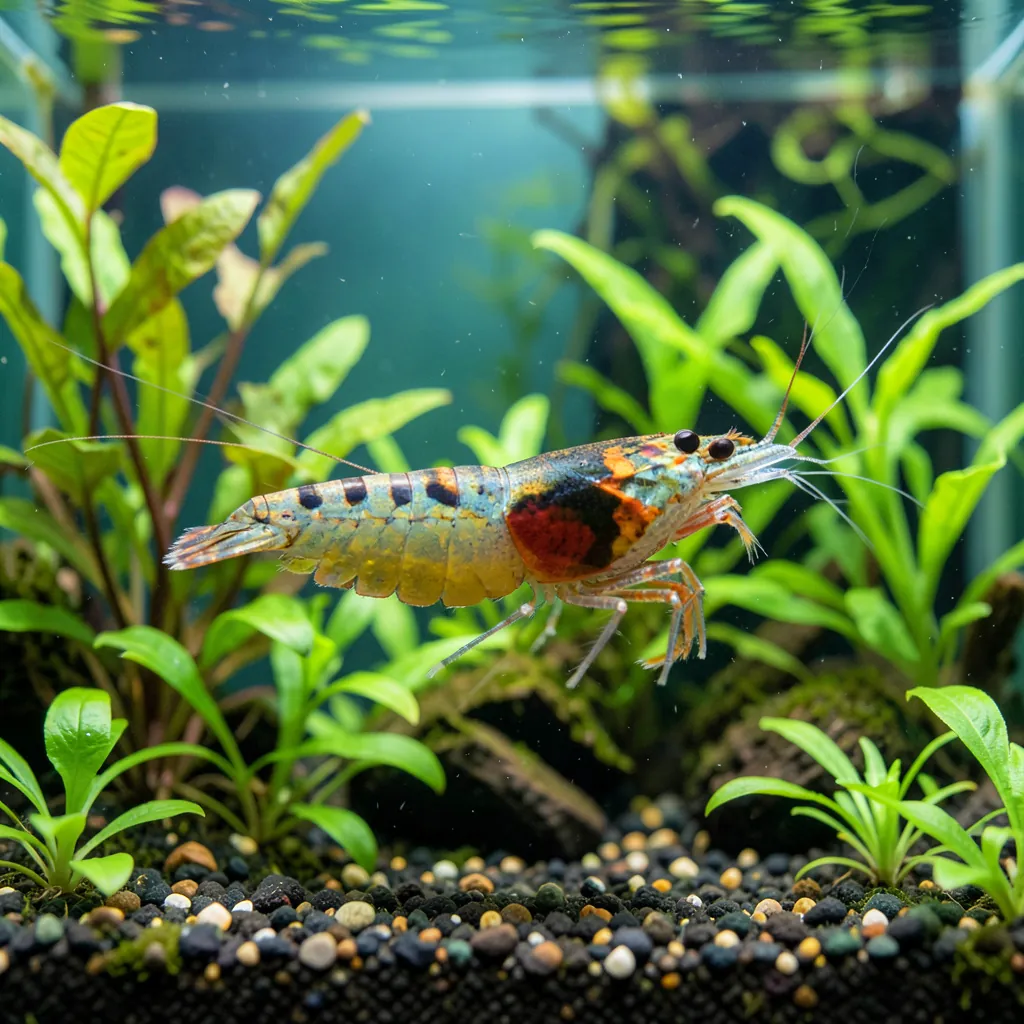
Amano Shrimp Care Guide
Contents
- Overview
- Is It Right for You?
- Tank Setup
- Water Parameters
- Diet and Feeding
- Tank Mates
- 🩺 Common Health Issues
- 💡 Care Tips
- ❓ FAQ
🦐 Amano shrimp (Caridina multidentata) are highly effective algae-eating invertebrates popular in freshwater aquariums. They’re hardy, peaceful, and help maintain tank cleanliness by consuming various algae types and organic waste.
Care Level: Beginner
Temperament: Peaceful
Max Size: 2 inches (5 cm) [sources conflict: others report up to 2.5 inches or 6 cm]
Lifespan: 2-5 years [sources conflict: 2-3 vs. 3-5 vs. up to 10 years]
Diet: Omnivore (primarily algae/aufwuchs)
Minimum Tank Size: 10 gallons (38 L) [some sources suggest 5 gallons]
Water Temp: 64-82°F (18-28°C)
pH: 6.5-7.5
Overview
Originally discovered in Japan (formerly called Caridina japonica), these transparent/greenish-brown shrimp now inhabit rivers across Japan, Taiwan, and potentially Madagascar. They’re named after aquascaper Takashi Amano, who popularized them in the 1980s. Variations exist (e.g., “Taimanos” from Taiwan), with potential differences in behavior and breeding. A white “Snow” morph has recently been bred in Taiwan.
Is It Right for You?
Pros:
- Excellent algae control
- Peaceful community tank member
- Tolerate varied water conditions
Cons:
- Cannot breed in freshwater (larvae require brackish water)
- May jump from uncovered tanks
Tank Setup
- Tank Size: 10+ gallons (38+ L) for stable parameters.
- Filtration: Sponge or Hamburg mat filter (prevents shrimp from being sucked in).
- Cover: Tight-fitting lid (they climb/jump).
- Substrate: Sand or fine gravel.
- Decor: Rocks, driftwood, and plants (Java moss, Anubias).
- Flow: Moderate current (mimics natural river habitats).
Water Parameters
| Parameter | Ideal Range |
|---|---|
| Temperature | 70-78°F (21-26°C) |
| pH | 6.5-7.5 |
| GH | 6-8 dGH |
| KH | 3-5 dKH |
| Ammonia/Nitrite | 0 ppm |
Diet and Feeding
- Primary Food: Algae, biofilm, decaying plant matter.
- Supplemental: Algae wafers, blanched vegetables (zucchini, spinach), protein foods (2-3x/week for egg-carrying females).
- Caution: Excess protein may trigger aggression.
Tank Mates
✅ Compatible:
- Small fish (tetras, rasboras, guppies)
- Other shrimp (Neocaridina)
- Snails (Nerite, Malaysian Trumpet)
❌ Avoid:
- Large/aggressive fish (cichlids, goldfish)
- Saltwater (harmful to adults)
🩺 Common Health Issues
| Symptom | Cause | Treatment |
|---|---|---|
| White/pink body | Poisoning (insecticides, metals) | None; remove toxin source |
| Failed molting | Low GH (calcium deficiency) | Adjust GH to 6-8 dGH |
| Sudden death | High nitrite/ammonia | Immediate water change |
💡 Care Tips
- Calcium Supply: Add cuttlebone or mineral stones to aid molting.
- CO2 Caution: Keep pH above 6.0 (CO2 overdose lowers pH).
- Acclimate Slowly: Drip acclimate for 1-2 hours to prevent shock.
- Avoid Salt: Even small amounts (3g/L) are lethal to adults.
❓ FAQ
Q: Can Amano shrimp live with bettas?
A: Yes, if the betta is calm and the tank has hiding spots.
Q: How many Amanos per gallon?
A: 1 shrimp per 2 gallons (e.g., 5 shrimp in a 10-gallon tank).
Q: Do Amano shrimp eat black beard algae?
A: No; they ignore black beard algae and cyanobacteria.
Q: Why are my Amanos fighting?
A: Likely competition for food—increase feeding frequency.
Q: Can Amano shrimp breed in freshwater?
A: No; larvae require brackish water (25g salt/L) to survive.
Q: Do Amano shrimp eat plants?
A: Only decaying plant matter—healthy plants are safe.
Related guides
- Amano Shrimp Care Guide: Algae-Busting Powerhouses
- Assassin Snail Care Guide: Everything You Need to Know
- Cherry Shrimp Care Guide: Tank Setup, Feeding, and Breeding
- Mystery Snail Care Guide
- Nerite Snail Care Guide: Tank Setup, Diet, and Breeding Facts