Angelfish Care: A Complete Guide
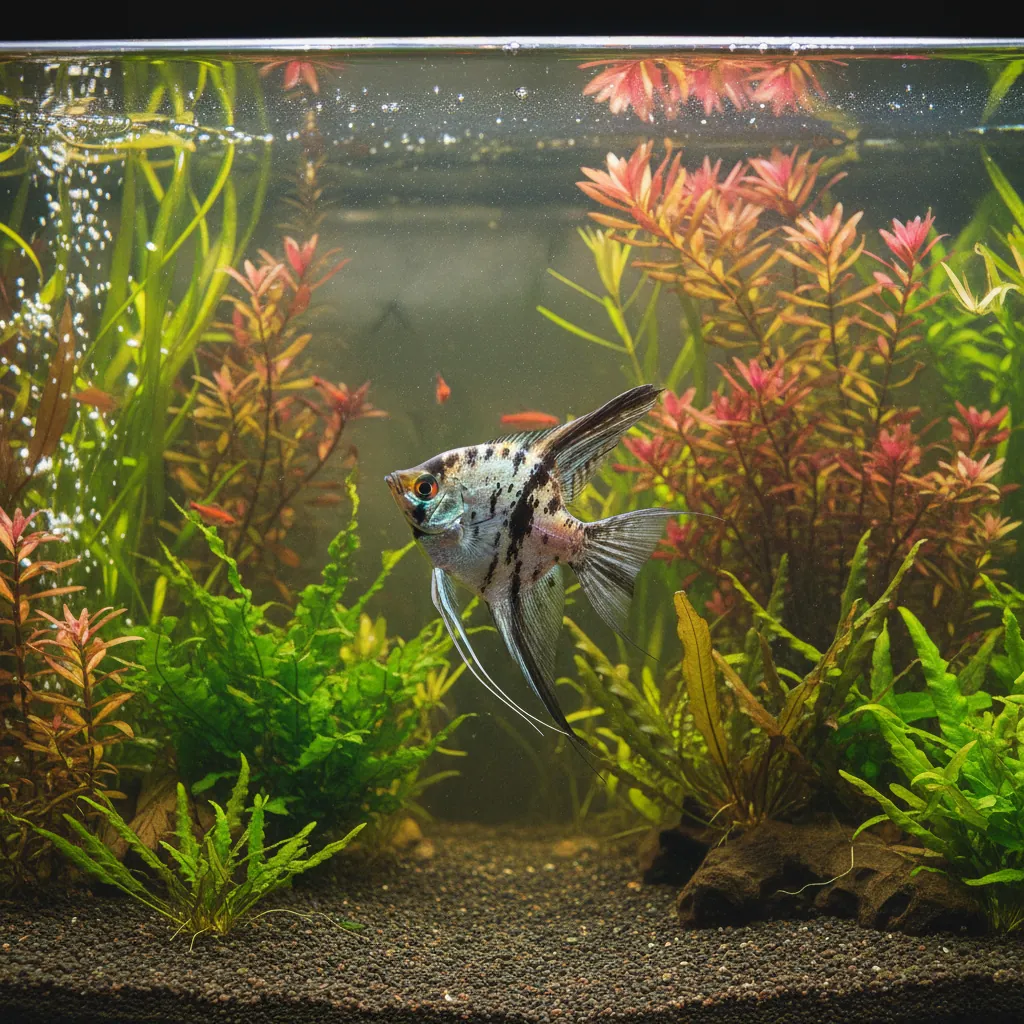
Angelfish Care: A Complete Guide
Contents
- Quick Care Summary
- How to Set Up an Angelfish Tank?
- What Are the Ideal Water Parameters for Angelfish?
- What Do Angelfish Eat?
- What Are Suitable Tank Mates for Angelfish?
- What Are Common Angelfish Problems?
Angelfish (Pterophyllum scalare) are popular freshwater fish known for their elegant fins and unique personalities. They thrive in warm, slightly acidic to neutral water with minimal stress. Proper care involves maintaining water quality, providing a spacious tank, and offering a varied diet. Angelfish are generally peaceful but can become territorial during breeding.
Quick Care Summary
- Tank Size: Minimum 20 gallons for juveniles; 55+ gallons for adults or pairs
- Water Temperature: 78°F–84°F (26°C–29°C)
- pH: 6.0–7.8
- Diet: Omnivorous—flakes, pellets, frozen foods, and live foods
- Temperament: Peaceful but territorial during breeding
- Difficulty: Easy to intermediate
How to Set Up an Angelfish Tank?
Angelfish require a tall aquarium to accommodate their vertical fin extensions. A minimum of 20 gallons is suitable for juveniles, but adults need at least 55 gallons, especially if kept in pairs or groups. Use fine to medium-grade gravel or sand and add driftwood, broadleaf plants, and vertical decorations to mimic their natural habitat. Floating plants can provide shaded areas, which angelfish prefer. Ensure gentle water flow, as strong currents stress them.
Filtration
A sponge filter or undergravel filter works well for angelfish. Avoid excessive water movement, as angelfish are not strong swimmers. Regular water changes (10%-25% weekly) are essential to manage dissolved organics and bacterial loads.
What Are the Ideal Water Parameters for Angelfish?
Angelfish thrive in warm, slightly acidic to neutral water:
- Temperature: 78°F–84°F (26°C–29°C)
- pH: 6.0–7.8
- Water Hardness: 3–8 dKH (54–145 ppm)
Higher temperatures promote faster growth and breeding but may shorten their lifespan. Consistency in water parameters is key to their health.
What Do Angelfish Eat?
Angelfish are omnivores and will eat a variety of foods, including:
- Flakes and pellets: High-quality tropical flakes or sinking pellets
- Frozen foods: Bloodworms, brine shrimp, and tubifex
- Live foods: Baby brine shrimp (ideal for fry)
Feed 2–3 times daily, offering only what they can consume in 2–3 minutes. Avoid overfeeding, as it can degrade water quality.
What Are Suitable Tank Mates for Angelfish?
Angelfish can coexist with other peaceful, similarly sized fish. Avoid fin nippers or aggressive species. Suitable tank mates include:
- Tetras: Cardinal tetras, rummy nose tetras
- Catfish: Corydoras, bristlenose plecos
- Other community fish: Gouramis, peaceful barbs
Do not keep them with aggressive cichlids or small fish like neon tetras, which they may eat.
| Tank Mate Type | Examples | Compatibility |
|---|---|---|
| Tetras | Cardinal, Rummy Nose | High |
| Catfish | Corydoras, Plecos | High |
| Other Cichlids | Discus (larger tanks) | Moderate |
| Small Fish | Neon Tetras, Guppies | Low |
What Are Common Angelfish Problems?
- Fin Rot: Caused by poor water quality. Regular water changes and proper filtration can prevent it.
- Hexamita (Hole-in-the-Head Disease): Treat with metronidazole and stress reduction.
- Aggression: Occurs during breeding. Separate pairs or provide ample space.
- Parasites: Capillaria and gill flukes are common. Treat with heat (95°F for 7–10 days) and medication.
FAQ
How Big Do Angelfish Get?
Adult angelfish can grow up to 6 inches in length and 8 inches in height (including fins). Pterophyllum altum species can reach up to 10–13 inches in height.
How Long Do Angelfish Live?
With proper care, angelfish typically live 8–10 years. Cooler temperatures may extend their lifespan but slow growth and breeding.
Are Angelfish Aggressive?
Angelfish are generally peaceful but can become territorial during breeding. Avoid overcrowding to minimize aggression.
Can Angelfish Be Kept Alone?
Yes, angelfish can be kept alone as centerpiece fish. However, they are social and may thrive better in pairs or small groups.
Do Angelfish Need a Heater?
Yes, angelfish require a heater to maintain a stable temperature between 78°F–84°F.
Can Angelfish Live with Guppies?
Guppies are not ideal tank mates for angelfish, as they may be eaten due to their small size.
What Fish Cannot Live with Angelfish?
Avoid fin-nipping species like tiger barbs, aggressive cichlids, and small fish that fit in their mouths (e.g., neon tetras).
Related guides
- Betta Fish Care Guide: Essential Tips for a Healthy Life
- Corydoras Catfish Care Guide: Tank Setup, Diet, and Breeding
- Guppy Care Guide: Everything You Need to Know
- Neon Tetra Care: Complete Guide for Healthy, Colorful Fish
- Platy Fish Care: A Complete Guide