Corydoras Catfish Care Guide: Tank Setup, Diet, and Breeding
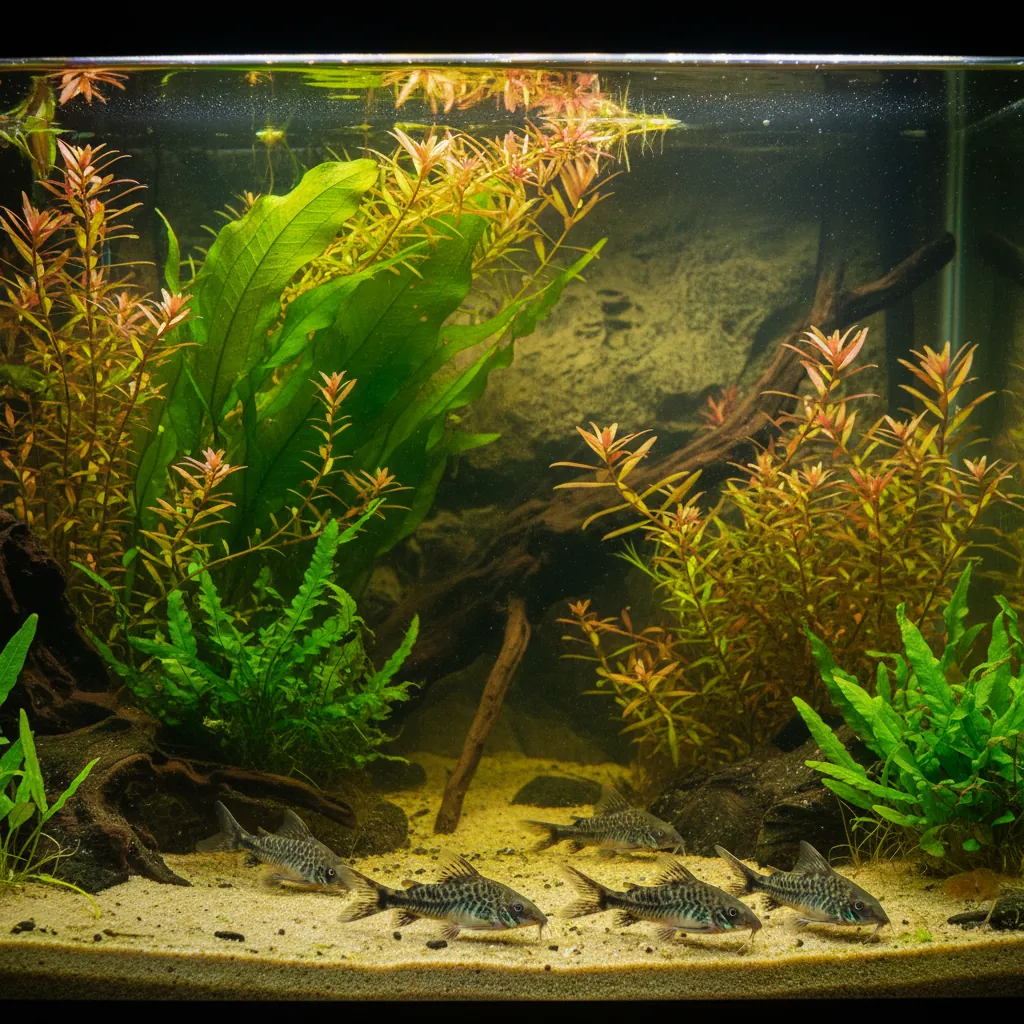
Corydoras Catfish Care Guide: Tank Setup, Diet, and Breeding
Contents
- Quick Care Summary
- What Tank Setup Do Corydoras Need?
- What Water Parameters Are Best for Corydoras?
- What Do Corydoras Eat?
- What Are Good Tank Mates for Corydoras?
- Common Corydoras Health Problems
- How Do You Breed Corydoras?
- Frequently Asked Questions
Corydoras catfish (Cory cats) are peaceful, social bottom-dwellers ideal for community tanks. They thrive in groups of 6+, prefer temperatures of 72–82°F (22–28°C), and need soft sand or smooth gravel substrate to protect their barbels. Feed sinking pellets, algae wafers, and live/frozen foods like bloodworms. They’re easy to care for but require pristine water quality.
Quick Care Summary
- Tank Size: 10–30+ gallons (species-dependent)
- Water Temperature: 72–82°F (22–28°C)
- pH: 6.0–8.0 (wild-caught prefer 5.5–7.0)
- Diet: Sinking pellets, algae wafers, bloodworms, brine shrimp
- Temperament: Peaceful, schooling
- Difficulty: Easy (Beginner-friendly)
What Tank Setup Do Corydoras Need?
- Substrate: Fine sand or smooth gravel (sharp substrates can damage barbels). Some keepers report success with rounded-edge gravel (2mm grain size) or aqua soil.
- Tank Size:
- Dwarf species (e.g., C. pygmaeus): 10+ gallons
- Standard species (e.g., C. aeneus): 20+ gallons
- Decor: Open bottom space for foraging; minimal sharp rocks/driftwood. Dense plants (e.g., java fern) provide cover.
- Filtration: Low to moderate flow; pristine water is critical.
What Water Parameters Are Best for Corydoras?
| Parameter | Ideal Range | Notes |
|---|---|---|
| Temperature | 72–82°F (22–28°C) | Cooler for peppered corys (20–22°C); warmer for sterbai (26°C+) |
| pH | 6.0–8.0 | Wild-caught prefer 5.5–7.0 |
| Hardness | 5–18° dH | Soft to moderately hard |
| Water Changes | 10% weekly or 25% biweekly | Use a gravel vacuum to remove debris |
Conflicting note: Source 5 suggests corys adapt to room-temperature tanks in some cases, but most sources specify heater use below 74°F (23°C).
What Do Corydoras Eat?
- Staple Diet: Sinking pellets, algae wafers, shrimp pellets.
- Supplementary Foods: Live/frozen bloodworms, brine shrimp, daphnia.
- Feeding Tips: Avoid relying on tank scraps. Feed 2–3 minutes’ worth of food 1–2x daily. Corys are not primary algae eaters.
What Are Good Tank Mates for Corydoras?
- Peaceful Community Fish: Tetras, rasboras, guppies, honey gouramis.
- Avoid: Large/aggressive fish (e.g., goldfish, cichlids) that may bully or eat them.
- Caution: Some plecos may compete for food; monitor interactions.
Common Corydoras Health Problems
- Barbel Erosion: Caused by sharp substrate or poor water quality.
- Disease Sensitivity: Prone to ich and bacterial infections if water quality declines.
- Genetic Issues: Inbred strains may develop deformities (e.g., stunted growth).
How Do You Breed Corydoras?
- Conditioning: Feed high-protein foods (e.g., bloodworms) to encourage spawning.
- Trigger: Simulate rainstorms with cooler water changes (2–3°F drop).
- Egg Care: Females lay adhesive eggs on glass/plants. Remove eggs to a separate tank to prevent predation.
- Fry Care: Feed baby brine shrimp or powdered fry food.
Frequently Asked Questions
Q: Can I mix different cory species?
A: Yes, but they school best with their own kind. Mixed groups may not exhibit natural behavior.
Q: Do corys need sand substrate?
A: Preferred (for natural sifting behavior), but smooth gravel is acceptable (Source 1 vs. Source 5 conflict).
Q: How long do cory catfish live?
A: Typically 3–5 years, but some report lifespans up to 15+ years with optimal care.
Q: Why do corys dart to the surface?
A: Normal behavior (gulping air), but frequent surfacing may indicate low oxygen or poor water quality.
Q: Are corys aggressive?
A: No—they’re peaceful but may unintentionally spike other fish with venomous spines if stressed.
Related guides
- Angelfish Care: A Complete Guide
- Betta Fish Care Guide: Essential Tips for a Healthy Life
- Guppy Care Guide: Everything You Need to Know
- Neon Tetra Care: Complete Guide for Healthy, Colorful Fish
- Platy Fish Care: A Complete Guide