Guppy Care Guide: Everything You Need to Know
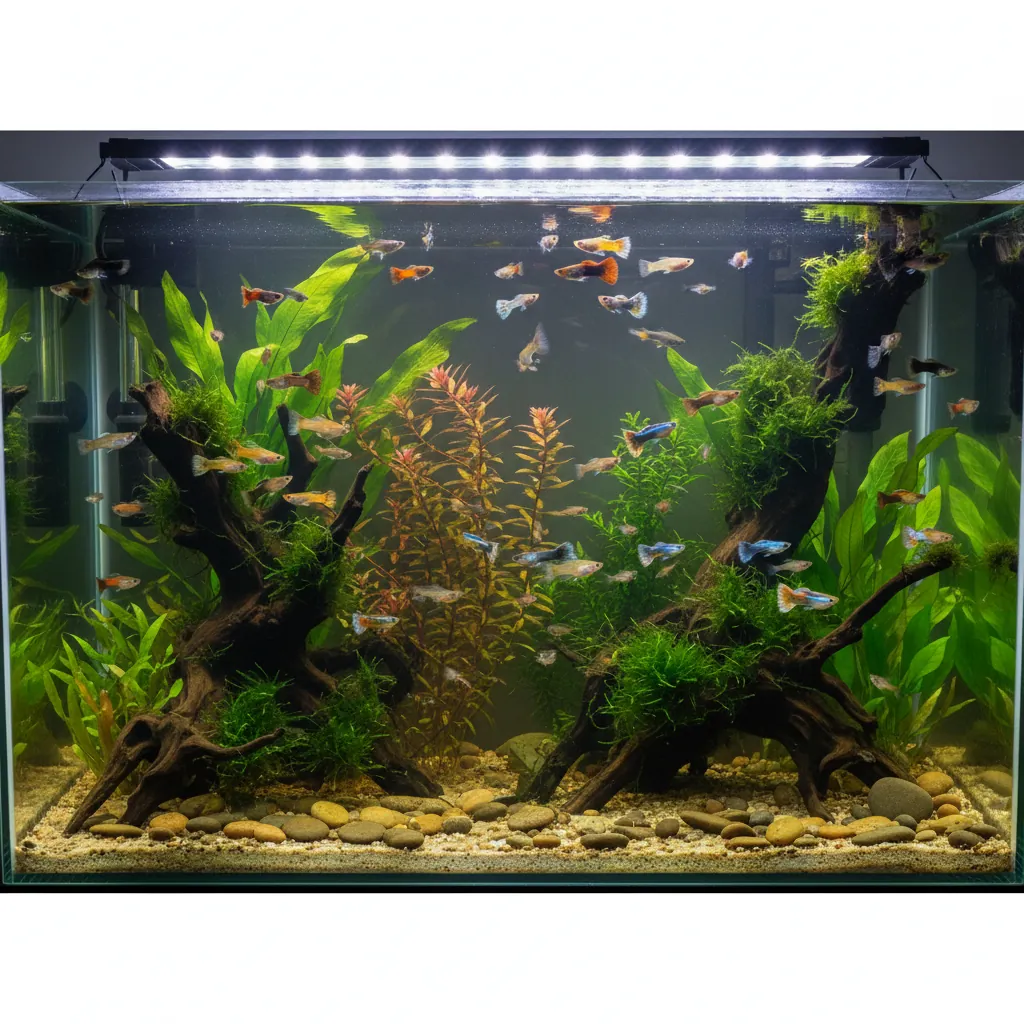
Guppy Care Guide: Everything You Need to Know
Contents
- Quick Care Summary
- How to Set Up a Guppy Tank
- What Are the Ideal Water Parameters for Guppies?
- What Should I Feed My Guppies?
- What Are Common Guppy Health Problems?
Guppies (Poecilia reticulata) are one of the most popular freshwater fish for beginners due to their vibrant colors, hardy nature, and ease of care. They thrive in warm, stable water conditions and require a varied diet of flakes, pellets, and live or frozen foods. A properly set-up aquarium with adequate filtration, heating, and hiding spots ensures guppies remain healthy and active. Keep them in groups of at least three, as they are social fish. With proper care, guppies can live 2–3 years.
Quick Care Summary
- Tank Size: 5+ gallons for a trio, 10+ gallons recommended for groups.
- Water Temperature: 72–82°F (22–28°C).
- pH: 6.8–7.8 (slightly alkaline preferred).
- Diet: Omnivorous—flakes, pellets, frozen, and live foods.
- Temperament: Peaceful and social; males may show mild aggression.
- Difficulty: Beginner-friendly.
How to Set Up a Guppy Tank
Tank Size and Decorations
Guppies need at least 5 gallons for one fish, with an additional 2 gallons per extra guppy. A larger tank (10–20 gallons) is ideal for stability and preventing overcrowding. Include live or artificial plants, rocks, and hiding spots to make them feel secure. Use sand or gravel as substrate, rinsed thoroughly before adding.
Tankmates
Guppies are peaceful and do well with other small, non-aggressive fish like:
- Cory catfish
- Mollies
- Tetras
- Platies
Avoid aggressive species like tiger barbs or goldfish, which may nip fins or eat guppies.
Filtration
Use a filter rated for at least 4x the tank’s volume (e.g., 80 GPH for a 20-gallon tank). Sponge filters are ideal for fry tanks. Avoid strong currents, as guppies prefer slow-moving water.
What Are the Ideal Water Parameters for Guppies?
Temperature and pH
Maintain water temperature between 72–82°F (22–28°C) using an aquarium heater. Guppies prefer slightly alkaline water with a pH of 6.8–7.8.
Water Hardness
Guppies thrive in hard water (10–20 dGH). Use additives like Wonder Shell to increase hardness if needed.
Water Changes
Perform 10–25% water changes every 2–4 weeks to maintain clean, stable conditions.
What Should I Feed My Guppies?
Guppies are omnivores and enjoy a varied diet. Feed them:
- High-quality flakes or pellets
- Frozen or live foods (e.g., brine shrimp, bloodworms, mosquito larvae)
- Occasional vegetables like blanched zucchini
Feed adults once or twice daily, giving only what they can eat in 1–2 minutes. For fry, feed 3–5 small meals daily.
What Are Common Guppy Health Problems?
Symptoms of Illness
Look for:
- Cloudy eyes
- Loss of appetite
- Frayed fins (fin rot)
- White spots (ich)
- Bloated appearance (dropsy or constipation)
Prevention
Maintain clean water, avoid overfeeding, and quarantine new fish before adding them to the tank. Treat diseases promptly with appropriate medications.
FAQ
How Many Guppies Should I Keep Together?
Keep at least three guppies together, as they are social. For mixed sexes, maintain a ratio of 2–3 females per male to reduce stress.
How Often Do Guppies Breed?
Guppies breed every 30 days. Females can store sperm and give birth multiple times without mating again.
What Do Guppy Fry Need?
Fry need hiding spots (e.g., java moss), finely crushed food or fry-specific food, and clean water. Separate them from adults to prevent predation.
Why Are My Guppies Dying?
Common causes include poor water quality, overfeeding, diseases, or stress from incompatible tankmates.
Can Guppies Live Without a Heater?
Guppies can survive in room temperature water (68–72°F) but thrive best with a heater maintaining 72–82°F.
Related guides
- Angelfish Care: A Complete Guide
- Betta Fish Care Guide: Essential Tips for a Healthy Life
- Corydoras Catfish Care Guide: Tank Setup, Diet, and Breeding
- Neon Tetra Care: Complete Guide for Healthy, Colorful Fish
- Platy Fish Care: A Complete Guide