how to get rid of ammonia in fish tank
Contents
- Overview
- Is It Right for You?
- Tank Setup
- Water Parameters
- Diet and Feeding
- Tank Mates
- 🩺 Common Health Issues
- 💡 Care Tips
- ❓ FAQ
🐠 Ammonia is toxic to fish and must be kept at 0 ppm. To remove ammonia, use water conditioners like Fritz A.C.C.R. or API AMMO-LOCK, perform partial water changes, and ensure a healthy biological filter with nitrifying bacteria. Regular testing and maintenance are key to preventing ammonia spikes.
Overview
Ammonia is a toxic byproduct of fish waste and decaying organic matter. It is the starting point of the nitrogen cycle, where beneficial bacteria convert it into less harmful compounds like nitrite and nitrate. High ammonia levels can stress or kill fish, especially in tanks with higher pH or temperature.
Is It Right for You?
Managing ammonia is essential for all aquarium keepers, regardless of experience level. Beginners should prioritize regular testing and water changes to prevent ammonia buildup.
Tank Setup
- Choose an appropriate tank size to avoid overcrowding, which leads to excess waste.
- Install a reliable filter to promote the growth of beneficial bacteria.
- Add a heater to maintain stable temperatures, as higher temperatures increase ammonia toxicity.
- Use substrate and decorations that are easy to clean to prevent debris buildup.
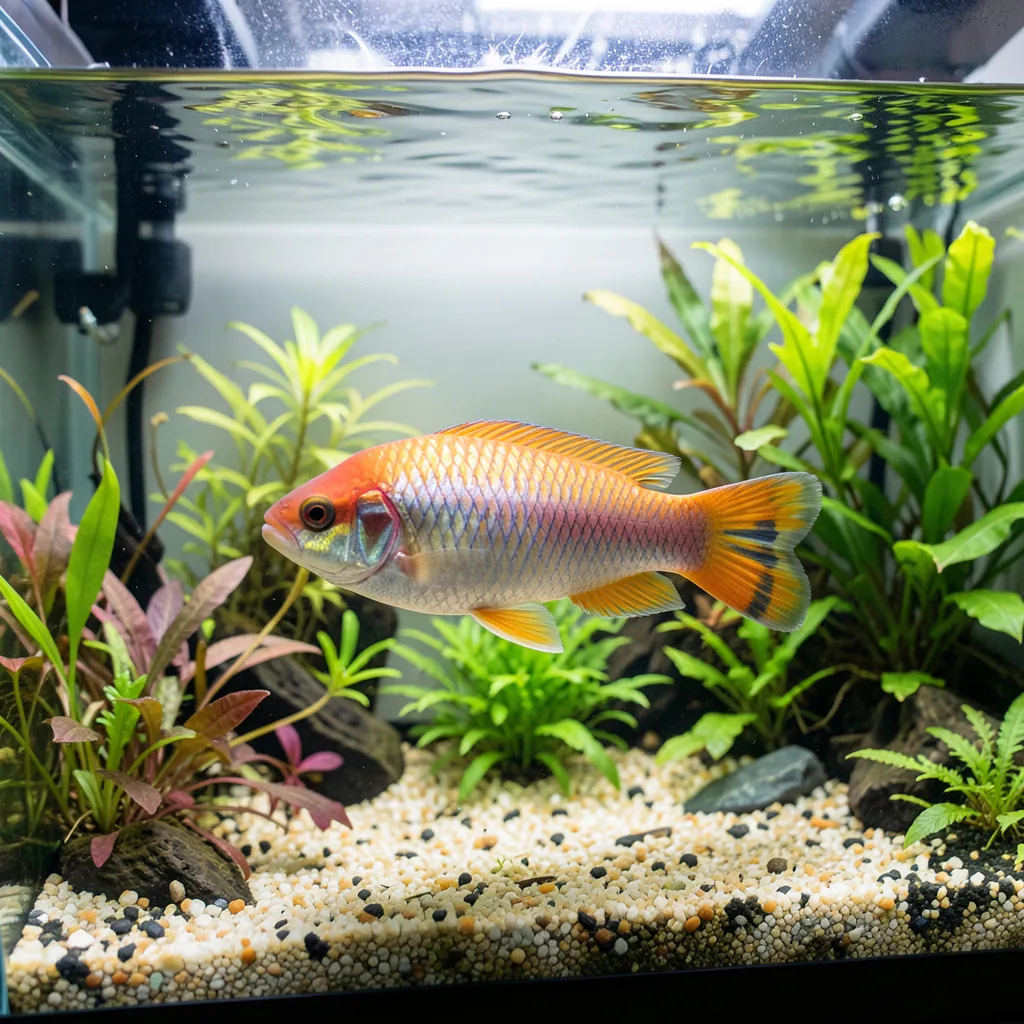
- Include live plants to absorb excess nutrients and help stabilize the tank environment.
Water Parameters
Here’s a table of ideal water parameters for keeping ammonia levels in check:
| Parameter | Ideal Range |
|---|---|
| Ammonia | 0 ppm |
| pH | 6.5-7.5 (freshwater), 7.8-8.4 (saltwater) |
| Temperature | 76-82°F (24-28°C) |
| Nitrite | 0 ppm |
| Nitrate | <20 ppm |
Diet and Feeding
- Feed high-quality food in small amounts to reduce uneaten food.
- Avoid overfeeding; feed only what fish can consume in 2-3 minutes, twice daily.
- Remove uneaten food after feeding to prevent decay.
Tank Mates
Choose tank mates that produce less waste and are compatible with your fish’s temperament. Avoid overstocking, which can lead to ammonia spikes.
🩺 Common Health Issues
Here’s a quick guide to identifying and treating ammonia-related health problems:
| Symptom | Likely Cause | Treatment |
|---|---|---|
| Rapid gill movement | Ammonia poisoning | Water change, ammonia remover |
| Clamped fins | High ammonia levels | Reduce feeding, clean filter |
| Bacterial infections | Chronic ammonia stress | Antibiotics, improve water quality |
💡 Care Tips
- Test water weekly to catch ammonia spikes early.
- Perform regular water changes (20-30% weekly) to dilute toxins.
- Avoid overstocking to reduce waste production.
- Use a salicylate-type ammonia test kit for accurate readings.
- Add nitrifying bacteria to strengthen the biological filter.
❓ FAQ
Q: How often should I test for ammonia?
A: Test weekly in established tanks and daily during cycling or after adding new fish.
Q: Can I use Fritz A.C.C.R. with nitrifying bacteria?
A: Yes, Fritz A.C.C.R. detoxifies ammonia, while nitrifying bacteria convert it into nitrite.
Q: What’s the safest way to remove ammonia during cycling?
A: Perform partial water changes and add nitrifying bacteria like FritzZyme to establish the biofilter.
Q: Can live plants help reduce ammonia?
A: Yes, plants absorb ammonia and other nutrients, improving water quality.
Related guides
- The Aquarium Nitrogen Cycle Explained: How to Keep Your Fish Safe
- Essential Aquarium Water Parameters for Healthy Fish
- fish tank nitrogen cycle
- Aquarium Water Changes: How Often to Refresh Your Fish Tank
- How Often Should You Change Fish Tank Water?