Nerite Snail Care Guide: Tank Setup, Diet, and Breeding Facts
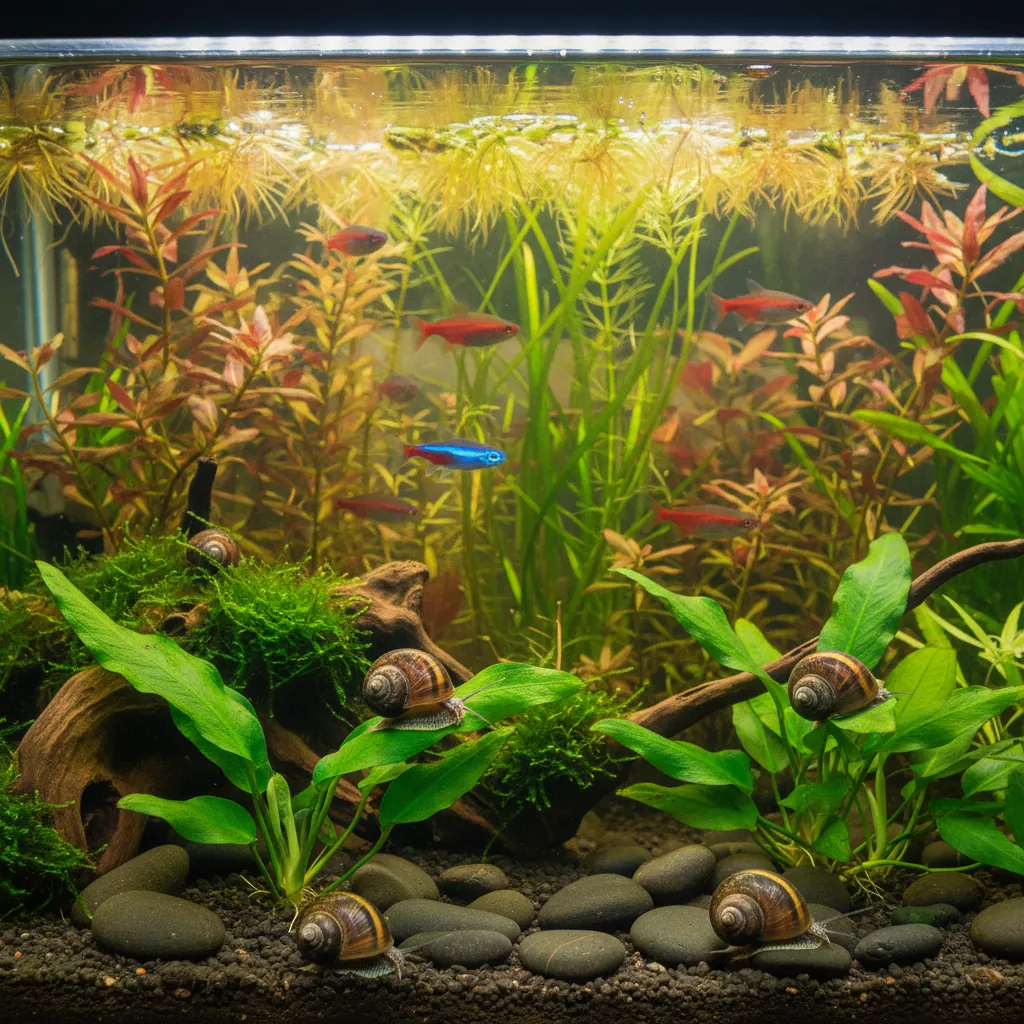
Nerite Snail Care Guide: Tank Setup, Diet, and Breeding Facts
Contents
- Quick Care Summary
- What Are Nerite Snails?
- Tank Setup
- Water Parameters
- Feeding
- Tank Mates
- Common Problems
- Breeding Nerite Snails
- Nerite Snail Varieties Comparison
Nerite snails (Neritina spp.) are hardy, algae-eating freshwater snails prized for their striking shell patterns and inability to breed in home aquariums (requiring brackish water to reproduce). They thrive in 5+ gallon tanks with stable water parameters (72-82°F, pH 7.5-8.5, 6-12 dGH) and are safe with plants, shrimp, and peaceful fish.
Quick Care Summary
- Tank Size: 5+ gallons per snail
- Water Temperature: 72–82°F (22–28°C)
- pH: 7.5–8.5 (slightly alkaline)
- Diet: Algae/biofilm; supplement with blanched veggies or wafers
- Temperament: Peaceful
- Difficulty: Easy (beginner-friendly)
What Are Nerite Snails?
Nerite snails are small (0.5–1.5 inches) herbivorous snails native to Africa, Asia, and the Pacific. Popular types include:
- Zebra Nerite: Black/gold stripes
- Horned Nerite: Spiked shells (e.g., Clithon corona)
- Tiger Nerite: Amber/black stripes
Tank Setup
- Minimum Tank Size: 5 gallons per snail (larger for groups)
- Substrate: Fine sand or smooth gravel
- Lid Required: Yes (they’re known escape artists)
- Decor: Rocks, driftwood (for algae grazing)
- Plants: Safe with all species
Water Parameters
| Parameter | Ideal Range | Notes |
|---|---|---|
| Temperature | 72–82°F (22–28°C) | Some species tolerate 65–85°F |
| pH | 7.5–8.5 | Below 7.0 risks shell erosion |
| Hardness (GH) | 6–12 dGH | Calcium needed for shells |
| Ammonia/Nitrite | 0 ppm | Nitrates <20 ppm |
Note: Sensitive to copper in medications/tap water.
Feeding
- Primary Diet: Algae/biofilm (green spot, diatoms)
- Supplements: Algae wafers, blanched zucchini/spinach
- Frequency: Daily grazing; supplement if algae is scarce
Tank Mates
Compatible:
- Peaceful fish (tetras, rasboras)
- Shrimp (Neocaridina, Amano)
- Other snails (non-aggressive)
Avoid:
- Pufferfish
- Crayfish
- Aggressive cichlids
Common Problems
- Escaping: Ensure a tight-fitting lid.
- Shell Erosion: Caused by low pH (<7.0) or calcium deficiency.
- Inactivity: Check water parameters; may indicate starvation.
- White Eggs: Harmless (won’t hatch in freshwater).
Breeding Nerite Snails
- Freshwater Breeding: Impossible (eggs require brackish water).
- Brackish Setup Needed: 5–15 ppt salinity for larvae survival.
- Larvae Food: Marine microalgae (e.g., Nannochloropsis).
Nerite Snail Varieties Comparison
| Type | Size | Shell Pattern | Best For |
|---|---|---|---|
| Zebra | 1” | Black/gold stripes | Algae on glass |
| Horned | 0.5–0.8” | Spiked, yellow/black | Nano tanks |
| Tiger | 1” | Amber/black stripes | Décor cleaning |
FAQ
Q: How long do Nerite snails live?
A: 1–3 years (up to 5 in optimal conditions).
Q: Do Nerite snails eat plants?
A: No—they only consume algae/dead leaves.
Q: Why are my Nerite snails climbing out of the water?
A: Normal behavior; ensure a secure lid.
Q: Can Nerite snails live in brackish water?
A: Yes, but most are kept in freshwater.
Q: How many Nerites per gallon?
A: 1 snail per 5–10 gallons to avoid starvation.
Related guides
- Cherry Shrimp Care Guide: Tank Setup, Feeding, and Breeding
- Angelfish Care: A Complete Guide
- Essential Aquarium Water Parameters for Healthy Fish
- Best Beginner Aquarium Fish: Hardy & Easy-to-Care-for Species
- Betta Fish Care Guide: Essential Tips for a Healthy Life