How to Set Up a Successful Planted Aquarium: A Beginner's Guide
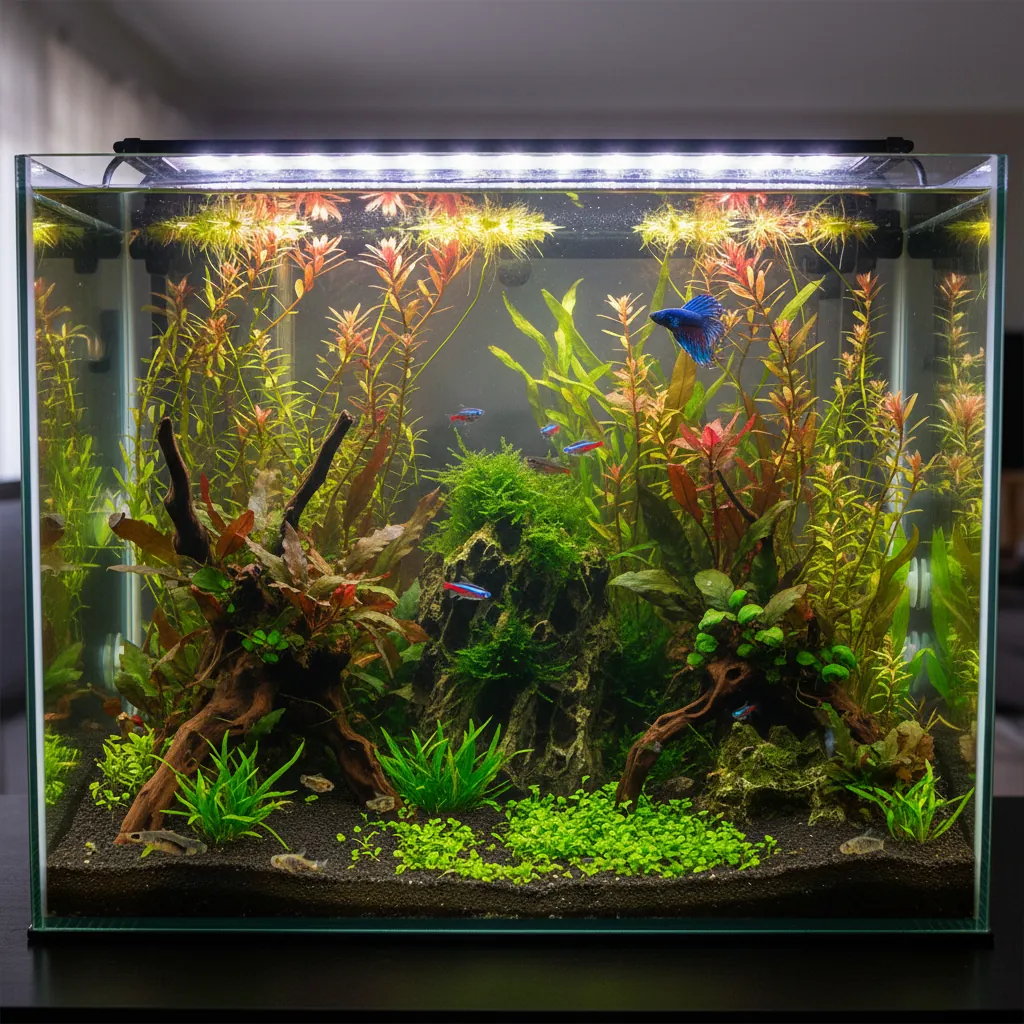
How to Set Up a Successful Planted Aquarium: A Beginner’s Guide
Contents
A planted aquarium creates a natural ecosystem where fish and plants thrive together, offering benefits like improved water quality, reduced algae growth, and stress relief. The key steps are: choosing a 20+ gallon tank, using nutrient-rich substrate (like ADA Aqua Soil or Oase Scaperline Soil), installing proper lighting (6,500–8,000K LED with 6-8 hour photoperiod), selecting easy plants (Anubias, Java Fern), and cycling for 2-3 weeks before adding fish. Low-tech setups work well with slow-growing plants and minimal fish.
Quick Care Summary
- Tank Size: 20+ gallons recommended (easier stability)
- Water Temperature: 75–82°F for tropical species
- pH: 6.5–7.5 (adjust with Seachem buffers if needed)
- Diet: Varies by fish; plants need liquid fertilizers (e.g., Seachem Flourish)
- Temperament: Peaceful community fish (tetras, gouramis, corydoras)
- Difficulty: Moderate (easier with slow-growing plants)
Tank Setup
- Substrate: Use 2–3 inches of nutrient-rich aqua soil (ADA Amazonia, Tropica) topped with gravel/sand. Slope higher toward the back.
- Hardscape: Arrange driftwood/rocks at angles for natural look. Secure wood to prevent floating.
- Lighting: Install full-spectrum LED (5–8 “true watts” per 10 gallons; 6,500–8,000K). Use timers for 6–8 hours daily.
- Plants: Start with easy species:
- Epiphytes: Java Fern, Anubias (attach to hardscape)
- Rooted: Cryptocoryne, Amazon Sword
- Carpeting: Dwarf Baby Tears (needs more light)
- Cycling: Fill with dechlorinated water, run filter/heater for 2–3 weeks before adding fish.
Water Parameters
- pH: 6.5–7.5 (use test kits; adjust with Seachem Acid/Neutral Buffer)
- Hardness: Soft to moderately hard (use RO water if tap is very hard)
- Filtration: Low-flow for planted tanks (sponge or canister filters recommended)
- CO2: Optional for low-tech; liquid carbon (Excel) can substitute
Feeding
- Fish: Species-specific diets (e.g., flakes for tetras, sinking pellets for corydoras)
- Plants:
- Root feeders: Nutrient tablets (placed near roots)
- Water column feeders: Liquid fertilizers (dose weekly; avoid copper with shrimp/snails)
Tank Mates
| Species | Notes | Compatibility |
|---|---|---|
| Neon Tetra | Peaceful schooling fish | ✅ All plants |
| Dwarf Gourami | Colorful centerpiece fish | ❌ May nip soft plants |
| Amano Shrimp | Algae control | ✅ Hardy plants |
| Otocinclus | Gentle algae eater | ✅ All plants |
Avoid: Silver Dollars, Tinfoil Barbs (plant-eaters), large cichlids (may uproot plants).
Common Problems
- Algae Blooms: Reduce light to 6 hours, increase water changes, add floating plants.
- Melting Plants: Normal for Cryptocoryne; trim dead leaves, wait for regrowth.
- Yellow Leaves: Likely nutrient deficiency; dose iron/potassium.
FAQ
How long should I wait before adding fish to a new planted tank?
2–3 weeks to establish beneficial bacteria and plant roots.
Can I use regular gravel instead of aqua soil?
Yes, but root tabs or liquid fertilizers become essential for plant growth.
Why are my Anubias leaves turning yellow?
Could be light burn (move to shade) or potassium deficiency (dose fertilizer).
Related guides
- Angelfish Care: A Complete Guide
- Essential Aquarium Water Parameters for Healthy Fish
- Best Beginner Aquarium Fish: Hardy & Easy-to-Care-for Species
- Betta Fish Care Guide: Essential Tips for a Healthy Life
- Cherry Shrimp Care Guide: Tank Setup, Feeding, and Breeding