Molly Fish Care Guide: Tank Setup, Feeding, and Breeding
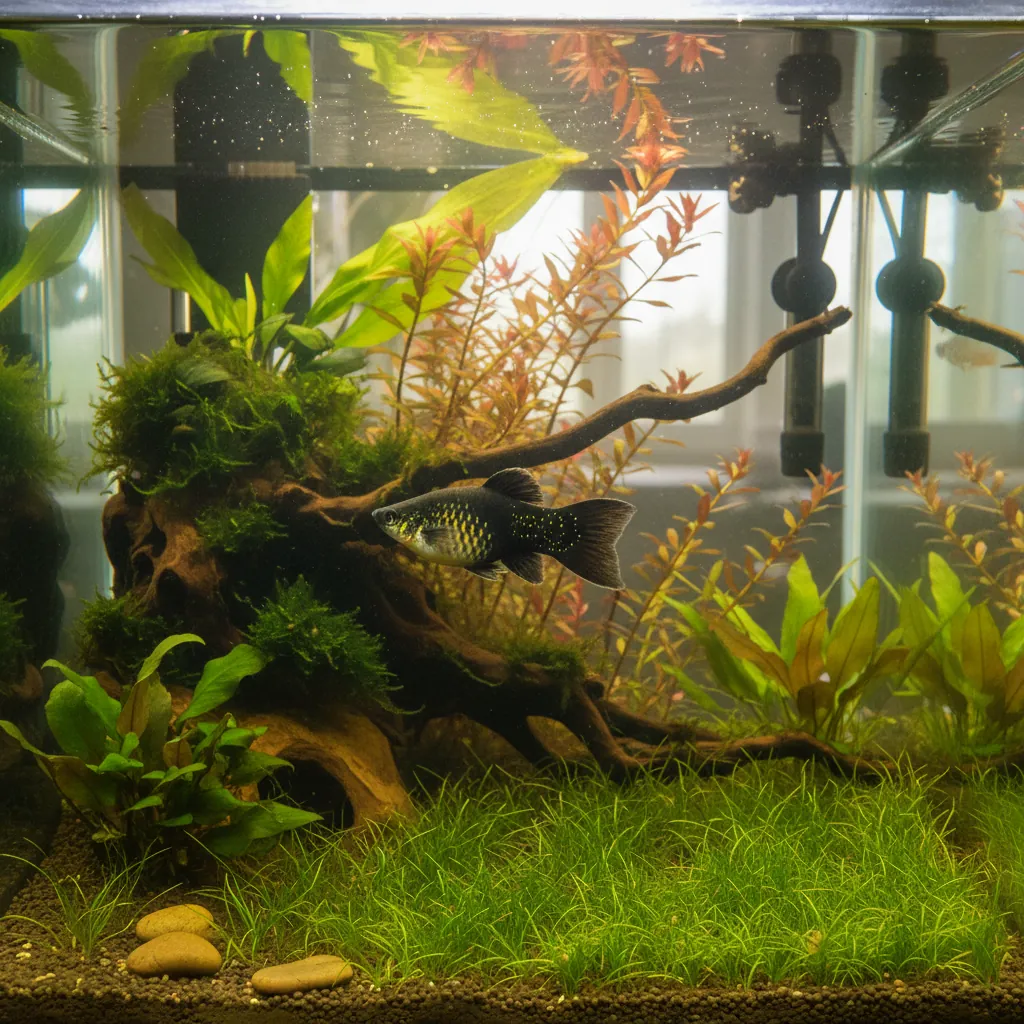
Molly Fish Care Guide: Tank Setup, Feeding, and Breeding
Contents
- Quick Care Summary
- Molly Fish Tank Setup
- Water Parameters for Molly Fish
- Feeding Molly Fish
- Best Tank Mates for Mollies
- Common Molly Fish Problems
- Breeding Mollies
Molly fish (Poecilia sphenops) are popular freshwater aquarium fish known for their vibrant colors, peaceful nature, and ease of care. Native to Central America, mollies thrive in warm, slightly alkaline water and are omnivorous, requiring a mix of plant and animal-based foods. They are livebearers, making breeding straightforward but requiring careful tank management to prevent overpopulation.
Quick Care Summary
- Tank Size: 10+ gallons (minimum for 2–3 mollies; 20+ gallons preferred for groups)
- Water Temperature: 72–82°F (24–28°C)
- pH: 7.0–8.5 (neutral to slightly alkaline)
- Diet: Omnivorous (flakes, pellets, brine shrimp, algae)
- Temperament: Peaceful but active; may nip at slow-moving fish
- Difficulty: Easy to intermediate (sensitive to water parameter shifts)
Molly Fish Tank Setup
Tank Size
- Minimum: 10 gallons for 2–3 mollies (sources conflict; some recommend 40L/10.5 gallons as a baseline).
- Ideal: 20+ gallons for a small group (3–6 fish). Larger species (e.g., sailfin mollies) need 30+ gallons.
- Note: Avoid overcrowding—plan for 3+ gallons per additional molly.
Filtration and Decor
- Filter: Moderate flow; power or canister filters recommended (process water 4x hourly).
- Substrate: Fine gravel or sand (mollies forage for food).
- Plants: Dense live plants (e.g., water sprite, java moss) for fry hiding spots.
- Brackish Water? Some molly varieties tolerate low salinity (1 tbsp/gallon aquarium salt), but freshwater is standard.
Water Parameters for Molly Fish
| Parameter | Ideal Range | Notes |
|---|---|---|
| Temperature | 72–82°F (24–28°C) | Use an aquarium heater for stability. |
| pH | 7.0–8.5 | Higher pH (7.5–8.5) preferred. |
| Hardness (GH) | 10–25 dH | Mollies thrive in harder water. |
| Salt | Optional for some species | Avoid marine salt; use aquarium salt. |
Watch for: Ammonia/nitrite spikes—mollies are sensitive to poor water quality.
Feeding Molly Fish
Mollies are omnivores and require a varied diet:
- Staple: High-quality flakes or pellets (e.g., spirulina-based).
- Supplemental:
- Protein: Brine shrimp, bloodworms (sparingly).
- Vegetables: Blanched spinach, zucchini, algae wafers.
- Frequency: 1–2x daily; avoid overfeeding (look for long feces strings as a sign).
Best Tank Mates for Mollies
| Compatible | Avoid |
|---|---|
| Platies, guppies | Aggressive cichlids |
| Swordtails, tetras | Fin-nippers (e.g., tiger barbs) |
| Corydoras catfish | Large predatory fish |
| Peaceful shrimp/snails | Smaller shrimp (may be eaten) |
Note: Keep a 2:1 female-to-male ratio to reduce male aggression.
Common Molly Fish Problems
- Ich (White Spot Disease): Treat with aquarium salt or heat (86°F for 3 days).
- Livebearer Disease: Often caused by poor water quality; quarantine sick fish.
- Bacterial Infections: Improve filtration and perform water changes.
- Balloon Molly Health: Prone to swim bladder issues due to selective breeding.
Breeding Mollies
- Gestation: ~4 weeks per batch; females can store sperm for multiple pregnancies.
- Fry Care: Separate or provide dense plants for hiding; feed powdered flakes or baby brine shrimp.
- Yield: 10–80 fry per birth (depending on female age/size).
FAQ
Q: Can mollies live in freshwater?
A: Yes, but some varieties (e.g., sailfin) prefer brackish water.
Q: Why do my mollies keep dying?
A: Check water parameters—mollies are sensitive to ammonia, nitrites, and soft/acidic water.
Q: Are balloon mollies ethical?
A: Controversial—their deformed bodies can cause health issues (e.g., swim bladder disorders).
Q: How often should I change the water?
A: 25–30% weekly to maintain water quality.
Related guides
- Goldfish Care: A Complete Guide
- Angelfish Care: A Complete Guide
- Betta Fish Care Guide: Essential Tips for a Healthy Life
- Corydoras Catfish Care Guide: Tank Setup, Diet, and Breeding
- Guppy Care Guide: Everything You Need to Know