The Risks of Tiny Aquariums: Why Small Tanks Kill Social Fish
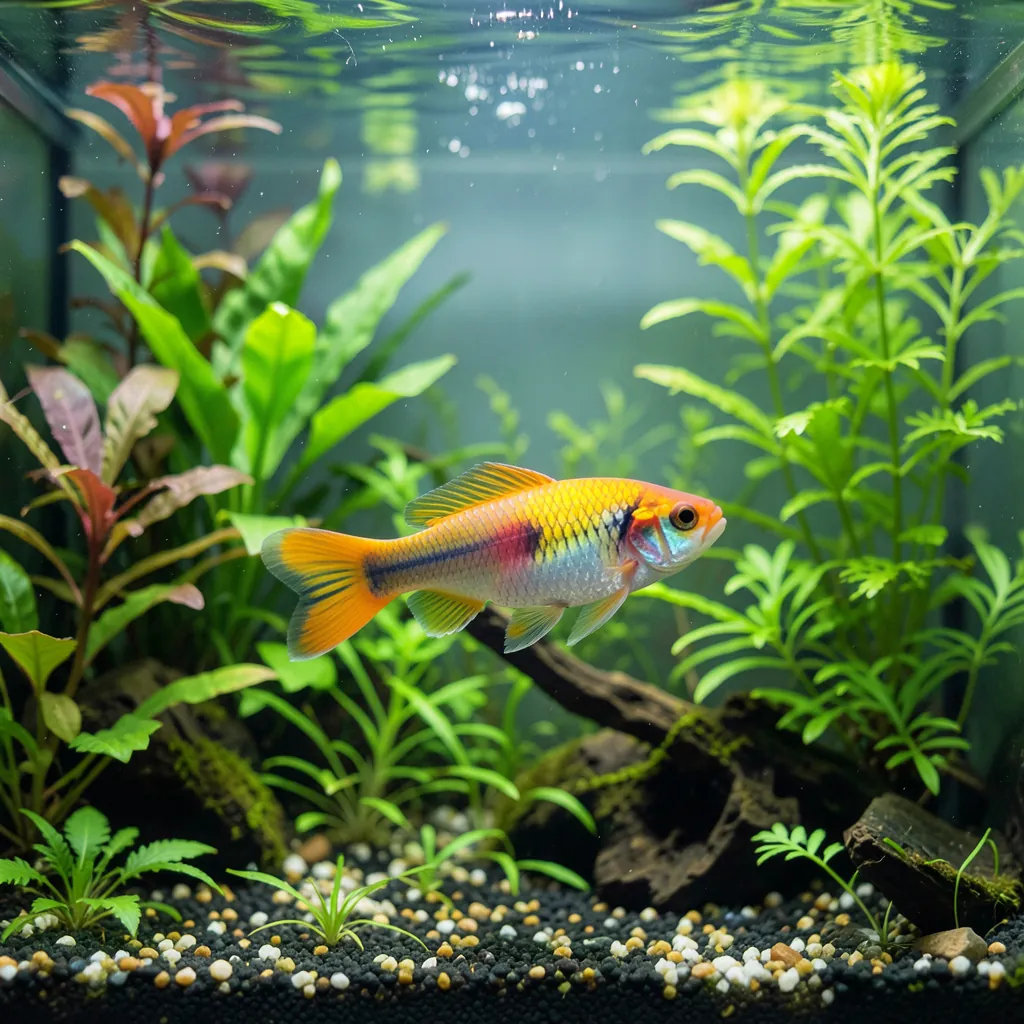
The Risks of Tiny Aquariums: Why Small Tanks Kill Social Fish
Contents
- Overview
- Is It Right for You?
- Tank Setup
- Water Parameters
- Diet and Feeding
- Tank Mates
- 🩺 Common Health Issues
- 💡 Care Tips
- ❓ FAQ
🐠 Tiny aquariums under 5 gallons (19L) are dangerous for fish due to rapid toxin buildup, oxygen depletion, and stress. Most small “decorative” tanks sold as novelty items cannot support healthy fish life, especially social species like guppies or bettas that require space and companions. Fish die from ammonia poisoning, suffocation, or aggression in cramped conditions.
Overview
Decorative mini-aquariums (bowls, cubes <5 gallons) are marketed as low-maintenance pet solutions but fail to meet basic biological needs:
- Surface-to-volume ratio: Small water surface areas limit oxygen exchange, leading to suffocation (Sources 1, 3)
- Ammonia spikes: Waste toxins concentrate lethally in tiny volumes (Sources 1, 5)
- Social stress: Shoaling fish like guppies become aggressive or lethargic without space/companions (Sources 3, 5)
- Temperature instability: Mini tanks fluctuate dangerously due to low water mass (Source 1)
Is It Right for You?
Avoid tiny tanks if:
- You want live fish (shrimp/snails may survive in 2.5+ gallon filtered tanks)
- You can’t commit to daily water changes in sub-5-gallon tanks (Source 5)
- You plan to keep social species (e.g., guppies, tetras, goldfish)
Tank Setup
- Minimum size: 5 gallons (19L) for one betta; 10+ gallons (38L) for shoaling fish (Sources 3, 5)
- Filtration: Hang-on-back or sponge filter rated for tank size
- Heater: 50W adjustable heater (76-82°F/24-28°C for tropical fish)
- Substrate: 1-2 inches of gravel/sand
- Plants/decor: Live plants (Java fern) and hides reduce stress (Source 3)
Water Parameters
| Parameter | Ideal Range | Danger Zone (Source 1,3,5) |
|---|---|---|
| Temperature | 76-82°F (24-28°C) | <74°F or >86°F |
| pH | 6.5-7.5 | <6.0 or >8.0 |
| Ammonia/Nitrite | 0 ppm | >0.5 ppm lethal |
| Oxygen | 5+ mg/L | <3 mg/L suffocating |
Cycling: Never add fish to uncycled tanks. Test kits are mandatory for small volumes.
Diet and Feeding
- Frequency: Tiny amounts 2x daily; remove uneaten food within 2 minutes (Source 5)
- Danger: Overfeeding is the #1 cause of ammonia spikes in nano tanks
Tank Mates
Never combine in small tanks:
- Multiple male bettas (lethal aggression, Source 3)
- Guppies/mollies in <10 gallons (stress → disease, Source 5)
- Goldfish (produce too much waste, Source 1)
Possible exceptions:
- Single betta in 5+ gallon with shrimp/snails
- 3-5 micro rasboras in heavily planted 10-gallon
🩺 Common Health Issues
| Symptom | Cause | Solution |
|---|---|---|
| Gasping at surface | Oxygen depletion | Upgrade tank size immediately |
| Sudden death | Ammonia poisoning | 100% water change + cycle |
| Fin nipping | Overcrowding stress | Rehome extra fish |
💡 Care Tips
- Reject “starter kits” under 5 gallons – they’re death traps (Source 1)
- Daily water tests are critical for tanks <10 gallons (Source 5)
- Surface agitation boosts oxygen in small tanks (Sources 1,3)
- Quarantine new fish – diseases spread faster in nano tanks
❓ FAQ
Can fish live in 2.5-gallon tanks?
No. Even hardy species like bettas require 5+ gallons (Source 3). Only shrimp/snails might survive with extreme care.
How many guppies can live in 5 gallons?
Zero. Guppies need 10+ gallons and groups of 6+ (Source 5 shows 2.5L tanks kill them).
Why do fish die in “self-cleaning” tanks?
These gimmicks don’t remove ammonia. All tanks need manual cleaning (Sources 1,5).
Is a fishbowl cruel?
Yes. Bowls lack oxygen, heat stability, and swim space (Sources 1,3,4).
Can tiny tanks work if I change water daily?
Still unethical. Daily 100% changes cause stress (Source 5 shows high mortality).
Related guides
- Aquarium Fishkeeping: A Complete Guide for Beginners and Enthusiasts 🐠
- Aquarium Fishkeeping: A Complete Beginner’s Guide
- Aquarium Fishkeeping as a Cottage Industry: Opportunities and Care Guide
- Aquarium Fishkeeping: A Complete Beginner’s Guide
- Aquarium Fishkeeping: A Guide to Starting and Growing Your Hobby or Business